United States, Institutional
Change

Showing
of
Insights Posts

Article
8 min
Oil is the spark — the cost of capital is the story
Higher oil prices are refocusing markets on inflation and the Fed, but the bigger investment story may be a broader shift toward a higher cost of capital and new diversification challenges.


8 min
Article
2027-09-17

Article
4 min
Tech Stocks as an Inflation Hedge: Is the Case Weakening?
Fixed Income Portfolio Manager Brij Khurana explores why US tech stocks may be a less attractive hedge against US inflation and currency debasement and how this could favor bonds.
By
4 min
Article
2027-09-03

Article
6 min
Oil market update: The long road to normalization
As geopolitical tensions in the Gulf region resume, our expert discusses recent oil market dynamics and their potential impact on inflation and the global growth outlook.

6 min
Article
2027-07-27

Article
11 min
The rally and the reality
Can the markets remain resilient in the face of geopolitical disruption and inflation worries? We offer our views on the macro environment, AI-driven earnings, and the implications for equities, bonds, and commodities.


11 min
Article
2027-07-30

8 min
The state of commercial real estate
We explore how macroeconomic, demographic, and sector-specific trends are reshaping commercial real estate, and why selectivity by sector, asset, quality, and capital structure may matter more than broad asset-class exposure.


8 min
2027-06-30
Article
5 min
Warsh’s first FOMC: We have a task force for that
Our experts highlight new task forces, examine evolving inflation and labor dynamics, and contend that the Fed soon may need to choose between growth support and price stability.


5 min
Article
2026-12-31

Article
4 min
The Iran war is changing the bond playbook
Regional wars, inflation, and shifting fiscal priorities are creating new challenges for the bond market. Fixed income portfolio manager Brij Khurana explains why investors may need to look beyond traditional core bond markets for opportunities.
By
4 min
Article
2027-04-24

Article
11 min
Top of Mind: Next-generation diversifiers for a changing market landscape
Multi-Asset Strategist Adam makes a case for a set of “next-generation diversifiers” — asset classes that may help protect portfolios against equity downside and other risks in the market environment investors are likely to face in coming years.

11 min
Article
2028-05-31

Article
6 min
Taking stock of the energy shock: 9 macro and market insights
Macro Strategist Juhi Dhawan looks at the potential effects of the war in the Middle East on economic growth, inflation, policy, and corporate profits.
6 min
Article
2027-03-31
Article
5 min
The Fed’s growing footprint on the market has a cost
Brij Khurana explains what the Federal Reserve's balance sheet expansion may mean for inflation and asset prices.
By
5 min
Article
2027-02-26
Article
4 min
Warsh as Fed chair: Something for everyone
Macro Strategist Juhi Dhawan shares five key takeaways on Kevin Warsh, President Trump’s nominee to be the next Fed chair, including thoughts on interest rates, deregulation, and the market impact.
4 min
Article
2027-02-28

Article
16 min
Are hedge funds the missing ingredient?
Inflation, volatility, and valuations — they all raise questions about portfolio diversification and resilience. Multi-Asset Strategists Nanette Abuhoff Jacobson and Adam Berger explain why multi-strategy and equity long/short hedge funds could provide the answers. They offer insights on adding allocations to a traditional portfolio mix and a recipe for manager selection.

16 min
Article
2026-12-31

Article
4 min
Japan's reflation story: An overlooked equity opportunity?
Macro Strategist Nick Wylenzek analyzes the structural shifts in Japan's economy and identifies potential equity opportunities.

4 min
Article
2026-12-01

Article
6 min
Commercial real estate debt: Transitional assets deep dive
Our private commercial real estate debt experts explore transitional CRE assets, highlighting their key characteristics, how they differ from other parts of the CRE debt universe, their potential roles in a portfolio, and much more.
6 min
Article
2026-10-31
Article
5 min
FOMC: Cushioning the US labor market
Fixed Income Portfolio Manager Jeremy Forster analyzes the Fed's decision to cut interest rates at the September FOMC meeting.
5 min
Article
2026-10-31
Article
4 min
Is it time to prepare for stagflation?
Discover why concerns about stagflation are rising, and how asset allocators may be able to hedge the effects on their portfolio.
By
4 min
Article
2026-08-28

Article
4 min
Twilight zone: how to interpret today’s uncertain macro picture
Macro Strategist John Butler and Investment Director Marco Giordano explore how to interpret today’s uncertain macroeconomic picture and its key implications.

4 min
Article
2026-09-30
Article
7 min
Rethinking the Fed’s dual mandate
Is it time for a fresh perspective on the dual mandate? Fixed Income Portfolio Manager Brij Khurana explores the potential benefits of reorienting monetary policy toward maximizing productivity.
By
7 min
Article
2026-08-31

Article
5 min
Stagflation watch: Thoughts on tariffs, inflation, and Fed policy
US Macro Strategist Juhi Dhawan considers signs the US economy may be moving toward a toxic mix of slowing growth and rising inflation, creating challenges for the Fed and investors.
5 min
Article
2026-08-31

Article
4 min
One Big Beautiful Bill: Why it’s “buy now, pay later” for markets
Multi-Asset Strategist Nanette Abuhoff Jacobson weighs the near-term benefits of the recently enacted US tax and spending bill against the longer-term costs, and suggests several investment implications.
4 min
Article
2026-07-31

Article
4 min
The power of positive and pragmatic thinking
While markets have a lot to worry about, from government policy to geopolitics, Global Investment and Multi-Asset Strategist Nanette Abuhoff Jacobson looks at the world from another angle: What could go right? She offers five reasons for positive thinking and considers the investment implications.
4 min
Article
2026-06-30
Article
4 min
FOMC: Patiently waiting to ease
Jeremy Forster discusses the Fed's steady policy rates, inflation forecasts, and potential interest rate cuts amidst economic uncertainties.
4 min
Article
2026-08-01

Article
4 min
Early thoughts on historic hike in US tariffs
Macro Strategist Michael Medeiros explores the significant economic and market implications of the latest US tariffs, highlighting potential recession and inflation spikes, and the impact on global trade relations.

4 min
Article
2026-05-31

Article
3 min
Could “Liberation Day” trigger a shift in capital flows?
John Butler discusses groundbreaking US tariffs, their impact on capital flows, and the changing investor perception of the US and Europe.
3 min
Article
2026-05-31

Article
8 min
Shrinking the government footprint: Medicaid cuts and America’s economic health
Macro Strategist Juhi Dhawan looks at what changes to the mammoth US Medicaid program could mean for economic growth, employment, inflation, and financial markets.
8 min
Article
2026-03-31
Article
3 min
FOMC meeting: Misery loves company
Fixed Income Portfolio Manager Jeremy Forster explores the Fed's decision to hold rates, downgraded economic forecasts, and the implications of balance-sheet policy changes on inflation and market conditions.
3 min
Article
2026-03-31

Article
5 min
Shrinking the government footprint: Deregulation and the US economy
Macro Strategist Juhi Dhawan shares her view on the economic effects of the Trump administration’s efforts to slash red tape, including the impact on growth and inflation, as well as some of the potential drawbacks of this approach.
5 min
Article
2026-03-31

Infographic
3 min
Chart in Focus: Can quality hedge against inflation?
Can Quality hedge against inflation? In this latest edition of Chart in Focus, we explore the historic outperformance of high-quality stocks and bonds during periods of high inflation, perhaps offering lessons should inflation surprise to the upside in 2025.
3 min
Infographic
2026-02-28

Video
15 min
Private credit roundtable: Outlook in 2025
Our private credit experts explore the potential effects of Trump 2.0 policies — like tariffs and deregulation — on the asset class in 2025. In addition, they dive into the impact of higher-for-longer interest rates, the broadening of private credit markets, and much more.
15 min
Video
2026-02-28

Article
7 min
The US immigration crackdown: Weighing the economic implications
As the details of new US immigration policies come into focus, Macro Strategist Juhi Dhawan considers the risks they may pose for the labor market and the broader economy.
7 min
Article
2026-02-28
Article
3 min
Fed in holding pattern
Fixed Income Portfolio Manager Jeremy Forster unpacks the US Federal Reserve's decision to pause its interest-rate-cutting cycle.
3 min
Article
2026-02-28

Article
8 min
Balancing bumps in the road and big-picture thinking in 2025
How can investors position portfolios for bumps in the road without losing sight of longer-term opportunities?

8 min
Article
2025-12-31

Article
3 min
Executive Summary 2025: Finding opportunity amid uncertainty
In this article, we summarize some of the key findings from our 2025 outlooks, from divergence-driven opportunities to the impacts of AI and beyond.
3 min
Article
2026-06-06

Article
6 min
Listening to voters’ economic concerns should mean less fiscal spending
Fixed Income Portfolio Manager Brij Khurana explains the likely economic and market impacts of Trump administration policies, including potential winners and losers from drastic fiscal spending cuts.
By
6 min
Article
2025-11-30
Article
8 min
Navigating uncertain policy shifts
Macro Strategist Juhi Dhawan explains why investors should prepare for heightened volatility in 2025, due to significant policy changes under President-elect Trump that will impact inflation, trade, and economic growth.
8 min
Article
2025-11-30

Article
6 min
What do declining European earnings mean for ECB policy?
European companies have been unexpectedly resilient over the last couple of years. However, the outlook for European earnings could be more challenging than headline numbers suggest. What could this mean for investors?
6 min
Article
2025-11-30

Podcast
21 min
Trump 2.0: US election market impacts
In the wake of the US election, macro strategists Juhi Dhawan and Michael Medeiros join host Thomas Mucha to discuss the market, policy, and geopolitical implications of Trump 2.0.
21 min
Podcast
2025-11-30

Article
5 min
What is “the economic cycle,” anyway?
See why the relationship between asset prices and the economic cycle is more complex than you might think, why a US recession is unlikely, and what a more dovish Fed could mean for the US and global markets.
By
5 min
Article
2025-10-31

Article
Fork in the road: Slowdown or reacceleration ahead?
Markets seem to expect a much smoother ride in 2024, but are they too optimistic? Members of our Investment Strategy & Solutions Group offer their macro and market outlook, including their latest views on equities, bonds, and commodities.
Article
2026-01-31

Article
Why Europe could surprise in 2023
Eoin O’Callaghan and John Butler discuss the contrasting prospects of the Euro Area and the UK and why 2023 could bring positive surprises in the region.

Article
2023-12-31
Article
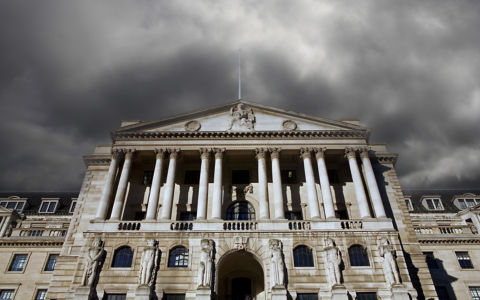
After the UK sell-off: what’s next for global markets and investors?
Co-Head of Investment Strategy Natasha Brook-Walters and Head of Macro Strategy John Butler discuss the implications of the recent sell-off in UK markets for global markets and investors.
Article
2022-12-30
Quick Take
The latest Wellington investor survey shows that our investment teams are increasingly concerned about the economic cycle, with 45% seeing a global recession over the next 12 months as the most likely outcome.
Continue reading

Quick Take
2022-11-30
Quick Take
Global Investment Strategist Nanette Abuhoff Jacobson believes higher-quality, longer-duration bonds may prove resilient even if the Fed keeps raising short-term rates into 2023.
Continue reading
Quick Take
2022-10-31

Article
We believe heightened geopolitical uncertainty, and the new macro environment of deglobalization, higher inflation, greater global cyclicality and volatility will disrupt and drive markets.
Continue reading


Article
2023-07-31

Article
We offer perspectives on growth and value equities and explore ideas for shoring up your fixed income flank amid the evolving economic and market environment.
Continue reading

Article
2023-07-31
Quick Take
With rising inflation and interest rates dominating the financial headlines in recent weeks, I have been fielding a flurry of colleague and client questions about the likely future trajectory of US monetary policy. While I don’t claim to have all the answers, especially with so many “known unknowns” as of this writing, here are my latest thoughts.
Continue reading
Quick Take
2022-08-30
Quick Take
Fixed Income Portfolio Manager Michael Barry and Investment Specialist Raina Dunkelberger believe global convertible bonds are likely to outperform other fixed income sectors over an investment time horizon of approximately two to three years. Learn why.
Continue reading


Quick Take
2022-07-31

Article
In his latest Top of Mind session, Multi-Asset Strategist Adam Berger addressed a wide range of what-if scenarios on the minds of our clients. See what he has to say on Russia, China, cryptocurrencies, the IPO market, and many other topics in this brief article.
Continue reading
Article
2023-02-28

Article
How worried should investors be about the risk of stagflation? Portfolio Manager Nick Petrucelli offers his take, digging into previous occurrences for clues about the causes that may be most relevant today and outlining the potential outcomes and capital market implications.
Continue reading

Article
2022-12-31
Article
Our fixed income outlook for 2022, examines our views on inflation and interest rates and the role central banks will play in the coming year.
Continue reading
Article
2022-11-15
URL References
Related Insights