


- Macro Strategist
United States, Institutional
Change
The views expressed are those of the author at the time of writing. Other teams may hold different views and make different investment decisions. The value of your investment may become worth more or less than at the time of original investment. While any third-party data used is considered reliable, its accuracy is not guaranteed. For professional, institutional or accredited investors only.
The US payroll figures released on August 1 finally “caught down” with the survey evidence and alternative measures of the labor market that have been signaling growing weakness in the employment picture. With virtually no job growth in the last three months, we have confirmation that tariffs and a restrictive Federal Reserve (Fed) are slowing US economic growth meaningfully as companies react to elevated uncertainty by pausing hiring. Revisions in previous months’ payroll reports show that Trump-policy-driven government sector cutbacks are now joining the ongoing cyclical weakness.
It is also worth noting that while the unemployment rate has ticked higher, it is still in the range it has been in for the better part of a year — a reflection of the fact that labor supply is declining meaningfully as the immigration crackdown weighs on participation rates of foreign-born workers.In 2024, the labor force grew by 1% or about 175,000 workers, enough to support breakeven payrolls (keeping the unemployment rate steady). We could now be looking at growth of just 50,000 workers in 2025. In the absence of this decline (i.e., had Trump not instituted more stringent immigration policy), some estimates suggest the unemployment rate would now be at about 4.9%, given current stalling payrolls, which would have prompted a swifter and deeper response from the Fed.
Along with the health of the labor market, here are some of the other key factors that will determine whether the US economy continues to move toward a stagflationary outcome:
Tariffs — Recent trade announcements have reduced policy uncertainty somewhat and left the effective US tariff rate at 15% – 20%, below the April highs. Still, tariff rates for Mexico, Canada, and China, the three largest US trading partners, remain in flux and matter most to companies, consumers, and the Fed. It is also possible a US federal court could rule against the Trump administration’s use of the International Emergency Economic Powers Act (IEEPA) to impose sweeping tariffs (a ruling is expected in the case in about 4 – 6 weeks), which could force the government to refund tariff revenue. The administration might still find alternative avenues to impose tariffs, but it would likely be more challenging to cover as many countries as quickly as under the IEEPA.
As of this writing, there is talk of extending the deadline for a tariff decision on China (currently August 12), with indications that President Trump may push for a fall meeting with the Chinese president. Recent decisions by the US, including allowing exports of the Nvidia H20 chip to China and delaying a trade agreement with Taiwan, may signal that President Trump is opening the door to negotiate with China on technology, tariffs, and Taiwan in return for access to critical minerals and help on Russia. This type of transactional deal could remove an overhang for inflation and for risk assets.
Inflation — Overall, the impact of tariffs on inflation was muted in the first half of 2025 thanks to several factors, including company decisions to stock up on inventories ahead of tariffs and to take a staggered approach in pushing through price increases. Disinflation in energy, services, and shelter was also a key offset. More recently, core consumer prices have started to rise as some of these factors attenuate. In the first half of the year, the US economy absorbed an effective tariff rate of roughly 10%.Today, that rate is in the 15% – 20% range, as noted earlier. I expect consumer prices to rise further in the coming months, with the inflation rate likely peaking in 4Q25 or 1Q26, depending on what happens with tariff rates for Mexico, Canada, and China. Slower labor force growth also means that the Fed cannot assume that wage growth, a potential inflation driver, will continue to slow from here, further complicating its task of calibrating interest rates, a topic I discuss in more detail below.
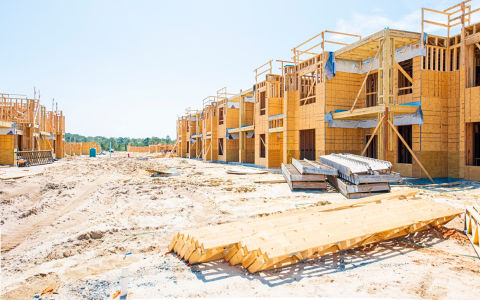
Housing — Weakness is starting to filter from the market for existing homes to the new home market as affordability hits a wall. The new home market, while relatively small, can have important spillovers effects on both the job market and inflation. Job growth in the critical residential construction sector (6% of US employment) seems to be flatlining and may dip into negative territory if builders delay land purchases and construction given policy and economic worries. On the inflation front, shelter is a key piece of the picture (35% of the Consumer Price Index and 42% of core inflation), and we are finally seeing signs of normalization in rent growth to pre-COVID levels, along with pockets of declining house prices around the country. This suggests potential for further downward pressure on inflation in this key category.
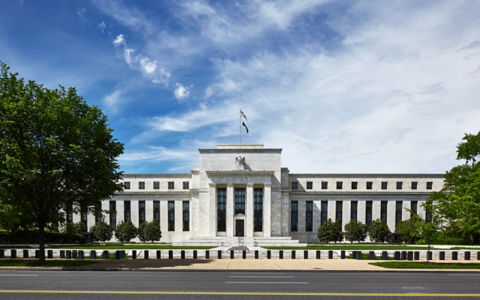
Fed policy — With weak payrolls and rising inflation, the Fed faces a potential stagflation dilemma and some difficult choices as it gets pulled in opposite directions in pursuit of its dual mandate (a challenge underscored by the recent dissent on interest rate decisions by some members of the FOMC). The central bank has many questions to wrestle with: How long before no hiring turns into firing? Will trade deals and the One Big Beautiful Bill Act shift hiring intentions positively? How high will tariffs go on Mexico, Canada, and China, given the direct impact that will have on inflation? Who will President Trump appoint to the FOMC now that a seat has opened up and how willing will that individual (potentially the next Fed chair) be to cut rates quickly? How will the bond market react if the Fed cuts interest rates even as inflation is moving higher? These questions are now more pressing, and the Fed’s annual Jackson Hole symposium (August 21 – 23) may provide an opportunity for the central bank to refresh or pivot on its policy strategy, as it often has in the past.
Labor market indicators, including the unemployment rate and wage growth, will be important signals for the Fed on where demand-driven inflation is headed, given the backdrop of higher tariffs and a continued immigration crackdown. That said, while the pickup in inflation will not be overlooked, I expect the Fed to increasingly focus on the weakening economy. Prior to the recent labor market news, I had assumed 50 bps of Fed rate cuts, and depending on the administration’s willingness to cut trade deals, I now think we could see as much as 100 bps of rate cuts.



















Monthly Market Review — August 2026
Continue readingBy