-
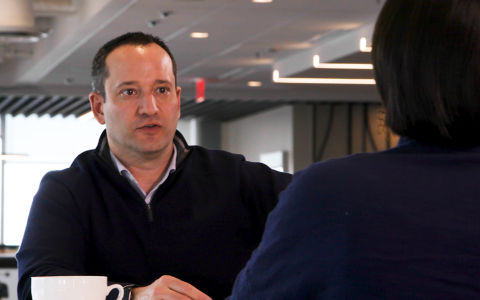
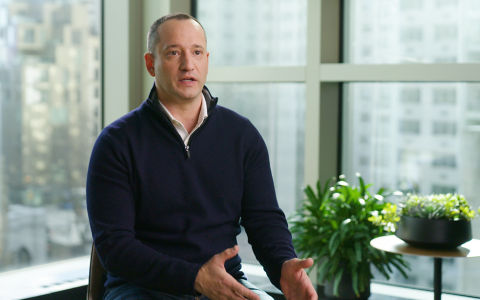
Christopher Goolgasian
, CFA, CPA, CAIA
- Director of Climate Research
Skip to main content
- Funds
- Insights
- Capabilities
- About Us
- My Account
Our Climate Research Team studies the investment risks and opportunities of climate change. They also engage with companies and issuers that they believe contribute to a lower-carbon future, can help the world adapt to changing climate, or are well positioned to manage climate-related risks.
Our approach: Research-based, science-supported
Biodiversity investment research
Given widespread economic dependence on ecosystem services, investors can benefit from a better understanding of the financial risks associated with biodiversity loss and the depletion of natural capital.

Supporting our clients’ net zero goals
Wellington is committed to working in partnership with clients who ask us to implement decarbonization objectives into new and existing mandates we manage on their behalf. Our core commitment is to aim to deliver superior investment results and exceptional service for our clients. Through our research partnership with Woodwell Climate Research Center, we have come to appreciate that the physical consequences of climate change will be felt sooner and be more disruptive than markets expect. As policymakers and markets increasingly recognize and respond to this, the transition to a low-carbon economy is likely to transform certain business models. As a result, we believe actively considering transition-risk management at the company and portfolio levels can help us deliver better financial outcomes for our clients.
Meet our climate investing experts
Christopher Goolgasian
, CFA, CPA, CAIA
Alan Hsu
Julie Delongchamp
, CFA
Insights
Sustainable commodities: Rethinking investment strategies for a changing climate
As climate change and the energy transition reshape global markets, commodities are gaining renewed attention as inflation hedges and portfolio diversifiers. This article introduces a climate integration framework for evaluating commodity investments through both sustainability and financial lenses.
Transition at risk: Checking in on corporate decarbonization progress
Corporate climate transitions face ambition-execution gaps. Success requires integrating decarbonization into business strategy, focusing on emissions, pragmatic Scope 3 approaches, transparency, and credible plans. See how our experts are thinking about this.
Investing in climate solutions across public and private markets
Collaboration between public and private market investors can be powerful. Opportunities where expertise and resources can be shared to accelerate innovation and deployment are optimal. Our experts explore how AI, geopolitics, and global policy are reshaping climate solutions across sectors.
2024 Climate Report
Aligned with TCFD recommendations, this report describes how we manage climate-related risks and opportunities, engage with companies on climate change, and reduce our own carbon footprint.
Finding climate investment opportunities amid shifting US policy
We delve into the evolving landscape for climate investments in the US and explain areas of overlap between government policy, corporate commercial interests, and climate focus.
Collaboration in practice: Climate venture capital
Greg Wasserman, Head of Private Climate Investing, highlights the importance of collaborating with Wellington’s later-stage private market investors and public market experts to better understand best practices, valuation, exit opportunities, and more.
Climate venture capital: Innovation versus hype
Greg Wasserman, Head of Private Climate Investing, discusses the balance between innovation and hype in climate venture capital. He explores automation in agriculture and manufacturing as well as the emerging commercial applications of generative AI.
2024 Sustainability Report
We appreciate the opportunity to share our approach to advancing sustainable practices across our investment, client, and infrastructure platforms.
Climate venture capital: Deployment, valuations, exits
Greg Wasserman, head of private climate investing, explores today’s normalizing valuations, encouraging IPO and M&A trends, and potentially actionable opportunities in climate venture capital.
Geopolitics in 2025: Risks, opportunities, and deepening uncertainties
Geopolitical Strategist Thomas Mucha outlines his structural, policy, and geopolitical outlook for the year.
Climate adaptation may cost trillions. Is your portfolio ready?
With climate adaptation and resilience spending projected to exceed mitigation spending sixfold by 2050, we believe investors should consider allocations to adaptation-aligned opportunities.
URL References
Related Insights
FAQS: Climate investing
In our view, climate change has the potential to significantly impact economic and financial-market outcomes, inclusive of asset prices and valuations. Companies and issuers that are unable to respond to shifting policy and regulation aimed at mitigating the effects of climate change, or that fail to adapt and build resilience to physical climate risks, may see their costs of capital rise and long-term value fall. Conversely, we believe companies and issuers that are helping the world mitigate and adapt to climate change may offer attractive investment opportunities.
Since September 2018, our Climate Research Team has been collaborating with Woodwell Climate Research Center, a leading independent climate-research institute. Working with the climate scientists, our Climate Research Team studies the physical effects of climate change on capital markets and asset prices, integrating those findings into our investment processes, where relevant to our clients’ objectives and the portfolio manager’s philosophy and process.
In January 2022, Wellington and the MIT Joint Program announced a new climate-change research collaboration. The alliance has not only bolstered the research we had been doing on the transition to a low-carbon economy, but also enhanced our understanding of the expected financial impacts of various transition pathways on industries and economies and deepened our decarbonization engagement practices.
We aim to study the investment risks and opportunities presented by climate change. With Woodwell Climate, we aim to bridge the gap between physical climate science and capital markets; understand which companies and regions face environmental and biodiversity risks; and improve our ability to quantify liabilities and appropriately price securities. With the MIT Joint Program, we seek to outline decarbonization pathways for corporate operations, supply chains, and products, while also assessing their potential economic impacts.
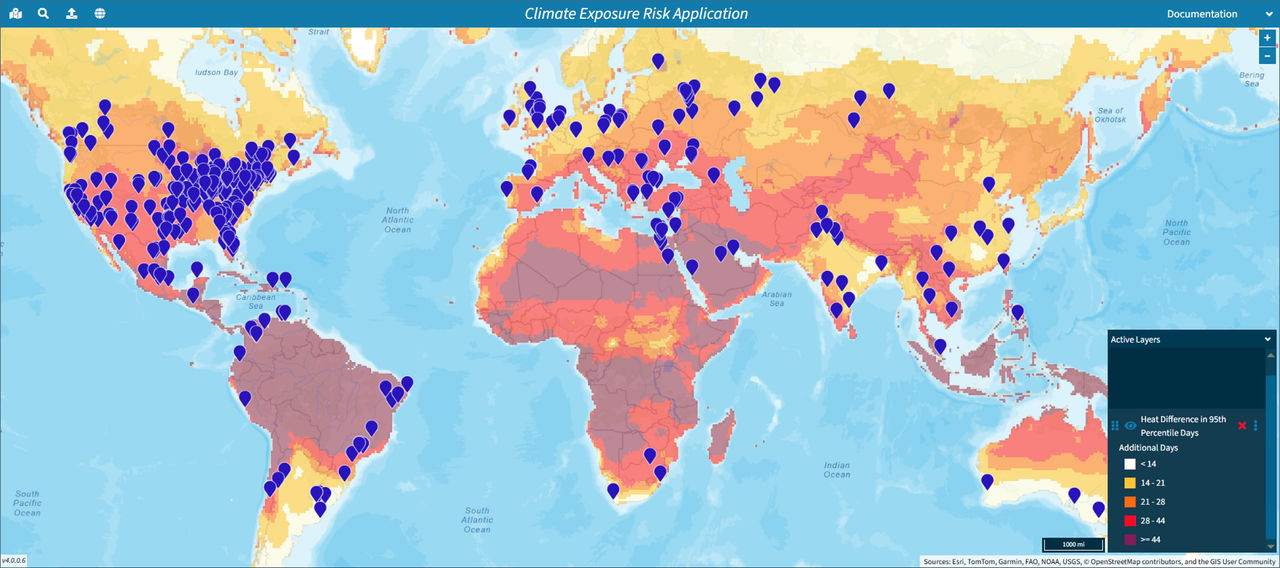
We leverage proprietary, data-driven tools and technology, including our Climate Exposure Risk Application tool (CERA), software that Wellington investors can use to view the geospatial relationships between physical climate-risk variables and the assets we consider investing in on behalf of clients. This work facilitates our ability to integrate climate science into fundamental investment insights; to better analyze and question those insights; and to draw practical, action-oriented conclusions. The Climate Research Team also conducts portfolio reviews and develops investor dashboards to facilitate company- and portfolio-level monitoring. The team also supports collaborative climate research at the firm.
Explore other sustainable and ESG investing opportunities
Socially and environmentally positive themes underpinned by structural economic drivers are central to the investment philosophy in pursuit of value creation and/or risk management.
Seeks to invest in issuers whose core products, services, or projects provide environmental and/or social solutions in a differentiated way, with the goal of driving measurable positive impact alongside financial returns
Contact the team
Please fill out the form with any questions for the team.
Your request has been submitted.