




- Macro Strategist
Explore our insights
Asset class
Formats
Education

Education
When it comes to China, most of the market’s attention has understandably been focused on the latest round of trade war, which, so far, Beijing has navigated more skillfully than the last. However, the China story that I believe to be of most significance now — for all investors — relates to fundamental structural shifts that too few investors are paying attention to.
Specifically, I see three key shifts in China that could have profound implications for investment both in and outside of the world’s second-largest economy.
These changes matter for all investors — not just those with exposure to Chinese assets.
The property sector has dominated conversations about investment in China since the global financial crisis (GFC). You might have noticed that this is no longer the case. Beijing has pulled off a pretty impressive juggling act over the past five years, aggressively shedding close to 20% of GDP worth of annual property sales and investments without driving the economy into a recessionary sinkhole.
While the harsh domestic policies behind this shift were hardly popular, mindsets in China have gradually come to agree both with the need for such measures and with the drawbacks that can arise from a big bazooka stimulus. This afforded China a timely opportunity to reorient its economic structure towards industrial development and technological innovation.
As the property sector ceases to exert an outsized influence on market performance, this shift is now redefining Chinese investment opportunities.
One popular narrative is that China is transitioning from an import-led to an export-led growth model. However, I believe it’s more precise to say it’s shifting to be a net-export-led model. As the government accelerated the push for supply chain localisation and greater self-sufficiency in the wake of geopolitical challenges, local companies were strongly incentivised to pursue greater import substitution and product innovation, resulting in dramatically reduced imports on the back of soaring exports.
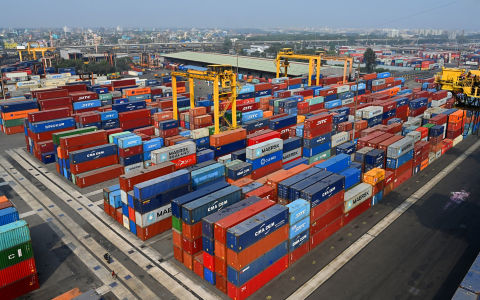
This is a far-reaching global regime shift because China had been the source of incremental world demand in the past two decades. This phenomenon has now gone into reverse. As China continues to cut back on what it buys from the rest of the world — its trade surplus has tripled since the US-China trade war 1.0 in 2019 — it is on course to disrupt and redefine global sector dynamics as we know them.
Investors are excited about China’s latest initiative to curb “involution,” or neijuan as it’s called in China. Involution is a state characterised by excessive competition and over-deployment of resources (investment, production or human labour). It is this race to the bottom that is often blamed for China’s overcapacity and deflation malaise.
Today, I believe deflation is only of secondary concern. The government is primarily focused on reining in extreme competitive behaviours (for example, price wars) that lead to market dysfunction and resource misallocation, which ultimately undermine China’s strategic roadmap.
Looking ahead, we can expect a prolonged period of low inflation, and if the government is successful, the potential emergence of a new generation of industry-leading Chinese companies.
Beijing’s handling of the trade war has resulted in better-than-expected growth for China in the first half of 2025. Yet investor sentiment hasn’t caught up. Why? Investors are still focused on the painful consequences of China’s ongoing deleveraging after years of stimulus and tend to ignore the emerging opportunities that structural change is generating in areas such as:
A key takeaway is that this bias of anchoring to the old model also means that investors may discount a still-positive growth story and stick to popular narratives regarding all things China — whether it be property cycles, trade surplus or supply-side reform — that may hamper their understanding of what may drive future asset prices.
For investors, China’s continued transformation presents both opportunities and risks. Its push towards self-sufficiency and an expansion in local consumption and services, along with growing dominance in advanced manufacturing and rapid progress in tech and other innovative spaces, bears close watching. Its growing market share in emerging economies is a bellwether. In my view, as China increasingly assumes a dominant position in these markets, it’s only a matter of time before this starts to affect business for incumbents in developed economies.
Global manufacturing is particularly vulnerable. China’s buildup of supply productivity has far outstripped demand growth, leaving much of global capacity obsolete. This isn’t likely to stop so long as the US-China competition continues. Now, with legacy capacity about to be cleared, the companies that are left standing could turn out to be formidable global competitors.
The views expressed are those of the author at the time of writing. Other teams may hold different views and make different investment decisions. The value of your investment may become worth more or less than at the time of original investment. While any third-party data used is considered reliable, its accuracy is not guaranteed. For professional, institutional or accredited investors only.














10 reasons why China could be the next rerating story
Portfolio Manager Bo Meunier, Investment Director Irmak Surenkok and Investment Specialist Gilbert Chen set out 10 reasons why China could be the next rerating story to watch.
By