




- Investment Director
Explore our insights
Asset class
Formats
Education

Education
The views expressed are those of the author at the time of writing. Other teams may hold different views and make different investment decisions. The value of your investment may become worth more or less than at the time of original investment. While any third-party data used is considered reliable, its accuracy is not guaranteed. For professional, institutional or accredited investors only. This material is provided for informational purposes only, should not be viewed as a current or past recommendation and is not intended to constitute investment advice or an offer to sell, or the solicitation of an offer to purchase shares or other securities. Past results are not a reliable indicator of future results. Forward-looking statements should not be considered as guarantees or predictions of future events.
Following the global financial crisis (GFC), bond yields declined for 15 years as central banks sought to avoid deflation taking hold. Markets may have come to accept low yields and limited market volatility as the norm, but I think this period of low inflation from 2008 to 2022 was an anomaly relative to history, as illustrated in Figure 1.
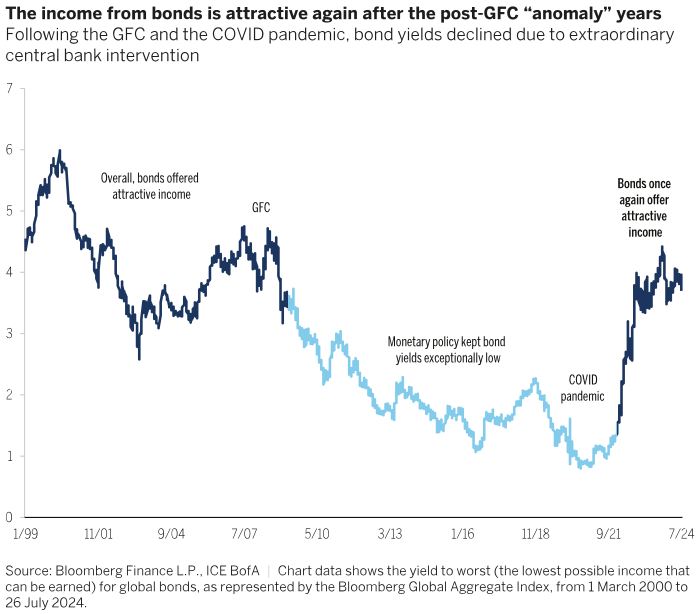
Research by our macro strategists suggests that inflation is likely to remain structurally higher and more volatile and economic cycles are likely to be shorter and more pronounced. The resulting investment backdrop may be more challenging, but it may also deliver new opportunities for active fixed income investors because, in my view, bonds have regained their historic role in portfolios — offering investors a stable source of income as well as the potential for downside protection and diversification:
In my view, today’s new economic era underlines the strategic case for fixed income and brings with it a wide range of investment opportunities for active, research-driven strategies.









Monthly Market Review — August 2026
Continue readingBy