United States, Institutional
Change



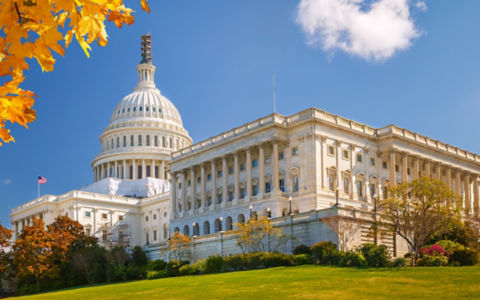
The Democrats have secured both the Senate and the House at the US midterm elections, giving them control of Congress. This decisive victory changes Washington. But I don't think it’s likely to fundamentally alter the direction of US foreign policy.
What does a Democrat win mean for the Trump administration?
Democratic control of Congress creates a meaningful new constraint on the Trump administration in 2027.
Congress will have greater authority to investigate, conduct oversight, scrutinize nominations, and, most importantly, shape spending.
Defense spending will become more contested. Expect harder questions on Capitol Hill about Iran, presidential war powers, Ukraine, and the use of executive authority overseas.
But constraint is not reversal.
Why Democratic control of Congress doesn’t put an end to geopolitical volatility
The White House still controls much of the machinery of US foreign policy, and President Trump’s core positions are unlikely to change because the Democrats won Congress.
The geopolitical challenges here are many: Iran remains an unresolved military, energy, and chokepoint problem. Ukraine remains a war without an obvious political settlement and amid ongoing escalation. Strategic competition with China will continue. Taiwan remains a test of deterrence, industrial capacity, and allied resolve. Venezuela and Cuba will remain part of a broader contest involving energy, migration, security, and great-power competition across the Western Hemisphere.
If anything, greater political constraint at home could create stronger incentives for presidential activism abroad. That's another reason I wouldn't interpret this election as a geopolitical de-risking event.
My base case is therefore straightforward: more political constraint in Washington but continued geopolitical volatility through the remainder of Trump’s term.
For investors, however, the more interesting question is what does not change.
What does the US midterm result mean for investors?
Beneath the partisan divide sits a striking degree of agreement about the direction of travel. Neither party is proposing a return to the efficiency-first globalization of the 1990s and 2000s. Yes, Republicans and Democrats will fight over how much to spend, where to spend it, and which policy tools government should use.
But the broader emphasis on economic security, defense capacity, critical minerals, semiconductors, AI infrastructure, energy security, cybersecurity, resilient supply chains, and domestic industrial capacity increasingly crosses party lines.
That's where I think the midterm result reinforces the Age of Resilience thesis.
Politics will remain volatile. Policy execution will likely become messier. Budgets could become harder to negotiate, and congressional oversight will intensify. Much of this will be noisy for markets.
But underneath that turbulence, both parties are responding to many of the same structural pressures: a more contested international order, intensifying technological competition, vulnerable supply chains, military capacity constraints, and a growing recognition that efficiency alone does not provide security.
For investors, that distinction matters.
Key takeaways for investors
Elections change who governs. They do not necessarily change what the system is being compelled to build.
The midterms may change the route, the speed, and, in some cases, the funding. But I don't think they change the destination. The bipartisan center of gravity continues to move toward resilience, security, and capacity.
That's why I would resist treating this election as a reversal of the current geopolitical regime. Markets have a habit of overpricing short-term political events and underpricing the structural systems beneath them.
The election matters. What survives the election may matter even more.
GO DEEPER
In this video podcast, recorded before the midterm elections, Geopolitical Strategist Thomas Mucha and Macro Strategist Juhi Dhawan discuss what the US midterm elections could mean for markets, including how a Democratic sweep could shift the policy focus toward priorities such as health care and affordability.
The views expressed are those of the author at the time of writing. Other teams may hold different views and make different investment decisions. The value of your investment may become worth more or less than at the time of original investment. While any third-party data used is considered reliable, its accuracy is not guaranteed. For professional, institutional or accredited investors only.