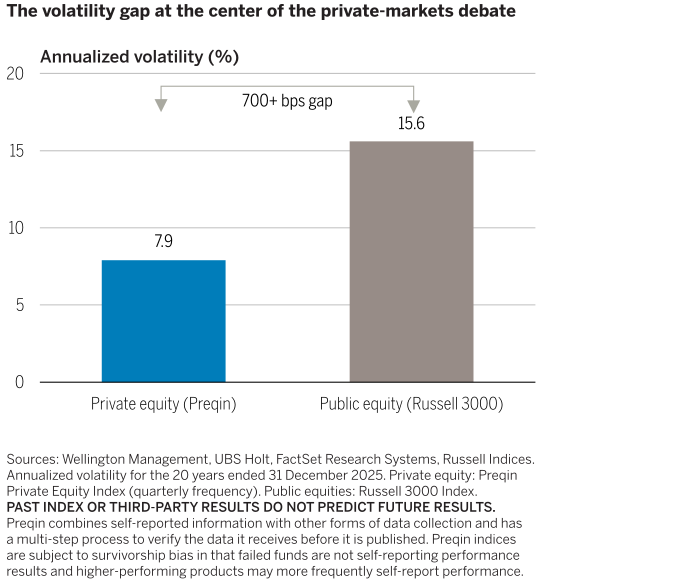
As we discuss in this paper, this debate needs to be reframed, distinguishing between underlying company fundamentals, public-market prices, and private appraisal-based marks. We agree with many in the industry that anchoring to reported private volatility alone risks understating company risk as well as liquidity and drawdown risk. On the other hand, anchoring mechanically to public-market volatility can result in overstating company risk by importing short-horizon repricing that may not track underlying business fundamentals (e.g., repricing driven by macro shocks). We believe that an SAA framework is meant to capture long-term risk and portfolio outcomes, and that fully unsmoothing private-equity performance violates this premise by artificially adding short-term public-market dynamics that, by definition, do not exist in private markets.
We think the solution is a third option: fundamental volatility, derived from a fundamentals-based estimate of public-company value (intrinsic value), which should be more representative of actual company performance and long-term value. In the following pages, we share the research behind this approach and discuss the portfolio implications. Importantly, we are not trying to produce a single “correct” private-market volatility metric or a new strategic asset allocation input for volatility-based optimizations. Our aim is narrower: to separate business-value volatility from market-price volatility so private-equity risk can be framed more coherently in a role-based, total portfolio approach to asset allocation and risk management.