- Director of Value Creation
United States, Institutional
Change
The views expressed are those of the authors at the time of writing. Other teams may hold different views and make different investment decisions. The value of your investment may become worth more or less than at the time of original investment. While any third-party data used is considered reliable, its accuracy is not guaranteed. For professional, institutional, or accredited investors only.
ESG may be a 4-letter word to some these days but, like any good 4-letter word, when used well it delivers. Beyond the noise, investors and company operators alike know that effectively integrating material sustainability factors is a value creation lever (not a political statement).
In this paper, we explore just how much these factors matter to the bottom line, identify additional nonfinancial benefits, and share best practices for assessing materiality. Our goal is to help founders and management teams navigate this fraught landscape and find the material topics that actually drive performance.
A recent survey covering 9,000+ private companies and nearly US$60 trillion in AUM found that general partners estimate sustainability initiatives contribute a 4% – 7% lift in EBITDA.1 In particular, initiatives focused on sustainability themes such as energy efficiency and employee well-being can drive cost reduction and revenue growth. This finding aligns with separate research showing sustainability efforts in private companies can increase exit multiples by up to 7%.2
Critically, reaping these benefits requires private companies to focus on the most influential, or “material,” sustainability initiatives and avoid “box-ticking” distractions. While governance topics such as board oversight and ethics apply universally, environmental and social priorities vary by industry. To quote a leading global audit firm, “as in financial reporting, you need to provide your stakeholders with information about the topics that matter and ensure less-relevant information doesn’t get in the way.”3 So, how can companies figure out what areas to focus on?
Enter the materiality assessment: a strategic tool to identify the specific sustainability value creation levers that most influence a company’s future growth. This is the crucial step that moves ESG initiatives from a mundane reporting exercise to “embedded sustainability”4 that can help drive long-term outperformance. A survey of 5,000 C-suite executives found that organizations with embedded sustainability initiatives had a 16% higher revenue growth rate and were 52% likelier to outperform on profitability.5
Ultimately, conducting a materiality assessment is about building a stronger, more future-ready business. In our view, private companies can benefit from this exercise as it helps management teams and boards focus their (often limited) time and resources where they can have the biggest long-term impact. Beyond the concrete financial benefits noted above, materiality assessments can help drive:
As our lead public side consumer ESG analyst, Sean Caplice, noted, "Large category leaders aren’t easing up on sustainability. They expect suppliers to help them cut emissions, ensure traceability goals, and prove it with transparency.”
Each stakeholder looks at ESG risks and opportunities through a different lens. In our view, understanding their distinct expectations is key to a holistic assessment of materiality.
A good materiality assessment maps these perspectives, identifies overlaps, and reveals where your company’s most meaningful opportunities and risks lie.
You don’t need to be a public company (or have a huge budget for ESG initiatives) to get started. In our view, even a focused assessment can deliver valuable insights. Below, we list five practical steps for private companies conducting a materiality assessment:
Step 1: Identify key stakeholders
Step 2: Brainstorm material issues
Step 3: Design and conduct a materiality survey
Step 4: Analyze insights
Step 5: Create and execute an action plan
ESG materiality assessments are a value creation exercise. We believe private companies that start this effort early can build competitive advantages through an improved ability to drive profitability, attract talent, and be a supplier of choice to sophisticated customers. They’ll also be ready for a potentially smoother transition if they choose to go public or seek institutional investment.
Done correctly, we believe sustainability isn’t a reporting exercise but is instead a strategy for building resilience, reducing risk, and enhancing long-term value.
How Wellington helps our portfolio companies
As part of our investment in a portfolio company, we offer support in this process including:
Figure 1
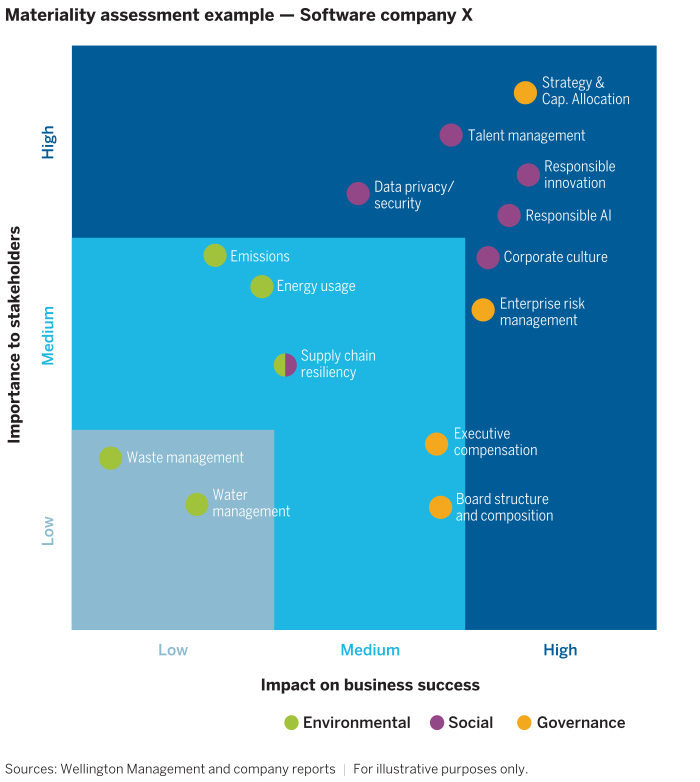
1Sources: “The business case for sustainability grows,” New Private Markets, 10 October 2025. “Sustainability in Private Markets: 2025 EDCI Benchmark Annual Report,” EDCI, 2025. | 2Sources: “The business case for sustainability grows,” New Private Markets, 10 October 2025. UN PRI, Sustainability Value Creation framework, July 2025. | 3Source: “Materiality for sustainability reporting,” KPMG, 31 July 2025. | 4Source: “Beyond checking the box,” IMB Institute for Business Value, February 2024. | 5Ibid. | 6Source: “ESG performance and stock idiosyncratic volatility,” ScienceDirect. Dayong Liu, Kaiyuan Gu, Wenhua Hu. December 2023. | 7Source: “New study reveals how ESG is a growing factor in global trade & supply chain resilience,” Thomson Reuters, 9 December 2024. | 8Source: “California climate disclosure laws – Countdown to disclosure: What companies need to know about reporting deadlines, CARB guidance and ongoing litigation,” Mayer Brown, 13 October 2025. | 9Source: “Beyond checking the box,” IMB Institute for Business Value, February 2024.