






























































































-
Nanette Abuhoff Jacobson
- Global Investment Strategist
- Boston
Explore our insights
Asset class
Formats
Education

Education
Latest insights

Weekly Market Update
What do you need to know about the markets this week? Tune in to Paul Skinner's weekly market update for the lowdown on where the markets are and what investors should keep their eye on this week.

US midterm elections: Why they matter for markets
Macro Strategist Juhi Dhawan and Geopolitical Strategist Thomas Mucha explore what's at stake in the US midterm elections what the outcome may mean for investors in the longer term.

The convergence of public and private markets — part 2
The convergence of public and private markets is opening new opportunities for wealth and institutional investors — but each will approach them differently. Part 2 of our series explores how evolving investor needs are shaping portfolio construction, product design, and implementation.

Why investors should pay attention to AI regulation
A trio of Wellington experts reviews the current state of AI regulation, looks at how the regulatory landscape may evolve, and offers insight into what the implications might be for investors.

Asset Allocation Outlook
How to evolve your portfolio for the latest market conditions? Explore the latest monthly snapshot of Wellington Solutions' asset class views.

When market cycles create opportunity: a value investor’s perspective
Equity Portfolio Manager Stefan Brugger, Equity Analyst Felix Schroeder and Investment Specialist Fred Owens-Powell discuss why the changing market regime may favour active value investors.

The rally: Refusing to yield?
Find out why we remain constructive but increasingly selective as AI investment supports equities, rising yields create opportunities in government bonds, and geopolitical risks complicate the outlook.

Can infrastructure investors pair growth and stability?
Global Industry Analyst Tom Levering and Investment Director Joy Perry discuss why investors in infrastructure do not need to choose between growth and stability and how to seek exposure to both.

Evergreen and drawdown funds: Structural considerations for private equity
We explore the key differences between evergreen and drawdown funds, including how each structure affects capital deployment, liquidity, compounding, portfolio flexibility, and diversification within venture and growth equity portfolios.

US utilities: What data center politics could mean for investors
Rising US data center electricity demand is fueling new opportunities for utilities as well as political pushback in this US midterm election season. Learn how regulation, affordability, and grid pressures could potentially affect investors.
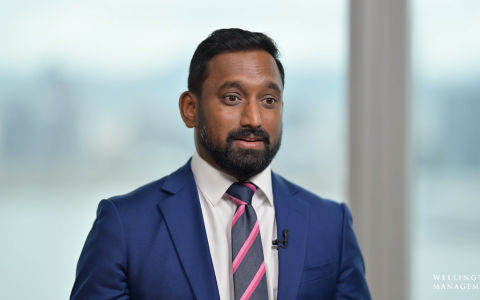
Rapid fire questions with Jeremy Butterworth on 2026 credit markets
Investment Strategist Jeremy Butterworth discusses why credit markets have remained resilient despite shifting rate expectations, where dispersion is creating opportunities for active investors, and why Asia continues to offer a compelling credit opportunity set.

Resilient growth, rising risks: Investing through the energy shock
Macro Strategist Eoin O’Callaghan explores the drivers of resilient growth amid the continued energy shock and discusses why investors need to keep a close eye on evolving macro conditions.

The Next Great AI Companies May Look Like Services Companies
The question is no longer simply whether AI can make an existing workflow faster, but whether an AI-native operator can deliver the service faster, cheaper, and more reliably than incumbents.

European high yield: time for selectivity
Portfolio Managers Konstantin Leidman and Thomas Kelly, and Investment Director Jennifer Martin discuss how European high-yield investors should rethink their approach in response to historically tight spreads.

September FOMC: Doves capitulate
For the first time in over three years, the Fed raised the target rate range to 3.75%-4.00% in September. Our team looks at what's driving the shift and what it means going forward.

Monthly Market Review — August 2026
A monthly update on equity, fixed income, currency, and commodity markets.

Oil is the spark — the cost of capital is the story
Higher oil prices are refocusing markets on inflation and the Fed, but the bigger investment story may be a broader shift toward a higher cost of capital and new diversification challenges.

Governance best practices in public markets
For private companies approaching the public markets, we highlight the corporate governance best practices that can help pave strong relationships with public market investors.

Asia's rising role in the global AI build-out
The narrative around artificial intelligence (AI) has, until now, been largely driven by a handful of US names that are now commonplace in most households — the hyperscalers and the model developers racing to the next breakthrough. But as Portfolio Manager Yash Patodia explains, for those investors willing to look further along the value chain, a quieter, arguably more durable story may be unfolding.
By

Climate investing in a constrained world
As systems across the physical economy hit capacity limits, technologies that unlock constrained capacity, improve reliability, and reduce risk are becoming increasingly important.

Top of Mind: Challenging false investment dichotomies
Multi-Asset Strategist Adam Berger takes on three familiar investment debates where rigid “either/or” thinking may not serve investors well: active vs passive, US vs non-US, and public vs private.

The most important midterm question?
As the mid-term elections approach, the things the election won't change may matter more than who wins and who loses.

AI capex and the new credit cycle
Fixed Income Portfolio Managers Alyssa Irving and Liz Kleinerman, and Head of Investment Grade Private Credit Emeka Onukwugha explore the emergence of an AI investment cycle in credit markets.

Follow the money: 3 ways wealth is reshaping economic and investment outcomes
We explore how macroeconomic, demographic, and sector-specific trends are reshaping commercial real estate, and why selectivity by sector, asset, quality, and capital structure may matter more than broad asset-class exposure.

Band-aids, bazookas, and boomerangs: Equity investing in a volatile US rate regime
With fiscal pressures and Treasury-market fragilities keeping bond yields volatile, Macro Strategist Juhi Dhawan outlines implications for equity investors.

High asset prices, not low interest rates, are driving inflation
Wealth distribution in the US has rendered the Federal Reserve’s usual tools less effective. The Fed will need to address asset prices head-on in creative ways if it is going to return inflation to target.
By

AI-driven market dispersion favors active selectivity
Headline market volatility may appear subdued, but dispersion across stocks and sectors is rising. Explore why AI-driven differentiation may favor active selectivity.

AI’s Magnificent 7: What to understand about the ecosystem of artificial intelligence
Investing in AI is not as simple as picking winners and avoiding losers. Here's a better way to think about this fast-changing landscape.

How AI is impacting the high yield market
Fixed Income Portfolio Manager Blake Huynh examines how AI is reshaping the high-yield market using the latest issuance data. He explores what this transformation may mean for investors.
By

Tech Stocks as an Inflation Hedge: Is the Case Weakening?
Fixed Income Portfolio Manager Brij Khurana explores why US tech stocks may be a less attractive hedge against US inflation and currency debasement and how this could favor bonds.
By

Deep dive on CLO equity investing
Alyssa Irving, Fixed Income Portfolio Manager, discusses the CLO equity asset class, highlighting its diversification potential, risk-return dynamics, and the crucial role of managers.

AI stocks after the sell-off: why the long-term investment case may remain intact
Portfolio Manager Yash Patodia shares his perspectives on why recent volatility may be a positioning-driven unwind — not a broken thesis — and where selective, long-term opportunities are emerging across semiconductors and the wider AI value chain.
By

Corporate governance: still a key driver for Japanese equities
Macro Strategist Nicolas Wylenzek and ESG Analyst Calista Lee explore how ongoing corporate governance remains a key driver of Japanese equities and set out key implications for investors.

Oil market update: The long road to normalization
As geopolitical tensions in the Gulf region resume, our expert discusses recent oil market dynamics and their potential impact on inflation and the global growth outlook.

Disrupting the disruptors: China’s challenge to US AI
Macro Strategist Johnny Yu explores whether China’s rapid advances in AI could pose a challenge to current market consensus and what it may mean for investors longer term.

2026 Hedge Fund Roundtable | The AI opportunity through a hedge fund lens
In this six-part video series, members of our hedge fund team examine how AI has evolved from a focused technology theme into a broad, cross-industry investment opportunity.

Rapid fire questions with Naveen Venkataramani on Asian quality dividends (Part 2)
Not all dividend stocks are created equal. Equity Portfolio Manager Naveen Venkataramani explains how the team identifies quality dividend companies across Asia, the high-conviction opportunities that stand out today, and the key risks on the horizon.

Pricing power: a growing differentiator among European equities
Equity Portfolio Manager Thomas Horsey, Investment Director Alex Davis and Investment Specialist Arthur Lui examine why pricing power is becoming a growing differentiator among European equities.

Rapid fire questions with Naveen Venkataramani on Asian quality dividends (Part 1)
Equity Portfolio Manager Naveen Venkataramani shares why recent market movements may not tell the full story of Asia's investment opportunity set, and why quality dividend investing can be a compelling way to navigate the region.

What investors should watch as private credit market matures
Private credit is entering a more mature phase, marked by greater selectivity, broader opportunities, deeper market infrastructure, and growing emphasis on manager selection.

2026 midyear outlook: Time to rethink EM debt
Our expert argues that emerging market debt may merit a fresh look as stronger fundamentals, credible policymaking, and attractive yields challenge outdated assumptions about the asset class.

AI governance for private companies
Explore the critical need for AI governance for private companies, addressing evolving risks, regulations, and best practices for responsible gen AI usage.

The role of commercial real estate debt in an insurance portfolio
We examine how commercial real estate debt fits within an insurance portfolio, from its diversification and income characteristics to key considerations around regulatory classification, capital treatment, and portfolio construction.

2026 midyear geopolitical update: What “structural competition” means for investors
Our expert explores how structural geopolitical competition is reshaping markets, raising risk premiums, and creating long-term investment implications across defense, energy, technology, supply chains, sovereign credibility, and portfolio resilience.

The rally and the reality
Can the markets remain resilient in the face of geopolitical disruption and inflation worries? We offer our views on the macro environment, AI-driven earnings, and the implications for equities, bonds, and commodities.

Looking beyond mega-caps
We explore how the growing concentration of capital in mega-cap private companies is reshaping the venture and growth opportunity set, and the implications for portfolio construction, manager selection, diversification, and potential return opportunities across private markets.

Productivity, prices, and profits: Mapping AI’s US trajectory
Macro Strategist Juhi Dhawan shares her latest research on AI's potential to lift US productivity and what that could mean for different industries, the broad labor force, and financial markets.

Growth outlook faces a new test: Inflation
Explore our latest views on risks and opportunities across global capital markets.

IPO readiness through a public and private market lens
Our Value Creation Team brings together portfolio company leaders and Wellington investors to explore key issues shaping private markets, with takeaways from a recent IPO market discussion.

Asia Technology WellCovered: Fundamentals
From semiconductors to robotics and gaming, Asia is central to tomorrow's tech, yet it continues to trade at a discount versus global peers. Learn how Asia now offers a rare opportunity to access AI-driven growth and diversification at compelling valuations.

Preparing for a shift in US exceptionalism
Equity Strategist Andrew Heiskell and Macro Strategist Nicolas Wylenzek explore the evolving nature of US exceptionalism in their 2026 midyear equity outlook.

Rapid fire questions with Steven Angeli on quality growth equities
Equity Portfolio Manager Steven Angeli shares his views on market concentration, the opportunities in quality growth equities, and the most attractive opportunities both within and beyond AI.

Three pressing portfolio questions for the second half of 2026
How can investors navigate current volatility and inflation pressures? Multi-Asset Strategist Adam Berger offers ideas on diversification, alternative investments, and global opportunities.

Asia Tech WellCovered: Gaming
Asia’s gaming industry is entering a new phase of durable growth. Explore how Asia's gaming dominance is powered by IP ecosystems, recurring monetization, and AI-driven efficiencies.

Warsh’s first FOMC: We have a task force for that
Our experts highlight new task forces, examine evolving inflation and labor dynamics, and contend that the Fed soon may need to choose between growth support and price stability.

Asia Tech WellCovered: Robotics
Robotics is moving from concept to necessity. Explore how structural demand for factory automation, the rise of physical AI, and Asia's — particularly Japan's — leadership in the space are reshaping the global automation industry.

Asia Tech WellCovered: Semiconductors
Asia sits at the center of the AI supply chain. Explore why structural tightness across the semiconductor ecosystem is creating compelling Asia tech opportunities across the market-cap spectrum.

Private biotech investing deep dive
We explore the distinct characteristics of private biotech investing, including how the asset class differs from traditional venture capital and how clinical milestones, specialized underwriting, and portfolio construction shape its risk, return, and diversification potential.

Tighter spreads, wider dispersion
Fixed Income Portfolio Managers Campe Goodman and Rob Burn share their midyear outlook for credit markets. They find that tight index spreads do not mean a lack of opportunity.
No rerun of the 2022 rates scenario but flexibility is key
Fixed Income Portfolio Manager Martin Harvey and Investment Director Marco Giordano share their outlook for rates (government bonds) for the second half of the year.

SpaceX IPO: 3 questions on what the next mega listing could mean for investors
SpaceX's IPO is set to be the largest in history. What does this mean for markets, investors – and subsequent IPOs?
The questions incoming Fed Chair Warsh will need to answer
We examine the key questions that incoming Fed chairman Kevin Warsh may need to confront as monetary policy faces new limits and new risks.
By

Markets are underestimating the persistence of inflation
Macro Strategists Eoin O'Callaghan, Michael Medeiros and John Butler share their macro outlook for the remainder of 2026 and discuss the implications of the ongoing energy shock for markets and investors.

How is AI transforming the macro outlook? Three potential scenarios
Macro Strategists John Butler and Eoin O’Callaghan explore how AI is transforming the macro outlook and outline three potential scenarios with very different investment implications.

A credit investor’s perspective on inflation, fiscal policy, and AI
Paul Skinner, Investment Director, and Connor Fitzgerald, Fixed Income Portfolio Manager. explore the forces shaping the economic landscape today, from the inflation outlook and the evolving role of fiscal policy, to the transformative impact of artificial intelligence on markets and corporate behaviour. Connor shares his perspective on where opportunities and risks are emerging across fixed income and what it all means for investors positioning their portfolios in an uncertain environment.

The Iran war is changing the bond playbook
Regional wars, inflation, and shifting fiscal priorities are creating new challenges for the bond market. Fixed income portfolio manager Brij Khurana explains why investors may need to look beyond traditional core bond markets for opportunities.
By

Optimizing a small-cap allocation: Why the building blocks matter
Small-cap implementation matters. Explore how blending quant breadth with disciplined fundamental research can improve resilience.

Chart in Focus: Inflation upends typical correlations
Fixed income expert Noah Atlas highlights how higher inflation expectations are disrupting stock-bond diversification and influencing portfolio construction.

Chart in Focus: Gold and oil, beyond the basket
Our experts explore how investors can rethink diversification, inflation hedging, and portfolio roles beyond a single commodities trade.

The IPO market inflection
Our late-stage private market experts explore how a small cohort of scaled, AI-driven IPOs could reshape distributions, public-market structure, and exit decisions across the venture ecosystem.

Rapid fire questions with Schuyler Reece on EM debt
In this edition of “Rapid fire questions,” fixed income portfolio manager Schuyler Reece shares his read on the evolving macro backdrop amid the Middle East conflict, why he remains constructive on emerging markets debt, and where he sees the most compelling opportunities and risks across hard currency, local debt and EM currencies.

The convergence of public and private markets – a three-part full-picture perspective
In part one of our new series on public and private market convergence, we explore how companies and issuers are navigating a broader set of capital tools across equity and debt, reshaping funding, liquidity, and financing strategy.

How AI, stagflation risks and private credit are reshaping credit opportunities
Fixed Income Portfolio Manager Mahmoud El-Shaer sees three key forces shaping credit markets: stagflation risks, AI and increased scrutiny of private credit. While these developments are tightening financial conditions and increasing uncertainty, they may also be starting to reopen a more attractive opportunity set after a period of historically tight valuations.

Top of Mind: Next-generation diversifiers for a changing market landscape
Multi-Asset Strategist Adam makes a case for a set of “next-generation diversifiers” — asset classes that may help protect portfolios against equity downside and other risks in the market environment investors are likely to face in coming years.

Mythos, power, and the state of artificial intelligence
Geopolitical Strategist Thomas Mucha analyzes Anthropic’s Mythos as a national-security inflection point, shifting AI from economic tool to strategic infrastructure and state power.

The case for securitized credit in a multi-asset credit strategy
Portfolio Manager Kyra Fecteau explores why securitized credit may offer diversification, alpha potential, and attractive valuations within a multi-asset credit strategy.

Reframing private-equity risk: a fundamentals-based perspective
When it comes to sizing private-equity allocations, a debate has emerged about the best "yardstick" for volatility. Our experts propose an approach that grounds risk assessments in fundamentals and supports a role-based allocation framework.

CLO equity’s role in asset allocation
We discuss CLO equity's role in asset allocation, highlighting its potential income and diversification benefits. In addition, we explore its potential fit alongside private equity, private credit, and public equity allocations.

Putting long-term investing into context
Equity Portfolio Managers Yolanda Courtines and Sam Cox and Investment Specialist Fred Owens-Powell revisit the concept of long-term investing in an increasingly sentiment-driven market through two case studies.

Approach AI with an open mind
Our experts profile how accelerating AI, infrastructure demand, software disruption, and labor impacts may reshape risks and opportunities across global markets.

Chart in Focus: how is equity market leadership changing?
Equity market leadership is changing in 2026 as sector rotation broadens beyond technology and communication services. This insights piece looks at how the Iran conflict, energy prices, market breadth and earnings resilience are shaping the global equity outlook. It also covers which sectors are leading, where risks are building and what to watch next in global stock markets.

Physical AI, robotics, and Encord
Greg Wasserman, Head of Private Climate Investing, explores the rise of physical AI across robotics, drones, and autonomous systems, and the growing role of machine vision and data infrastructure in enabling real-world deployment.

Asian credit: A market you don’t want to miss?
Discover the untapped potential of Asian credit markets. With growing economic independence and robust financial systems, Asia offers compelling opportunities for fixed income investors seeking stability and growth.
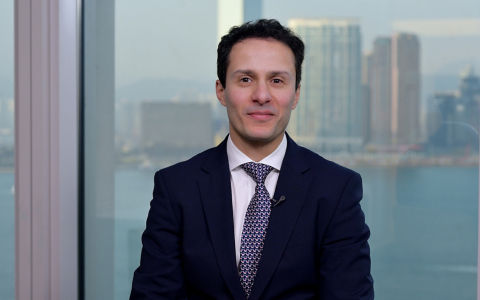
Rapid fire questions with Ehab Hosny
In this edition of “Rapid fire questions,” Ehab Hosny, portfolio manager on the hedge fund multi-manager team, provides an inside perspective at Wellington’s hedge fund operations. He discusses the firm’s competitive advantages, its approach to risk management and talent, and where he sees the most compelling opportunities in equity long/short today.
One battle after another: Time to reset expectations?
How might the historic energy shock impact portfolio decisions in the coming months? We offer our take on the implications for equities, bonds, and commodities.

Iran ceasefire – risk deferred, not removed
The US and Iran have announced a two-week ceasefire. While this reduces immediate tail risk, Geopolitical Strategist Thomas Mucha cautions against mistaking it for a resolution. What should investors be watching now?

Europe and the Iran conflict: 4 critical considerations for investors
Macro Strategists Eoin O’Callaghan and Nicolas Wylenzek explore how the conflict in the Middle East may alter the outlook for Europe and outline potential implications for European fixed income and equities.

The role of secondaries in venture and growth private equity
Our experts discuss how secondaries are reshaping venture capital and growth markets, offering liquidity and strategic portfolio diversification opportunities.

Private credit is not a monolith
In the wake of today’s private credit headlines, we examine why the asset class is more complex than it appears. We outline a three-dimensional framework, spanning assets, vehicles, and leverage, to help identify where risks are building and where they may be overstated.

Taking stock of the energy shock: 9 macro and market insights
Macro Strategist Juhi Dhawan looks at the potential effects of the war in the Middle East on economic growth, inflation, policy, and corporate profits.

The economy needs more competition. AI can make that happen.
Brij Khurana believes that as AI evolves, it will challenge traditional business moats and revitalize competition across industries. This transformation could lead to increased productivity, higher real wages, and stronger economic growth.
By

Investment implications of the conflict in the Middle East
Geopolitical Strategist Thomas Mucha discusses the strategic complexities of the Middle East conflict, underscoring the importance of active management and diversification in investment portfolios.

Yes, climate change (still) matters in private markets
We explore why climate change matters in private markets, highlight the current regulatory landscape, and profile key questions to expect from public market investors.

Three ways to reset credit portfolios for a more volatile world
Our experts, Fixed Income Portfolio Managers Campe Goodman and Rob Burn, and Investment Director Raina Dunkelberger, explore how to reset credit portfolios for a more volatile world.

Rapid Fire Questions with Campe Goodman - 1st Year of Trump 2.0
In this edition of “Rapid Fire Questions,” fixed income portfolio manager Campe Goodman shares his assessment on the first year of Trump 2.0, and perspectives on why he remains constructive on fixed income, and where he is finding attractive opportunities.

Chart in Focus: Diversifying for different macro regimes
Against the backdrop of heightened geopolitical uncertainty, our experts Alex King and Joshua Riefler explore how to optimise diversification across different macro regimes.
FOMC: Holding the line amid geopolitical crosscurrents
Fixed Income Portfolio Manager Jeremy Forster discusses the Fed's cautious stance amid geopolitical tensions, inflation risks, and labor market dynamics.

A generational opportunity in publicly listed infrastructure?
What makes the current outlook for publicly listed infrastructure so compelling? For Portfolio Manager Tom Levering and Investment Director Joy Perry, the answer lies in strong demand dynamics, healthy return potential, attractive valuations — and burgeoning support from private capital.

Reinforcing core equity: The fundamental third pillar
Allocators are rethinking their core equity exposure. A more deliberate, three-pillar approach, blending quant and fundamental, can help improve outcomes.

US exceptionalism: 5 perspectives on 2 truths
Our experts discuss the paradox of US exceptionalism today, emphasizing diversification and active management in response to evolving global economic trends.
Investment insights on the Middle East: A roundtable discussion
In a special roundtable discussion, our investment experts discuss the Middle East crisis, including geopolitical developments, energy prices, emerging markets, and multi-asset implications.

Perspectives on the Middle East conflict
As the situation in the Middle East continues to unfold, you can find the latest insights from our investment experts here.

New directions in diversification: Four ideas for a shifting economy
Multi-Asset Strategist Adam Berger explains the growing need for a broader view of diversification and how hedge funds, defensive equities, and other assets could help.

2026 Private Credit Roundtable
In this three-part video series, our private credit experts explore the evolving role of banks, where we are in the credit cycle, and potential AI/data center opportunities in private credit.

2026 Venture Capital Roundtable
Our three-part video series brings together experts from across our venture capital platform to explore opportunities outside of AI, how to identify quality among today’s noise, and what investors may be underestimating for the year ahead.

The Fed’s growing footprint on the market has a cost
Brij Khurana explains what the Federal Reserve's balance sheet expansion may mean for inflation and asset prices.
By
Private equity deep dive
We explore four key private equity questions to help investors better understand how these strategies compare and complement each other in a portfolio. In particular, we highlight the distinct opportunity sets, risk-return characteristics, and portfolio roles of venture capital and buyout strategies.

How to reposition equity portfolios for recurring AI disruption
With a growing range of industries hit by sell-offs, Multi-Asset Strategist Nanette Abuhoff Jacobson explores how to reposition equity portfolios for recurring AI disruption.
Chart in focus: Rethinking the bond mix
Alex King and Josh Riefler explore the evolving role of global government bonds in portfolios against a backdrop of tight spreads.

Private Market Perspectives 2025: Full Picture
At our Annual Meeting, we explored private markets trends, from private credit growth to opportunities across the credit continuum, powered by our integrated public and private insight.

The three drivers of resilient portfolios in 2026
Natasha Brook-Walters sees three key areas for investors to focus on in 2026: the role of alpha, the role of income and the role of uncorrelated returns.

Public REITs at a turning point: Value, growth, and diversification potential
After several years of rate‑driven headwinds and post‑COVID earnings pressure, fundamentals are turning—and we believe the setup for public real estate today is one of the strongest in years.

Secondary investment: Flexibility in private equity
Our private equity experts highlight how secondary transactions offer liquidity solutions for LPs, capital support for GPs, and a growing opportunity set.

Japan biopharma: A global sector priced as domestic
Our biopharma experts discuss the global earnings potential of Japanese companies and highlight the need for a global investment lens.

Duration: A dynamic lever in fixed income investing
Amar Reganti and Adam Norman profile duration's versatility in fixed income, focusing on its role in managing volatility and pursuing attractive risk-adjusted outcomes.
By

Housing affordability directives not a silver bullet
Our Fixed Income Portfolio Managers profile housing affordability directives, examining their modest effects on mortgage rates and institutional buying restrictions.

Chart in focus: The long-term case for quality equity
Our equity experts highlight the resilience of quality equities despite recent setbacks, emphasizing their historical outperformance.

European equities: time to reassess?
Many investors remain cautious on European equities, but Multi-Asset Portfolio Manager Supriya Menon and Lead Researcher Patrick Wattiau argue it is time to consider what could go right for European equities.

3 reasons to believe in Chinese equities
Macro Strategist Johnny Yu explores China's equity market resurgence, highlighting innovation, US-China relations, and policy shifts towards quality growth.

Don’t stop believin’ in emerging market equities
Multi-Asset Strategist Nanette Abuhoff Jacobson explains why emerging market equities have become her highest-conviction view across asset classes.

Warsh as Fed chair: Something for everyone
Macro Strategist Juhi Dhawan shares five key takeaways on Kevin Warsh, President Trump’s nominee to be the next Fed chair, including thoughts on interest rates, deregulation, and the market impact.

JPY intervention: what makes it so important this time?
Fixed Income Portfolio Managers Sam Hogg and Ed Meyi and Investment Director Takashi Nakao explore what’s different about the unconfirmed but likely JPY intervention and why it matters for global investors.

What are interval funds? Structure and potential benefits, explained
Public pension experts Adam Berger and Amy Morse share their latest research on asset allocation trends and what they could mean for plans’ ability to hit their return targets. They also offer their top investment ideas for putting plans on a better path forward.

Portfolio construction and volatility management in 2026
Multi-Asset Strategist Nanette Abuhoff Jacobson discusses adapting portfolios for 2026, focusing on diversification, hedge funds, and private markets.

Disquiet in quality: What happened and what now?
Quality has been lagging since 2021, with underperformance accelerating sharply in 2025. Where does this leave investors now?

Another banner year for emerging markets local debt in 2026?
Our experts highlight EM local debt's strong 2025 performance and explain their bullish outlook for 2026.

Top 5 fixed income ideas for 2026
Which areas in fixed income offer the most promising potential in 2026? Fixed Income Strategist Amar Reganti and Investment Communications Manager Adam Norman share their annual top five ideas.
By
The soft underbelly of US foreign policy
Our experts discuss the US-EU financial dynamics amid Greenland tensions and analyze US foreign policy's vulnerabilities.

More from the core: How fundamental extension (140/40) strategies could help
Extension strategies may offer investors more flexibility in portfolio construction, along with potential to achieve greater risk-adjusted returns, thus delivering “more from core” in equity allocations without taking on significantly more tracking risk.

China’s biotech surge (and its impact on biotech venture capital)
China’s biotech sector’s long-term potential is underpinned by lower costs, faster development timelines, and increasingly translatable clinical data. In our new paper, we explore the implications for US and European biotechs.

CLO equity insights: Thinking fast and CLO
We explore how short-term arbitrage and long-term structural optionality interact in CLO equity investing, and why reinvestment, convexity, and refinancing options have historically played central roles in driving returns.

An active management partner for the near and long term
CEO Jean Hynes focuses on key themes driving our evolving capabilities and client collaboration, including AI's transformative potential and new thinking about equity, fixed income, and alternative allocations.

Succession planning: lessons for investors from three sectors
Equity Portfolio Manager Yolanda Courtines and Investment Director Alex Davis explore the importance of CEO succession planning for investors through three sector case studies.

Growth lending deep dive
Growth lending has become a key channel in today’s venture financing landscape. Our new piece examines the market forces behind its rise, the structural features that define the asset class, the risks to assess, and more.
The spending bubble driving corporate profits looks set to burst
US corporate profits have been fueled by government deficits, low rates, and consumption — drivers now at risk, raising questions about the sustainability of market valuations.
By
Oil: The real influencer in the Venezuela intervention
Multi-asset Strategist Nanette Abuhoff Jacobson details the role of oil in the recent events in Venezuela and shares the investment implications.

Geopolitics in 2026: Risks and opportunities we’re watching
Geopolitical Strategist Thomas Mucha shares his outlook, highlighting conflicts to watch, the importance of national security, and investment opportunities.

Why materiality assessments (still) matter
Our Value Creation Team explores why materiality assessments matter for private companies and outlines a practical five-step approach to identifying the issues that most influence financial performance, resilience, and long-term value.
Top of Mind: The allocator’s checklist for 2026 and beyond
Multi-Asset Strategist Adam Berger offers near- and longer-term ideas for allocators, including thoughts on alternatives, potential market surprises, and risk management.

The three drivers of resilient portfolios in 2026
What does a world of lower forward-looking return expectations mean for portfolios in 2026? For Head of Solutions Natasha Brook-Walters, it suggests a deliberate, targeted approach to portfolio construction and a focus on three key areas: the role of alpha, the role of income and the role of uncorrelated return streams.
FOMC: Easing into uncertainty
Fixed Income Portfolio Manager Jeremy Forster profiles the Fed's December rate cut, labor market trends, inflation pressures, and the role of anticipated changes to FOMC leaders in 2026.

Financing the AI boom: credit markets at a crossroads
Fixed Income Portfolio Manager Derek Hynes and Fixed Income Investment Specialist Will Prentis examine how the AI financing boom is transforming credit markets and discuss the opportunities and risks it creates for investors.

Inflation, volatility, and valuations: 3 reasons hedge funds fit today’s market
Our multi-asset strategists explain why economic and market conditions in the year ahead could make a compelling case for adding hedge funds to the asset allocation mix, including multi-strategy and equity long/short hedge funds.

The power of Asia’s dividends
Discover Asia’s quality dividend potential. With diverse income sources, structural tailwinds, and governance reforms at play, Asia offers a compelling mix of income, resilience, and long-term growth potential.
Venture capital outlook for 2026: 5 key trends
We explore 2026's venture capital trends, highlighting IPO momentum, M&A acceleration, secondary market growth, public-private convergence, and the focus on quality investments.
Private credit outlook for 2026: 5 key trends
Our private credit experts discuss five themes driving the asset class’s 2026 outlook, including public/private convergence, changing credit profiles, the growth of retail, and much more.

Are hedge funds the missing ingredient?
Inflation, volatility, and valuations — they all raise questions about portfolio diversification and resilience. Multi-Asset Strategists Nanette Abuhoff Jacobson and Adam Berger explain why multi-strategy and equity long/short hedge funds could provide the answers. They offer insights on adding allocations to a traditional portfolio mix and a recipe for manager selection.

The rising tide of AI: How it could lift US productivity, growth, and profits
From an economic and market standpoint, a lot is riding on the future of artificial intelligence. Macro Strategist Juhi Dhawan sees plenty of reasons for excitement but also a need for patience along the way.
Broadening underway? 6 equity ideas for 2026
Andrew Heiskell and Nicolas Wylenzek see 6 key themes ahead for equity investors in 2026, including the durability of the AI investment cycle, the broadening of earnings growth beyond mega-caps, the potential for renewed value in international diversification and the growing need for equity investors to rethink risk hedging beyond bonds.

Private real estate debt: An evolving opportunity set
In our latest Insurance Quick Takes video, Fixed Income and Global Insurance Strategist Amar Reganti talks to Ravi Anand, Portfolio Manager and Head of Private Real Estate Credit. They discuss trends driving interest in private real estate and the diversification opportunity the asset class may offer insurers.
By

Sustainable commodities: Rethinking investment strategies for a changing climate
As climate change and the energy transition reshape global markets, commodities are gaining renewed attention as inflation hedges and portfolio diversifiers. This article introduces a climate integration framework for evaluating commodity investments through both sustainability and financial lenses.
Is AI taking over? Portfolio and productivity insights for asset allocators
Amid questions about corporate spending, valuations, and technology exposure, Global Industry Analyst Brian Barbetta and Multi-Asset Strategist Adam Berger take a deep dive on the AI landscape, offering investment insights and ideas for using AI to improve productivity.

Investing in climate solutions across public and private markets
Collaboration between public and private market investors can be powerful. Opportunities where expertise and resources can be shared to accelerate innovation and deployment are optimal. Our experts explore how AI, geopolitics, and global policy are reshaping climate solutions across sectors.

Transition at risk: Checking in on corporate decarbonization progress
Corporate climate transitions face ambition-execution gaps. Success requires integrating decarbonization into business strategy, focusing on emissions, pragmatic Scope 3 approaches, transparency, and credible plans. See how our experts are thinking about this.

Rapid Fire Questions with Ross Dilkes
In this edition of “Rapid Fire Questions,” fixed income portfolio manager Ross Dilkes shares his views on the Asia credit market—covering the macro outlook, China’s momentum, the most compelling opportunities across the region, and key risks shaping the next 12 months.

What does the new economic era mean for equities?
The twists and turns of 2025 have reinforced the sense that the global economy is undergoing a structural shift — towards higher inflation, more volatile business cycles and a potential gradual unwinding of decades-long globalisation. However, with flexibility and careful positioning, there are reasons to be positive about the outlook for global equities
Rapid Fire Questions with Philip Brooks on Asian equities
In this edition of “Rapid Fire Questions,” Philip Brooks, investment director and equity strategist, answers key questions on Asian equities—exploring the structural drivers of the asset class, the traits of quality businesses, and the most compelling quality dividend opportunities today.

Human capital management for private companies
We discuss why effective people management is critical for private companies and outline four strategic focus areas that can help companies navigate evolving employee needs, regulatory changes, and investor expectations.

Is all that glitters still gold?
Gold has delivered impressive gains thus far in 2025, but what does that say about market risks and the recent strong returns of stocks? Multi-Asset Strategist Nanette Abuhoff Jacobson offers her take on the precious metal and the case for diversification in today’s market.
Questioning US credit quality
Fixed income strategist Amar Reganti examines questions surrounding US creditworthiness.

Chart in Focus: Is AI a bubble, or is it driving real market value?
AI isn't just about the hype. Our experts explain why this innovation is driving real market value and lay out the investment implications.

Broadening impact through multi-theme fixed income investments
Multi-theme fixed income impact investments can drive sustainable development by aligning with multiple Sustainable Development Goals, ensuring broad-based impact.
Chart in Focus: Is the Fed rate cut positive for risk?
In this edition of Chart in Focus, we examine how the Fed’s long-awaited interest rate cut may influence risk assets.

Chart in Focus: Three reasons to keep the faith in US credit quality
Our fixed income experts highlight the resilience of US institutional credibility.
By

Japan's reflation story: An overlooked equity opportunity?
Macro Strategist Nick Wylenzek analyzes the structural shifts in Japan's economy and identifies potential equity opportunities.

What’s the Fed got to do with it? The impact of rate cuts on CLO equity
Our CLO experts discuss the implications of Fed rate cuts on CLO equity, emphasizing its potential to maintain income amidst rate sensitivity challenges in other credit assets.

Chart in focus: What tech in 2000 teaches us about tomorrow
In this Chart in Focus, Equity Strategist Andrew Heiskell illustrates what 2000s tech can teach us about AI and innovation today and tomorrow.

What markets are missing on critical minerals
Geopolitical Strategist Thomas Mucha highlights the importance of critical minerals in US-China relations, details the impact on global markets, and identifies the investment implications.

Commercial real estate debt: Transitional assets deep dive
Our private commercial real estate debt experts explore transitional CRE assets, highlighting their key characteristics, how they differ from other parts of the CRE debt universe, their potential roles in a portfolio, and much more.
Long bonds could become a diversifier once again
Despite a challenging 15 years, long bonds represent a valuation opportunity. Brij Khurana explains why long-term yields may not last, offering asset allocators a reason to rethink the diversification potential of long-maturity bonds.
By
Not all AI opportunities are created equal
Global Industry Analyst Michael Masdea explores AI's transformative power and shares a five-step framework to help evaluate potential long-term AI success stories.

Time to diversify your diversifiers with hedge funds?
Christopher Perret highlights potential benefits of adding uncorrelated strategies, such as hedge funds, to portfolios to navigate turbulent markets.
Rapid Fire Questions with Alex Chambers
In this edition of “Rapid Fire Questions,” Director of Alternatives, Hedge Funds, APAC, Alex Chambers answers four key questions on the role and opportunities of hedge funds in today’s market.
Rational exuberance: Will the bulls keep running?
Tariffs, fiscal challenges, geopolitical turmoil — lately, nothing has seemed to get the market down. We consider how long the good times may last in our quarterly look at the equity, bond, and commodities markets.

Venture and growth equity: The future of private-market evergreen funds?
Investment Director Cara Hubbard highlights how the VC and growth equity landscapes are transforming, details the rising popularity of evergreen funds, and shares how these themes may converge to expand access to private markets.

Finding climate investment opportunities amid shifting US policy
We delve into the evolving landscape for climate investments in the US and explain areas of overlap between government policy, corporate commercial interests, and climate focus.

Chart in focus: Three reasons to revisit emerging markets
Multi-Asset Strategist Nanette Abuhoff-Jacobson illustrates the case for emerging markets in three charts.

Investment-grade private credit market deep dive
Emeka Onukwugha and Elisabeth Perenick explore the evolving investment-grade private credit market, highlighting its key characteristics, liquidity profile, roles in a portfolio, and much more.
Rotations and reallocations: Rethinking equities
Since April's Liberation Day, equity markets have recovered losses and appear to be on an upwards trajectory. But under the surface of the highs, argues Equity Strategist Andrew Heiskell, is a market and an economy looking for direction. Why is the economy so stuck?

Chart in Focus: What do higher long-end yields mean?
Long-end yields have climbed on concerns over structural growth and fiscal expansion. In this edition of Chart in Focus, we explore how shifting yield curves are reshaping opportunities across asset classes.

The long-term rewards of a contrarian approach to European equities
Portfolio Manager Tom Horsey and Investment Director Thomas Kramer explain why viewing European equities through a contrarian lens could help investors to uncover long-term opportunities in a rapidly evolving Europe.
Chart in Focus: Fed rate cuts resume — What’s next for investors?
In this edition of Chart in Focus, we explore the Fed’s return to rate cuts after a strategic pause. We examine how this move, alongside diverging central banks paths, could shape the outlook for risk assets.

New regime, new reality for investors?
The first half of 2025 has reinforced our view that we are entering a new investing regime. But this isn't a clean break from one regime to another; it's a messy, transitional phase, where some old rules still apply, even as new ones might be emerging. How can investors evolve for a new market environment?
Rapid Fire Questions with Tim Manning
In this edition of “Rapid Fire Questions,” equity portfolio manager Tim Manning offers his views on rates, fiscal policy, tariffs, and AI — and shares why he remains constructive on the US equity market.
By
The Fed architecture under scrutiny: What are the investment implications?
Macro Strategist Juhi Dhawan looks at how changes in the Federal Reserve's personnel and decision making could impact policy, the US dollar, and financial markets.
FOMC: Cushioning the US labor market
Fixed Income Portfolio Manager Jeremy Forster analyzes the Fed's decision to cut interest rates at the September FOMC meeting.
A look under the hood: US consumer holding up amid volatility
Fixed Income Portfolio Manager Kyra Fecteau dissects several key consumer credit trends and explains how they could have an outsized influence on the overall performance of securitized credit markets going forward.

Evaluating human capital management amid AI adoption: A guide for investors
This guide explores the critical role of HCM in maximizing AI's potential benefits, from productivity to innovation. Wellington ESG analyst Caroline Conway also provides targeted engagement questions to ask management teams as they navigate their AI journey.

Brave New World: “US vs them” world order emerges
Geopolitical Strategist Thomas Mucha profiles the shifts signaling increased global policy friction and national security related opportunities for investors.

Five ways to find opportunity in a new world (dis)order
Geopolitical Strategist Thomas Mucha analyzes the investment implications of five global themes that speak to the need for strategic adaptation in a turbulent world.

How a changing Europe is reshaping credit markets
Portfolio Managers Derek Hynes and Konstantin Leidman explore how a changing Europe is reshaping the region's credit markets and identify key takeaways for investors.

Chart in Focus: Are today’s equity returns too high?
In this edition of Chart in Focus, we examine the strength of markets so far this year, placing it in historical context.

Chart in Focus: Where are rates headed?
In this edition of Chart in Focus, we take a look at where rates have been headed and potential implications moving forward.
Is it time to prepare for stagflation?
Discover why concerns about stagflation are rising, and how asset allocators may be able to hedge the effects on their portfolio.
By
Chart in Focus: Earnings upgrades fueled the recent US equity market rally
Where are earnings heading? In this edition of Chart in Focus, we address the recent uptick in earnings expectations and its potential impact on equity returns.

Collaboration in practice: Late-stage growth
Matt Witheiler, Head of Late-stage Growth, explores the impact of Wellington’s collaborative culture. He highlights the potential benefits of working with his private-market colleagues across sectors and stages as well as leveraging Wellington’s hundreds of public-market experts.

Twilight zone: how to interpret today’s uncertain macro picture
Macro Strategist John Butler and Investment Director Marco Giordano explore how to interpret today’s uncertain macroeconomic picture and its key implications.

Collaboration in practice: Late-stage biotech
Nilesh Kumar, Head of Biotech Private Investing, explores how working with Wellington’s public-market biotech experts helps his team better understand the feasibility of emerging biotech innovations.

Chart in Focus: Are higher valuations justified?
Since Liberation Day, a clearer picture on tariffs has begun to emerge and markets have rallied in response. In this edition of Chart in Focus, we revisit cross-asset valuations and examine if the higher valuations are justified.
Rethinking the Fed’s dual mandate
Is it time for a fresh perspective on the dual mandate? Fixed Income Portfolio Manager Brij Khurana explores the potential benefits of reorienting monetary policy toward maximizing productivity.
By

Multi-asset credit: Evergreen anchor in an age of volatility and divergence
Investment Director Raina Dunkelberger explores the benefits of a multi-asset credit approach, highlighting diversification and risk-adjusted returns in today's volatile fixed income landscape.

Integrating end-beneficiary insights into impact investing: Microfinance case study
Louisa Boltz and Oyin Oduya join with Pranav Sridhar from 60 Decibels to examine best practices for bringing end-beneficiary insights into impact investing.

CCC junk bonds appear undervalued and overlooked
Fixed Income Portfolio manager and Credit Analyst Blake Huynh and Investment Director Nick Leichtman highlight CCC bonds' potential amid tight spreads and market dynamics.

Private credit roundtable: The role of covenants
Our private credit team explores the evolving role of covenants in today’s private credit landscape, highlighting their continued importance despite differing availability in specific markets.
AI and national security: What markets are missing
Geopolitical Strategist Thomas Mucha analyzes the role of AI in shifting national security dynamics and its influence on future investment strategies.

(Re)emerging markets: 10 reasons for optimism
Our experts identify 10 reasons why now may be the time for investors to reconsider emerging markets.

Collaboration in practice: Climate venture capital
Greg Wasserman, Head of Private Climate Investing, highlights the importance of collaborating with Wellington’s later-stage private market investors and public market experts to better understand best practices, valuation, exit opportunities, and more.

Collaboration in practice: Early-stage venture
Jackson Cummings, head of Wellington Access Ventures, outlines how collaborating with our later-stage private teams, public market industry analysts, and Value Creation Team can benefit his early-stage venture team.

Chart in focus: What does a weak US dollar mean for global investors?
In this Chart in Focus, we illustrate how the power of the US dollar in 2025 stacks up against the past fifty-plus years. Learn what we're watching and understand the global investment implications of a weaker USD.

Commercial real estate debt market update
Our private credit team discusses the CRE debt market's growth, evolving dynamics, and opportunities for private lenders amid higher rates and reset valuations.

Stagflation watch: Thoughts on tariffs, inflation, and Fed policy
US Macro Strategist Juhi Dhawan considers signs the US economy may be moving toward a toxic mix of slowing growth and rising inflation, creating challenges for the Fed and investors.

China’s changing: Why you should be watching
Macro Strategist Johnny Yu discusses structural shifts in China impacting global investment dynamics. notably diminished importance of the property sector and collapse of imports.

Chart in Focus: Is growth investing still dominating?
Growth isn't global? In this edition of Chart in Focus, we compare the performance of value vs. growth stocks globally, highlighting the contrast by region, and in turn explore the implications for style investing.
Rapid Fire Questions with Philip Brooks (Part 2)
In part 2 of his “Rapid Fire Questions”, equity strategist Philip Brooks shares his views on 3 key questions, focusing on the topic of Quality and investible opportunities today in US and abroad.
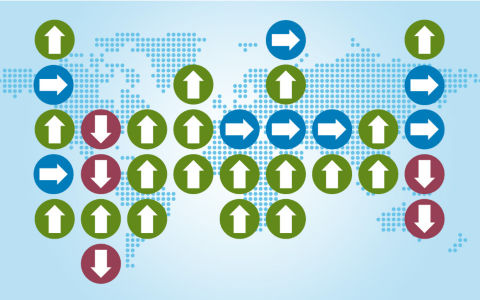
Still climbing, just slower
Members of our Insurance team share the key themes behind their cautiously optimistic outlook for the second half of 2025 and the implications for reserve-backing and surplus fixed income, as well as other major asset classes.

Understanding private equity performance
We dive deep on best practices for measuring and benchmarking private equity performance. In addition, we outline the J-curve and the impact of fund lifecycle on returns.

Wellington Venture Summit
The Wellington Venture Summit brings our portfolio companies the breadth of our investment expertise and networks under one roof. Watch highlights from the summit on preparing to go public, fundraising your next round, and much more.

AI isn’t like other tech cycles — and investors may need a new approach
AI may dominate headlines and strategy decks but people may still be underestimating its potential for disruption. What makes AI so different to other tech cycles?

Weighing the economic winners and losers of the One Big Beautiful Bill Act
Macro Strategist Juhi Dhawan unpacks the impact of One Big Beautiful Bill Act, including its potential effect on economic growth, corporate earnings, and the US government deficit and debt.

One Big Beautiful Bill: Why it’s “buy now, pay later” for markets
Multi-Asset Strategist Nanette Abuhoff Jacobson weighs the near-term benefits of the recently enacted US tax and spending bill against the longer-term costs, and suggests several investment implications.
Rapid Fire Questions with Philip Brooks (Part 1)
In part 1 of his “Rapid Fire Questions”, equity strategist Philip Brooks shares his views on 3 key questions, focusing on market outlook and risks.
The long and short (term) of markets
Head of Multi-Asset Strategy Adam Berger offers a four-part plan for short-term volatility and looks at the longer-term implications of shifting capital market expectations.

Allocating to alternatives: A role-based guide for corporate DB plans
For corporate plan sponsors thinking about weaving hedge funds and private equity into their portfolios, we offer this brief guide to the potential benefits and key considerations when establishing an allocation, including liquidity stress testing.
Agile approach important amid market desynchronization
Global markets are desynchronizing, with macro volatility and intervention from governments leading to diverging economic outcomes. Increased dispersion may facilitate more frequent rotation on market leaders, as these charts from Alex King and Joshua Riefler help illustrate.
Facing a new economic reality
We summarize our 2025 mid-year outlooks.

The transformative power of vertical AI agents
Learn how vertical AI agents are set to revolutionize industries ranging from health care to government to small business.

IPOs aren’t dead, they’re just napping
Experts from our venture capital and trading teams explore the current IPO landscape. They highlight three challenges and three opportunities for private companies aiming to go public today.

Japan’s banking sector outlook: Alpha up ahead?
Olivia Hurley and Rie Kimoto explore Japan's banking sector, highlighting regional banks' undervaluation and M&A opportunities driven by regulatory changes and demographic shifts.

Still opportunities in European equities? Positioning is key
Macro Strategist Nicolas Wylenzek revisits the case for European equities and discusses why positioning can help optimise exposure to Europe’s accelerating regime change.
Severance: The split between the economy and the markets
While markets have bounced back since Liberation Day, policy changes and macro data bear watching. Heading into the second half of 2025, we're focused on relative opportunities across asset classes created by disconnects and divides between markets and economies.

Building the future: Advances in AI infrastructure for autonomous agents
Van Jones highlights AI infrastructure advancements, emphasizing emerging protocols and data solutions for autonomous agents driving innovation and connectivity.

CLOs and the growth of private credit
Alyssa Irving profiles private credit's influence on CLOs, focusing on its ability to refinance lower-quality issuers and the potential benefits for the broadly syndicated market.

Venture capital mid-year outlook: Five key questions
Our venture capital team explores the state of the IPO market, M&A uncertainty, the growth of secondaries, and more.

Loans from Federal Home Loan Banks: An opportunity for US insurers to enhance investment yield and total return
Learn why we believe FHLB loans provide compelling potential for insurers to add alpha or increase yield by borrowing at low rates and benefitting from possible favorable treatment by ratings agencies. In addition, explore examples of customized investment solutions that have the potential to capitalize on these advantages.

10 reasons why China could be the next rerating story
Portfolio Manager Bo Meunier, Investment Director Irmak Surenkok and Investment Specialist Gilbert Chen set out 10 reasons why China could be the next rerating story to watch.

The power of positive and pragmatic thinking
While markets have a lot to worry about, from government policy to geopolitics, Global Investment and Multi-Asset Strategist Nanette Abuhoff Jacobson looks at the world from another angle: What could go right? She offers five reasons for positive thinking and considers the investment implications.

CLO investing and active ETFs
Alyssa Irving explores the evolving role of active ETFs in the AAA CLO market, highlighting their significant growth, the impact of increased trading activity, and the potential opportunities they create.
FOMC: Patiently waiting to ease
Jeremy Forster discusses the Fed's steady policy rates, inflation forecasts, and potential interest rate cuts amidst economic uncertainties.

Two key questions that bond investors should not ignore
Investment Directors Amar Reganti and Marco Giordano and Portfolio Manager Campe Goodman tackle two key questions that are likely to be top of bond investors’ minds during the second half of 2025.
Where to turn in an uncertain market
Nick Samoulihan explores strategies for navigating today's markets, emphasizing quality equities, strategic bond selection, and high-yield opportunities to balance risk and growth potential.

Chart in Focus: Did you miss out on the market bounce back in April?
Did you miss out on the market bounce back in April? In this edition of Chart in Focus, we look at market turnaround following the Liberation Day correction, highlighting the consequences of not having stayed invested.

Go-to-market strategy: 5 lessons learned
Our Value Creation Team explores go-to-market strategy best practices, highlighting stages of growth, product-market fit, the science of sales, and much more.

Return-seeking fixed income for an uncertain age?
Raina Dunkelberger discusses the role of flexible, return-seeking fixed income strategies against a backdrop of concentrated equity markets and global policy divergence.

Climate venture capital: Innovation versus hype
Greg Wasserman, Head of Private Climate Investing, discusses the balance between innovation and hype in climate venture capital. He explores automation in agriculture and manufacturing as well as the emerging commercial applications of generative AI.

The intersection of AI and private credit
Our private credit experts highlight AI's influence on asset class’s market growth, emphasizing how investments in infrastructure like data centers has the potential to drive long-term market opportunity.

Innovation in late-stage private markets
Matt Witheiler, head of Late-stage Growth, explores innovation and hype in late-stage private markets, discussing AI and defense technology.

Early-stage venture: Innovation versus hype
Wellington Access Ventures' Jackson Cummings discusses promising innovations in edge AI and embedded fintech. In addition, he highlights the potential hype surrounding consumer AI and quantum computing.

Private biotech innovation versus hype
Nilesh Kumar discusses the next generation of biotech disruptors in obesity, autoimmunity, and oncology, focusing on drugs that solve real-world unmet medical needs.

Where’s my safe haven? A global investor perspective on the tariff tantrum
Portfolio Manager Martin Harvey shares his insights on how global investors may need to reassess long-held assumptions in light of shifting global dynamics.
URL References
Related Insights

Check out our podcasts
Become a more informed investor in under 30 minutes with Wellington podcasts.
Experts

Nanette Abuhoff Jacobson

Adam Berger
, CFA

Andrew Heiskell
Get in touch
We’re here to help. Call us at (888) 287-3403 to speak with one of our team members. Or, send us a message via the form in this section and we’ll get back to you shortly.
Your request has been submitted.
Quarterly Market Review — 3Q26
A quarterly update on equity, fixed income, currency, and commodity markets.
By