

- Sector Lead, Biotech Private Investments
United States, Institutional
Change
The views expressed are those of the authors at the time of writing. Other teams may hold different views and make different investment decisions. The value of your investment may become worth more or less than at the time of original investment. While any third-party data used is considered reliable, its accuracy is not guaranteed. For professional, institutional, or accredited investors only.
The biotech market was increasingly active in 2024, despite substantial volatility that was fueled — in large part — by interest-rate and policy uncertainty. Investors provided a significant amount of capital to high-quality companies through follow-on financings, reverse mergers, and IPO offerings (which increased throughout the year, though performance remains mixed).
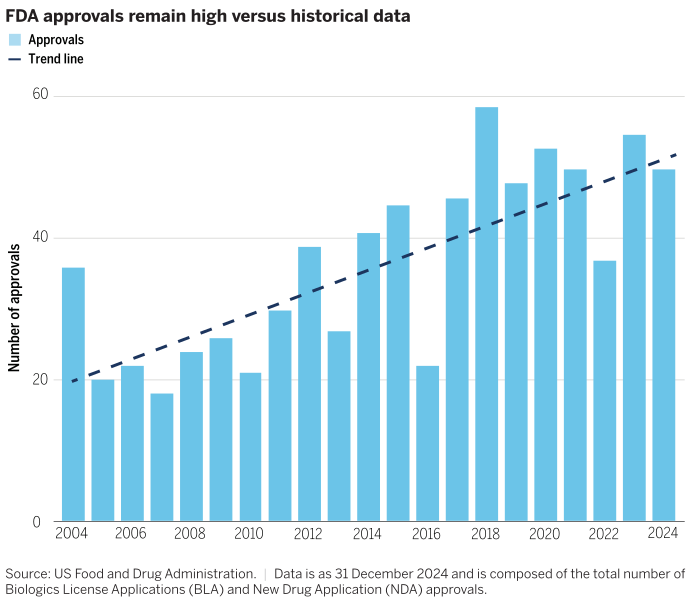
Companies with derisked clinical assets seem to be drawing the lion’s share of interest from private and public investors, as well as pharma M&A. Looking forward, we are cautious on near-term IPO activity for companies with meaningful clinical-stage risk given market uncertainty. Such uncertainty, however, may incent a more active M&A environment driven by pharma interest, possible Federal Trade Commission (FTC) reforms, and the increasing attractiveness of private companies as acquisition targets. In our view, the long-term outlook remains positive as innovation continues, driven by the confluence of technological and scientific advancements that are generating record numbers of approved drugs. The high levels of activity we see in early-stage investments suggests this is likely to accelerate, and that drug development progress (Figure 1) is poised to produce an increasing pipeline of investment opportunity.
In this short outlook, we dive into the three key trends we believe will be of greater importance in 2025 and beyond.
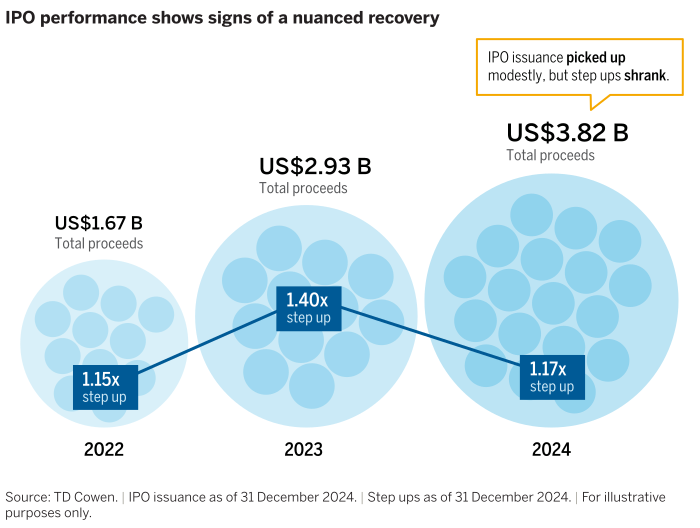
The biotech IPO market showed signs of recovery in early 2024 (Figure 2), with a slight increase in deal volume (18 deals versus 13 in 2023). However, performance remained mixed, with only four out of 18 IPOs trading above the issue price and average performance down 27% by year end. While these metrics have improved compared to 2023 IPOs, they are still not at a level that would broadly support new issuance. In our view, companies with clinical data and strong shareholder bases may be better positioned for successful public debuts, but the process remains challenging, time-consuming, and increasingly uncertain given the evolving policy environment. As such, we expect the IPO window will remain largely closed in 2025.
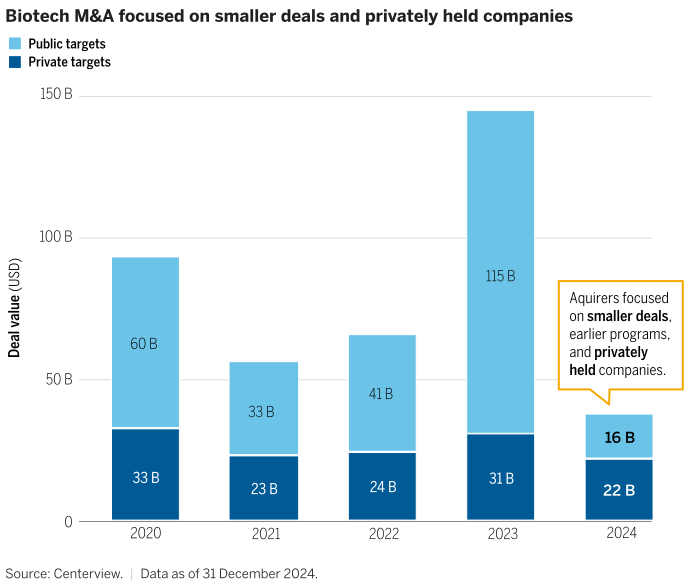
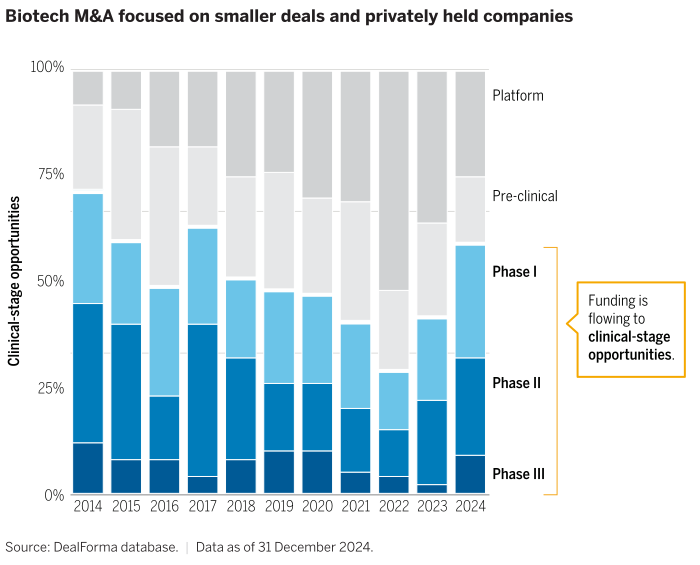
M&A activity in 2024 was strong, primarily focusing on small (<US$5 B) bolt-on acquisitions (Figure 3), resulting in a lower total capital return to investors (US$37 B in 2024 versus US$140 B in 2023 and US$67 B in 2022). The Biden administration’s antitrust stance contributed to this trend, and we are optimistic that dealmaking will increase under the Trump administration and new FTC leadership. Further, pharma business development groups note high premiums for commercial-stage companies and near-term risks with Phase 3 assets, leading buyers to favor smaller deals around earlier-stage assets, an emerging trend supported by active mid-cap biopharmas.
This dynamic combined with a difficult IPO environment, a high cost of capital, and biotech VCs’ need for liquidity to potentially create a perfect storm for unprecedented M&A activity in the private market, in our view. We expect this trend to continue in the near term, with larger-scale, public-company M&A potentially returning as pharma’s near-term revenue replacement needs and a more deregulated FTC under the new administration come into play.
As we navigate this new biotech investment landscape in 2025, we believe clinical-stage opportunities will remain an attractive area for investment. Funding for preclinical and platform companies has continued to shrink year over year after significant activity in 2021 and 2022 (Figure 4), perhaps not a surprising trend given the rising cost of capital. We also believe that this is, in part, reflective of a tight IPO market that encourages companies to stay private longer and go public at a more derisked stage. As companies progress to more derisked stages, they may generate additional optionality to attract interest from both public investors and pharma.
We believe private investors will remain at the forefront of innovation, and the most successful companies will have multiple pathways to help ensure continued access to capital. While public-market volatility creates near-term pressures on new issuances, M&A remains an increasingly important, and perhaps a more robust, avenue to liquidity.