United States, Institutional
Change


The views expressed are those of the authors at the time of writing. Other teams may hold different views and make different investment decisions. The value of your investment may become worth more or less than at the time of original investment. While any third-party data used is considered reliable, its accuracy is not guaranteed. For professional, institutional, or accredited investors only.
Wellington has committed to being carbon neutral in our operations by the end of 2022. To achieve that goal, we are taking a multifaceted approach that includes:
- Prioritizing direct reduction of our activities that generate greenhouse gas (GHG) emissions (Scopes 1, 2, and 3)1
- Sourcing renewables for our purchased electricity needs (Scope 2)
- Purchasing high-quality carbon offsets for our remaining emissions (primarily Scopes 1 and 3)
Since establishing a baseline carbon-footprint measurement from 2014 covering our Scopes 1, 2, and 3 emissions, we have continued to seek ways of reducing our carbon footprint. Going forward, we will work with existing technologies and methodologies to select high-quality offsets aligned with our broader sustainability goals. As available tools and technologies improve and become economical at scale, we expect to evolve our approach. We will actively support the development of the carbon offset market, incorporating The Oxford Principles for Net Zero Aligned Carbon Offsetting, including selecting high-quality offsets, modeling best practices, supporting transparency, and aligning with our clients and industry peers.
Prioritize direct emissions reductions
As a first step in decarbonizing our operations, we aim to reduce or eliminate as many sources of operational Scopes 1, 2, and 3 emissions as possible without compromising our capacity to serve our clients, deliver investment excellence, and support our global employees. These efforts include:
- Reducing overall electricity usage
- Enhancing recycling and composting
- Traveling smarter and more purposefully
- Replacing existing technology with energy-efficient alternatives
- Minimizing paper consumption
- Adhering to green building standards and infrastructure reliability
Source renewables for our purchased electricity needs
In addition to direct emissions reductions, we will cover a portion of our global electricity usage with renewables, with plans to expand this coverage. In a normal (non-COVID) year, purchased electricity accounts for approximately…
1Targeted reductions and offsets do not, at this time, include Scope 3 Category 15 emissions, or those associated with investments we make on behalf of clients. This category is the focus of our commitment to the Net Zero Asset Managers initiative (NZAMI).
Experts
Related insights
Showing
of
Insights Posts


URL References
Related Insights
Stay up to date with the latest market insights and our point of view.
RECOMMENDED FOR YOU
Showing
of
Insights Posts

Article
7 min
Governance best practices in public markets
For private companies approaching the public markets, we highlight the corporate governance best practices that can help pave strong relationships with public market investors.
7 min
Article
2027-09-15

Report
2025 Climate Report
Aligned with TCFD recommendations, this report describes how we manage climate-related risks and opportunities, engage with companies on climate change, and reduce our own carbon footprint.
Report
2026-11-30

Report
2025 Sustainability Report
We appreciate the opportunity to share our approach to advancing sustainable practices across our investment, client, and infrastructure platforms.
Report
2027-05-31

Article
6 min
Putting long-term investing into context
Equity Portfolio Managers Yolanda Courtines and Sam Cox and Investment Specialist Fred Owens-Powell revisit the concept of long-term investing in an increasingly sentiment-driven market through two case studies.
6 min
Article
2027-05-07

Video
3 min
Physical AI, robotics, and Encord
Greg Wasserman, Head of Private Climate Investing, explores the rise of physical AI across robotics, drones, and autonomous systems, and the growing role of machine vision and data infrastructure in enabling real-world deployment.

3 min
Video
2027-04-30
Article
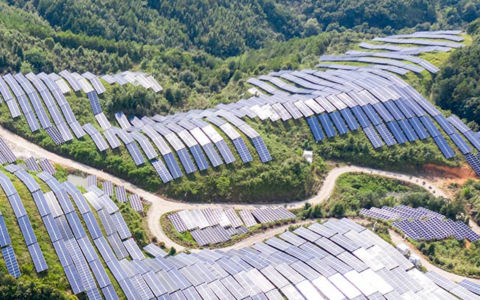
Yes, climate change (still) matters in private markets
We explore why climate change matters in private markets, highlight the current regulatory landscape, and profile key questions to expect from public market investors.
Article
2027-03-31

Article
4 min
Succession planning: lessons for investors from three sectors
Equity Portfolio Manager Yolanda Courtines and Investment Director Alex Davis explore the importance of CEO succession planning for investors through three sector case studies.


4 min
Article
2027-01-01

Article
3 min
Sustainable commodities: Rethinking investment strategies for a changing climate
As climate change and the energy transition reshape global markets, commodities are gaining renewed attention as inflation hedges and portfolio diversifiers. This article introduces a climate integration framework for evaluating commodity investments through both sustainability and financial lenses.
3 min
Article
2026-11-30

Article
3 min
Transition at risk: Checking in on corporate decarbonization progress
Corporate climate transitions face ambition-execution gaps. Success requires integrating decarbonization into business strategy, focusing on emissions, pragmatic Scope 3 approaches, transparency, and credible plans. See how our experts are thinking about this.


3 min
Article
2026-10-14

Article
6 min
Investing in climate solutions across public and private markets
Collaboration between public and private market investors can be powerful. Opportunities where expertise and resources can be shared to accelerate innovation and deployment are optimal. Our experts explore how AI, geopolitics, and global policy are reshaping climate solutions across sectors.

6 min
Article
2026-10-14

Article
7 min
Human capital management for private companies
We discuss why effective people management is critical for private companies and outline four strategic focus areas that can help companies navigate evolving employee needs, regulatory changes, and investor expectations.
7 min
Article
2026-11-30
URL References
Related Insights