
Explore our insights
Asset class
Formats
2026 Midyear Investment Outlook

2026 Midyear Investment Outlook
Stocks and bonds have traditionally held complementary roles in investment portfolios. Historically, the two have been negatively correlated, meaning when stocks have faltered, bonds have risen, offsetting equity declines.
When stocks and bonds experience a positive correlation or move in the same direction ― a defining feature of markets in recent years ― it creates portfolio-construction challenges for many types of investment strategies.
While there are many factors that can influence these relative movements, in my view, inflation expectations are the most important driver today. Prior to the war in Iran, US markets embraced a disinflationary narrative driven by potential labor displacement from continued advancements in AI.
However, the conflict in Iran has triggered an energy shock, pushing inflation expectations higher and reinforcing positive equity–bond correlations. In this environment, rising inflation drives rates higher, pressuring both asset classes at the same time. This limits the effectiveness of diversification. Outcomes become more dependent on direction rather than balance.
That said, we don’t see this as permanent. While inflation may stay elevated near term, the structural disinflationary forces — principally the impacts of AI — remain intact. As they reassert themselves, both asset classes could rally and, over time, more traditional diversification dynamics are likely to return.
Figure 1
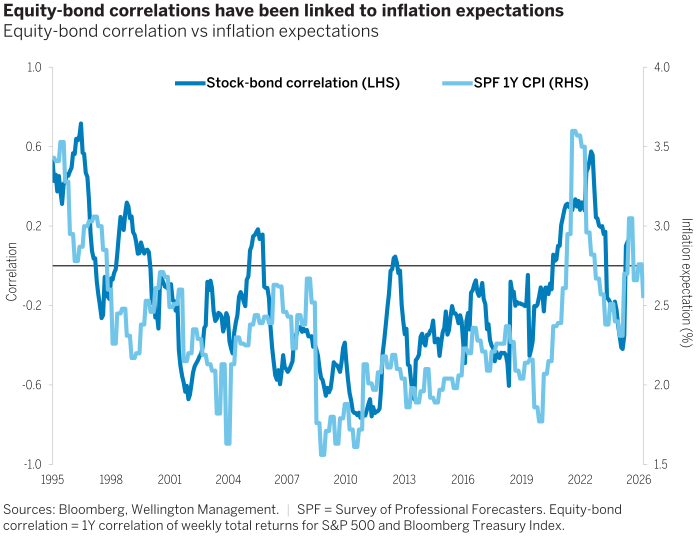
Because today’s backdrop of positive correlations, which renders traditional diversification less effective in the near term, is likely transitory, we believe a flexible, adaptable approach to portfolio construction may be prudent. Actively managed strategies may be well positioned to meet current challenges and pivot if structural disinflation reasserts itself, broadening the opportunity set and restoring traditional diversification dynamics.
The views expressed are those of the author at the time of writing. Other teams may hold different views and make different investment decisions. The value of your investment may become worth more or less than at the time of original investment. While any third-party data used is considered reliable, its accuracy is not guaranteed. For professional, institutional or accredited investors only.





















Monthly Market Review — August 2026
A monthly update on equity, fixed income, currency, and commodity markets.
By