Allocating to European high-yield bonds has been a sound strategy over recent years but many existing investors are asking whether it is time to take stock, while new investors are weighing the risk-return trade-offs.
In our view, the structural appeal of the asset class remains robust, supported by a consistent trend towards higher-quality issuance and attractive income potential. However, tight valuations mean that relying on spread compression for returns may no longer be a winning strategy.
Instead, we think it is time for a different approach that focuses on disciplined credit selection to capture the opportunities a more diverging market may bring.
Structurally stronger, but less favourable starting point
European high yield has delivered strong returns in recent years. Investors have benefited from attractive income, resilient corporate fundamentals and a market that has continued to improve in quality, with BB-rated issuers now representing a larger share of the index. Moreover, the asset class continues to offer attractive diversification potential, especially for investors looking to diversify away from the US.
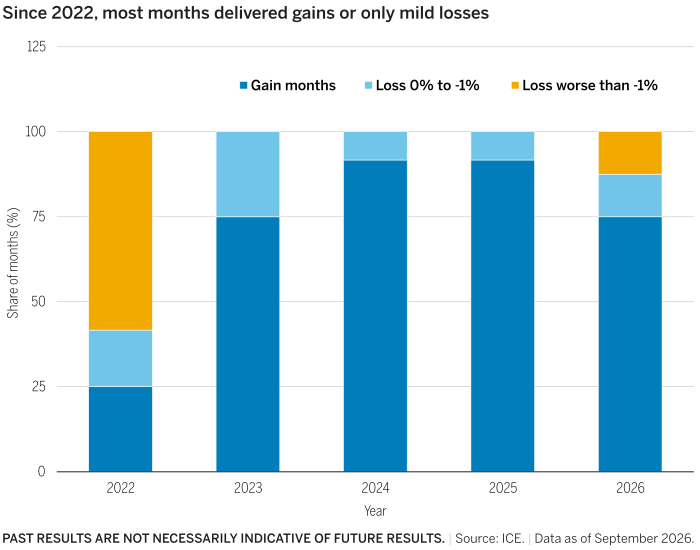
However, after several years of strong returns, spreads are now at historically tight levels. In our view, this spread compression should give investors pause for thought. In fact, since the last major market drawdown in 2022, we have experienced only a few periods of market weakness. with the asset class generating positive returns across most months, as Figure 1 shows. Moreover, most negative months have involved only modest losses.



















































































































































Monthly Market Review — August 2026
A monthly update on equity, fixed income, currency, and commodity markets.
By