United States, Institutional
Change


Below we share edited highlights from our special client webcast hosted on 3 March 2026. You can also watch the full webcast replay here.
Webcast replay
The information and views expressed are those of the speakers on the date of the webcast and are subject to change. Other teams may hold different views and make different investment decisions. Forward-looking statements should not be considered guarantees or predictions of future events. This webcast is provided for informational purposes only and is not intended as investment advice or an offer to sell or the solicitation of an offer to purchase shares or other securities. Any characteristics discussed or presented are not necessarily indicative of accounts managed by Wellington Management.
Q: In the first couple of days of this conflict, we’ve seen events escalate and President Trump has noted that this could last weeks, not days. Thomas, can you give us a snapshot of what the conflict looks like now and your latest assessment
Thomas: Judging by the actions and not the rhetoric, I agree that we're seeing a rising probability of an extended conflict — not the quick and easy operation many had hoped for. So, what are those actions that I'm keying on? First is US force posture — that is, the military assets that are in the region or headed to the region. We're seeing an increase in those capabilities, including the movement of two US carrier battle groups. That significantly increases US military firepower and indicates to me that the administration is planning for the possibility of a longer campaign.
The second action relates to Iranian government incentives. Now that this has been clearly cast as a regime-change operation, I believe capitulation or even negotiation is likely to be a harder sell in Tehran. And the actions support this, including quick succession planning in Tehran, a widening of targets across the Gulf, and no signs of surrender from the new leadership or anywhere across the IRGC.
Q: There's a lot of discussion about the comparative military capabilities of Iran and the US. Is that a limiting factor in terms of Iran's capabilities and the duration of this conflict?
Thomas: I think those military capabilities will be the test. The US has advantages in the air and it's clearly doing a lot of damage to Iranian infrastructure, leadership, and other military assets. So, I don't think those capabilities are in doubt. The questions I still have are about the Iranian military capabilities and ability to hit back at targets across the region. So far, we've seen pretty good capacity by the Iranians to attack civilian and military targets, as well as some energy infrastructure. So, I think both sides have demonstrated military capacity. What will happen over the coming days and weeks will be the deciding factor here.
Q: Elise, obviously you've been following oil prices closely. What are you looking at right now? And what scenarios are you considering?
Elise: Along with oil prices, I’m focusing on commodity prices across the complex given different interdependencies and the reliance on commodity production and transport more broadly in the region. Oil is up a significant amount — about $10 versus the close on Friday and a little bit over $20 from before events began to escalate in the region with the movement of US military assets. Likewise, we've seen European gas move quite strongly from the low €30 range to over €50.
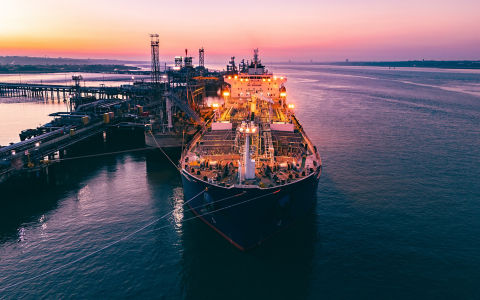
What I'm really looking at from a scenario analysis perspective is the disruption of oil flowing through the Strait of Hormuz and other key export infrastructures that are located in the region and may have been preemptively shut as a result of concerns about the conflict spreading. If the disruption is relatively short-lived, then the market has the potential to absorb the geopolitical instability by releasing inventories and making other policy changes. But if the disruption lasts a little bit longer, then oil really needs to meaningfully reprice to be able to reflect that incremental risk, as well as the risk of production in the region needing to shut down because countries simply don't have enough storage to keep that oil flowing without it going onto ships and through the Strait of Hormuz to consumers. So really the name of the game for us is the duration of this conflict.
Q: What prices are you thinking about in the event of a longer-term closure?
Elise: If no oil is flowing through the Strait beyond a week and a half or two weeks, I think that type of tail case means we would need to see oil meaningfully repriced above $90 to $100 or more. The Strait of Hormuz is responsible for over 25% of global oil flow.
Q: There’s a US Strategic Petroleum Reserve. And Saudi Arabia announced some increase in oil production. To what extent are those offsets?
Elise: Let me set the stage a little first. Most analysts, including me, had the oil market in surplus before this escalation began, meaning that supply outweighed the demand we saw in the market. And that really underpinned a more bearish view on oil prices. Obviously, as a result of the geopolitical insecurities at play, positioning as well as market attitudes toward oil changed rapidly. But what that means vis-a-vis OPEC is that OPEC was deciding to hold their production flat before this escalation began. And what was decided last Sunday was a nominal increase of 200,000 barrels a day, which is very small relative to the amount of oil that's disrupted in the Strait of Hormuz, which I think means that Saudi Arabia is watching to see how this plays out.
In terms of what the US can do in terms of drawing down its own Strategic Petroleum Reserve, quite frankly there isn’t a lot left in those reserves. We have a fair amount, but it was drawn down significantly during the last presidential administration, and we have not yet had time to rebuild those inventories. And what's left is not the type of crude that many refiners end up using.
I do believe there are other inventories that are accessible outside of the US that can be drawn on, and the International Energy Agency is discussing what to do with those inventories right now. But I think the key ultimately is not going to be the Strategic Petroleum Reserve. It is whether the US government and allies provide sufficient security to ships traveling through the Strait such that the Strait reopens. Without that Strait, the oil market cannot function normally.
Q: Gillian, can you give some perspective on EM countries or regions that might benefit from or be hurt by higher oil prices?
Gillian: Sure, so let me start by saying, this geopolitical conflict probably leaves the world as a whole in a little bit of a worse place relative to where we were before it started, with uncertainty higher than it was. But I do think there are a number of emerging markets where, if commodity prices hold where they are today, fundamentals are going to improve. Within emerging markets, you have a large number of commodity exporters, including oil exporters that are seeing large positive terms-of-trade shocks right now, even though asset prices are down and that's where some of the dislocation is coming in. So, think about Nigeria, Ecuador, Angola, Gabon, and Kazakhstan, for example. Our external debt index leans towards commodity exporters and many of them are seeing export receipts increase at quite a rapid pace right now, given what is happening to commodity prices.
I think the countries that are feeling the pinch are the countries that are oil importers. Of those countries, some are high-yield credits. A country like Kenya, for example, is struggling a little bit with financing costs and is now facing a negative terms-of-trade shock. But many of them are stronger credits and countries that are more concentrated within our local markets index. Poland is having a tough day today, for example.
Now, I think some of the moves have been quite exaggerated and are generating opportunities, but I think we have to acknowledge that if oil stays here over the next month or two, you are going to see both developed market and emerging market central banks step back and think about what this means for inflation. It will include an upward revision to inflation forecasts. And even though we have been in a rate-cutting cycle, I think that will cause a lot of central banks to sit back and say let's just pause on the cuts for now. Let's figure out where inflation is going to land. Let's figure out what impact this is going to have on growth, and then we'll figure out what our next move is.
Q: People are wondering about gold. Can it remain a safe haven in this environment?
Elise: Gold's been a bit volatile in these early days of the conflict, and I think that’s mainly because of the market reaching for the dollar a bit as a safe-haven asset. But the view on our team is that the structural tailwinds that support gold remain, including the theme of de-dollarization. I would think that theme is even stronger after US military intervention in a geopolitically unstable region.
I think the other key piece we've seen is physical demand for gold coming strongly from China, but India and other countries as well. And I think that you're going to continue to see that, especially amid incremental geopolitical insecurity.
Q: From a multi-asset perspective, what surprises you about the market moves to date and how do you see the balance of risks at this point across the different asset classes you look at?
Nanette: I think the bigger surprise was Monday, after the conflict began. The market was certainly anchored to a very short-lived event. Even though equities were down overnight on Sunday, they recovered quickly and risk assets really did okay. That changed as we saw the repercussions based on a more extended conflict. One of the things that’s interesting is that interest rates are up 10 to 15 basis points in the US and even more in emerging markets, based on the inflation impulse that higher oil prices would produce.
But I think we have to consider a broader context, which is that we came into this with very different themes affecting the markets. One was AI disruption and the possibility of big productivity gains, lower inflation, and maybe a softer labor market. And all those factors were causing interest rates to fall.
That said, our multi-asset team remains long equities. Our base case is still that this conflict is time-bound and will not go on indefinitely, but we're cautious. Obviously, a supply shock to oil could increase recession risk. In terms of being defensive, we are long duration. And I certainly think recent events support that view that having some hedge in a portfolio for an equity drawdown is appropriate.
We've also been looking at the rotation from growth into value and from the US into international and emerging markets. And I think there are elements of this conflict that still support that rotation. Certainly, the idea of US exceptionalism is waning in some areas in terms of the US being a trustworthy global partner. I think that supports a case for moving out of US-dollar assets and considering emerging market equities and debt. At the same time, there is incredible dispersion underneath the US index because of AI disruption, which is creating potential alpha opportunities.
Again, we should keep in mind that historically, the market effect of geopolitical conflicts has tended to be short lived and may ultimately create opportunities.
Are you considering anything from a hedging perspective?
Gillian: FX is obviously a very liquid asset class and we have plenty of flexibility there in terms of what we can do — not necessarily to hedge, but just to size positions and maybe lean a little bit more on those currencies that we don't like. We don't need to like every EM currency.
We’re also keeping a very close eye on EM central banks, and we’re already beginning to see some come out and push back. Turkey was very active in the market yesterday and that's helping underpin that currency. We're beginning to see action in Romania and potentially in Egypt.
We’re also thinking about EM rates, a very large and liquid part of the market. It is about sizing and thinking about those countries that are more vulnerable to an increase in the oil price versus those that may ultimately benefit because fundamentals will look better.
One final geopolitical question about Russia and China. How would you characterize their role in this conflict? And do you think there could be some catalyst that could get them involved?
Thomas: I would say that at the moment, their direct military involvement will be minimal, if any. But again, it goes back to duration, because we can't forget that China gets almost a fifth of its oil from the region, and much of that from Iran in particular. And so that does become a more important geopolitical variable the longer this conflict goes on.
I also think it's important to step back and understand that this is not necessarily a discrete geopolitical event, given the great-power competition issues running through it. And that's true for the broader geopolitical environment. If you look across that landscape today in Ukraine, the South China Sea, the Korean Peninsula, and other areas, the US and China are on opposite geostrategic sides.
I think that's part of this new geopolitical order that we're moving toward. I also think it creates investment opportunities alongside the risks, including opportunities for exposure to long-term investment themes such as national security.
The views expressed are those of the authors at the time of writing. Other teams may hold different views and make different investment decisions. The value of your investment may become worth more or less than at the time of original investment. While any third-party data used is considered reliable, its accuracy is not guaranteed. For professional, institutional or accredited investors only.
Experts

- Geopolitical Strategist

- Commodities Portfolio Manager

- Fixed Income Portfolio Manager

- Global Investment Strategist