FEATURED EQUITY FUNDS
FEATURED FIXED INCOME FUNDS

Asset classes

Asset classes
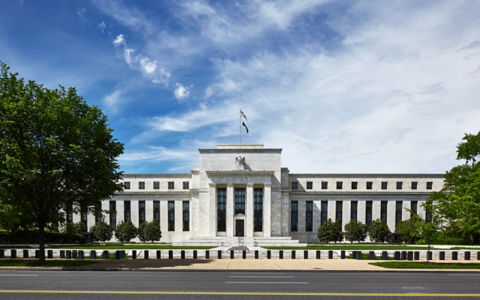
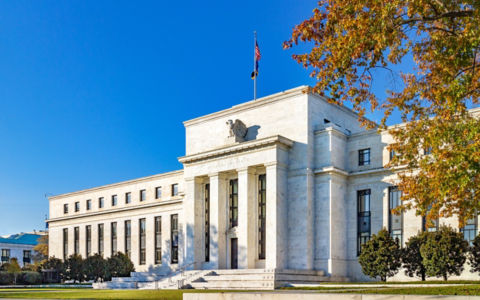
At its June 2026 meeting, the Federal Open Market Committee (FOMC) held its federal funds rate target unchanged at a range of 3.5% to 3.75%. The statement was much shorter than in the past, including removal of the previous easing bias and omission of forward guidance. In its updated Summary of Economic Projections (SEP), nine of nineteen participants projected at least one rate hike this year. The Fed also increased its inflation forecast and lowered its unemployment rate and growth outlooks.
Chair Warsh, who has previously expressed skepticism around rigid forward guidance, acknowledged he did not submit a forecast for policy rates in the so-called “dot plot” and may ultimately seek to further evolve the Fed’s communication framework. At his first press conference, he announced the creation of several new task forces to review key areas, including communication, the balance sheet, data usage, labor market dynamics, and inflation frameworks.
Inflation has surprised to the upside in recent months, with the Fed’s preferred core personal consumption expenditures (PCE) measure accelerating to 3.3% year over year through April, now above the 2% target for five years and counting. Importantly, inflation pressures have broadened beyond the initial energy- and food-related supply shock from the Strait of Hormuz closure, pointing to more persistent underlying dynamics.
Looking ahead, headline inflation may have peaked but will likely remain elevated, particularly given ongoing geopolitical risks to energy prices, despite the Memorandum of Understanding to pause the war in Iran. A key risk is wages: While some leading indicators point to only a modest pickup so far, rising labor cost pressures among small businesses increase the risk of stronger pass-through. In this context — elevated nominal growth, persistent inflation, and strong labor demand — policy rates appear insufficiently restrictive, strengthening the case for additional tightening in line with the Fed’s projections. In his press conference, Chair Warsh noted that policy was likely accommodative for financial markets, but restrictive for housing markets.
Warsh seemed to be giving financial markets the green light to price more restrictive policy as they consider what’s next. He seemed inclined to let financial markets respond to data with what they view as appropriate actions rather than encouraging investors to consider the Fed’s potential response to data as their guide. This will likely lead to more volatility in interest-rate markets, especially around key data releases.
The US labor market strengthened again in May, while job gains broadened across sectors. Although the unemployment rate stabilized due to labor force growth, underlying conditions appear firmer than even the Fed’s upgraded projections. We expect continued above trend job creation, a renewed decline in unemployment, and stable-to-firm wage dynamics.
Rather than signaling a bias toward further tightening, Warsh underscored the importance of evaluating a broader set of inflation indicators, including market-based measures. This more nuanced approach may be interpreted as a modest shift in the Fed’s reaction function, placing greater weight on forward-looking measures of inflation. More details may be revealed as the task forces deliver their findings in the months ahead.
Heading into this meeting, pressure from the administration to cut policy rates risked undermining the Fed’s inflation-fighting credibility, but Warsh reiterated the Fed’s commitment to restoring price stability. Bowing to political pressure to make policy more accommodative risks lifting term premium — defined as the additional compensation investors demand to hold longer-term US Treasuries — by weakening market confidence in the Fed’s commitment to price stability. In the end, if credibility is tested, the bond market will act as the ultimate disciplinarian through higher term premiums and tighter financial conditions.
The key question for markets is whether the Fed can maintain credibility as growth, inflation, and labor market dynamics remain stronger than expected. Absent a clear disinflation trend, the risk is that the bond market tightens financial conditions through a higher term premium or higher expected policy rates.
More broadly, the policy backdrop is shifting toward a more restrictive stance. While this transition is not inherently negative, much of the prior support is reflected in valuations, increasing the likelihood of greater volatility across rates and risk assets. Ultimately, the Fed may not be able to “serve two masters” for long — forcing a clearer prioritization between supporting growth and preserving price stability.
The views expressed are those of the authors at the time of writing. Other teams may hold different views and make different investment decisions. The value of your investment may become worth more or less than at the time of original investment. While any third-party data used is considered reliable, its accuracy is not guaranteed.
DISCLOSURE
This material and its contents may not be reproduced or distributed, in whole or in part, without the express written consent of Wellington Management. This document is intended for information purposes only. It is not an offer or a solicitation by anyone, to subscribe for shares in Wellington Management Funds (Luxembourg) III SICAV (the Fund). Nothing in this document should be interpreted as advice, nor is it a recommendation to buy or sell shares. Investment in the Fund may not be suitable for all investors. Any views expressed are those of the author at the time of writing and are subject to change without notice. Investors should carefully read the Key Facts Statement (KFS), Prospectus, and Hong Kong Covering Document for the Fund and the sub-fund(s) for details, including risk factors, before making an investment decision. Other relevant documents are the annual report (and semi-annual report).
© 2026 Morningstar, Inc. All Rights Reserved. The information contained herein: (1) is proprietary to Morningstar; (2) may not be copied or distributed; and (3) is not warranted to be accurate, complete or timely. Neither Morningstar nor its content providers are responsible for any damages or losses arising from any use of this information. The Overall Morningstar Rating for a fund is derived from a weighted average of the three, five, and ten year (if applicable) ratings, based on risk-adjusted return. Past performance is no guarantee of future results.
Issued by Wellington Management Hong Kong Limited. Investment involves risk. Past performance is not indicative of future performance. This document has not been reviewed by the Securities and Futures Commission of Hong Kong.