
Explore our insights
Asset class
Formats
2026 Midyear Investment Outlook

2026 Midyear Investment Outlook
We recently updated our analysis of the funded status, derisking/rerisking activity, and ROA assumptions of US corporate defined benefit plans using 2025 fiscal year-end filings for companies in the Russell 3000 Index. Below we share our key observations on the data, as well as links to some of our recent research insights.
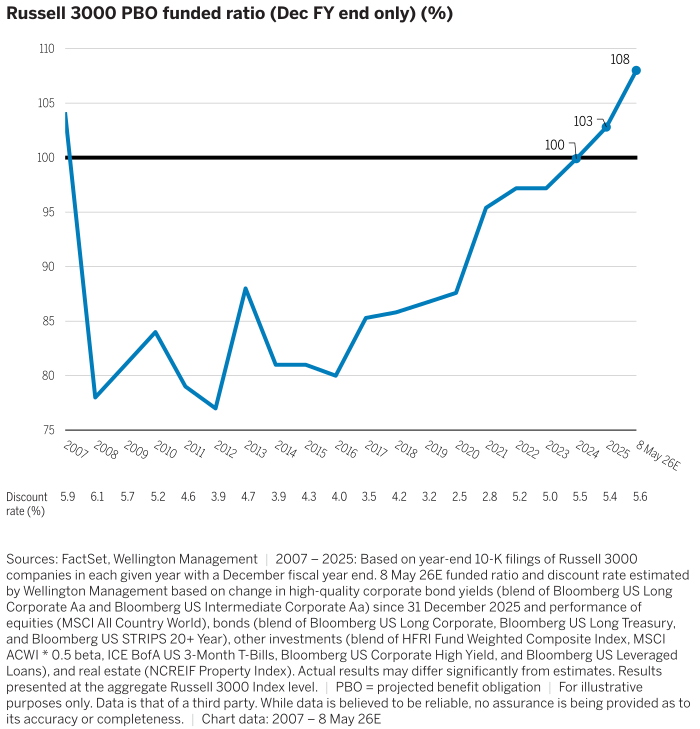
Plans ended 2025 with an aggregate funded ratio of 103%, up three percentage points from year-end 2024, driven by strong equity returns (Figure 1). While ~30% of plans are over 110% funded, the distribution remains wide, with the median year-end funded ratio at 95%.1
Thus far in 2026, we’ve seen additional gains in funded ratios thanks to continued strong equity market returns. As of May 8, we estimate that the aggregate funded ratio was up to 108%, a five-percentage-point gain — a magnitude that might cause some plans to hit their next derisking trigger. We recommend plan sponsors update their funded-ratio estimates, if they have not done so recently, and compare them against their glidepath to see if derisking is warranted.
With many plans seeing their funded ratios improve, questions about how to invest surplus assets are on the rise. To help, we’ve designed a framework with three possible paths — read about it here.
Figure 1
Aggregate asset allocation didn’t move much, but what’s going on under the surface?
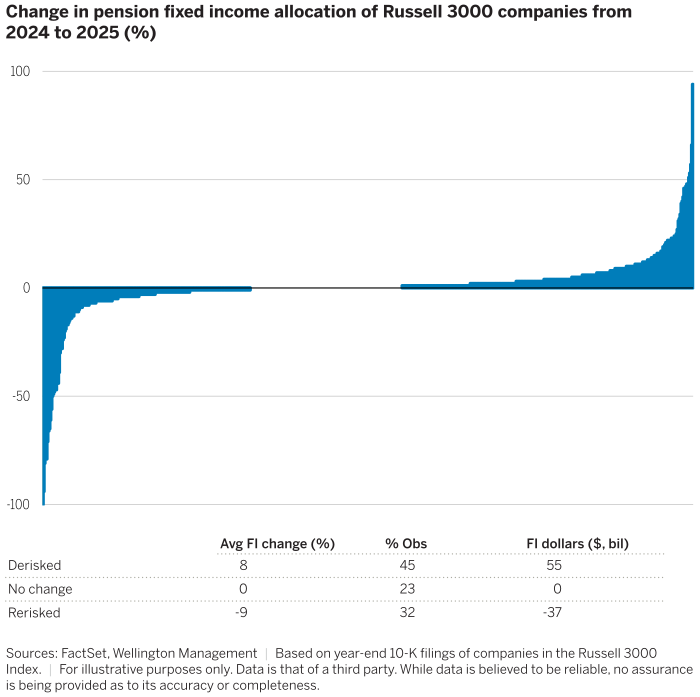
Aggregate pension allocations were largely unchanged at year-end 2025 compared to year-end 2024 (Figure 2). Almost half of plans derisked (increased their fixed income allocation), while about a third reported reductions in fixed income allocations, suggesting they might have rerisked (Figure 3).
The broad asset allocation changes, however, might overstate rerisking activity. Based on our estimates, the allocation changes of just under half of companies that “rerisked” may have been driven by market movements, with global equities (23%) having outpaced long bonds (7%).2 Some of the apparent rerisking might also be explained by risk-transfer activity, with reallocations out of fixed income into cash (generally reported as “other”).
Based on recent polls (our own and others in the industry), diversifying return-seeking allocations is a top area of interest. We continue to think that plans should balance upside equity participation with downside mitigation by bringing together three building blocks: core global equities, defensive equities, and liability-aware diversifiers — learn more in our list of top 10 LDI questions for 2026. Derisking and refining the liability-hedging allocation across the three key risks (interest-rate risk, credit risk, and yield-curve risk) are also top areas of interest — and we would expect this interest to grow, given recent strong gains in funded ratios noted earlier. Read our related paper.
Figure 2
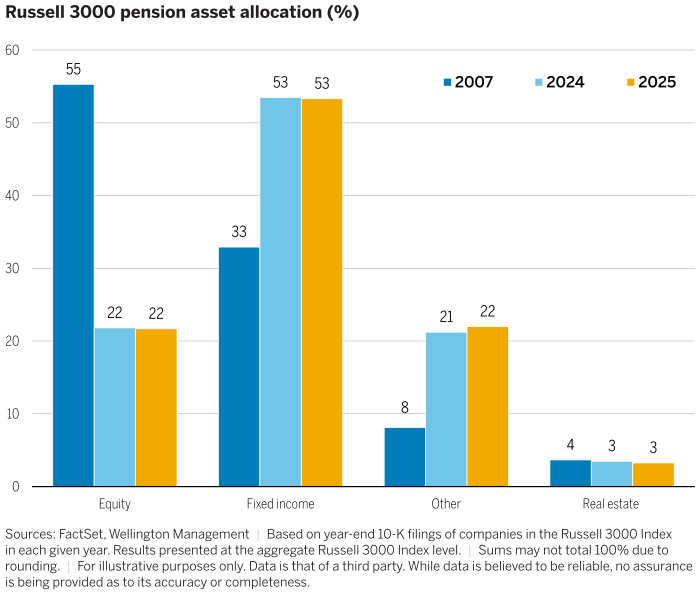
Figure 3
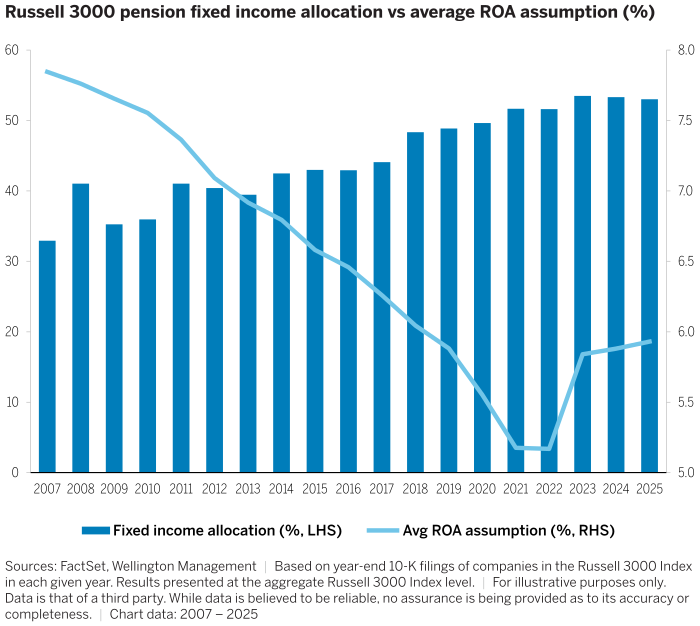
The average ROA assumption was 5.9% at year-end 2025, right about where it ended 2024 (Figure 4). Over the past three years, the average ROA has reversed a 15-year downward trend, although it remains well below the level in 2006, when the introduction of mark-to-market balance sheet accounting for pension plans by the Financial Accounting Standards Board (FASB) and the passage of the Pension Protection Act by Congress first prompted many plan sponsors to reevaluate their investment strategies. We share more in our 2026 ROA guide.
Figure 4
1Based on companies with a December FY end. | 2Global equities based on MSCI ACWI; long bonds based on Bloomberg US Long Gov/Credit Index.
The views expressed are those of the authors at the time of writing. Other teams may hold different views and make different investment decisions. The value of your investment may become worth more or less than at the time of original investment. While any third-party data used is considered reliable, its accuracy is not guaranteed. For professional, institutional or accredited investors only.
Experts