3. Fixed income
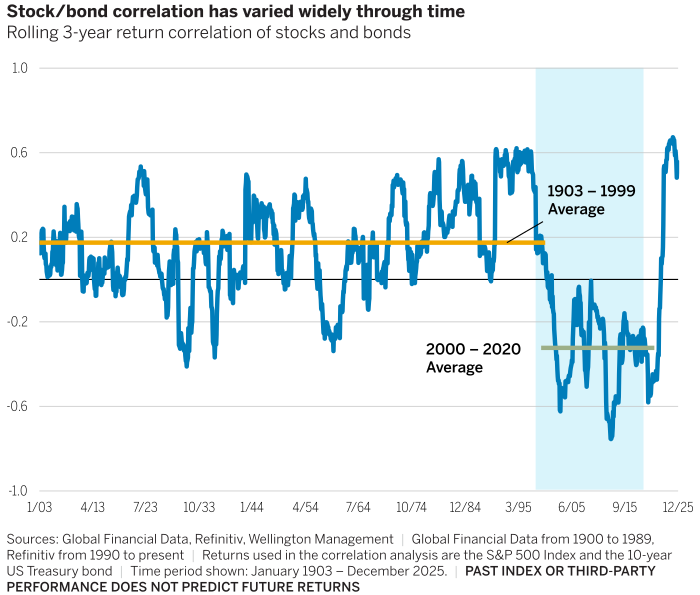
While I’ve already noted that there may be times when fixed income is not as effective at offsetting equity risk, the asset class can continue to play several critical roles in portfolios, including:
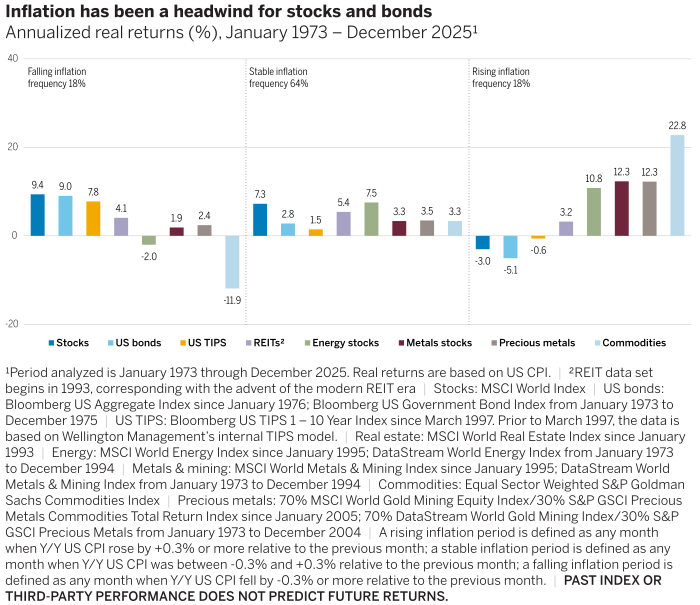
Protection against classic (deflationary) recessions — Recent economic challenges have largely been related to supply shocks, including the pandemic, the war in Ukraine, and the war in Iran. Fixed income may not always provide a diversification benefit in these inflationary environments. But as our fixed income experts have noted, it’s likely to be a more effective diversifier in classic demand-driven recessions and deflationary environments.
A source of income — There's still a need for steady income, and fixed income will typically be a core holding in that respect. This is especially important given demographics, with developed country populations aging and seeking income. It helps, of course, that yields today are more attractive than they were a decade ago.
A volatility dampener in an equity sell-off — Fixed income is still inherently less volatile than equities, which can make it a volatility dampener for an overall portfolio, even when stocks and bonds may be moving in the same direction.
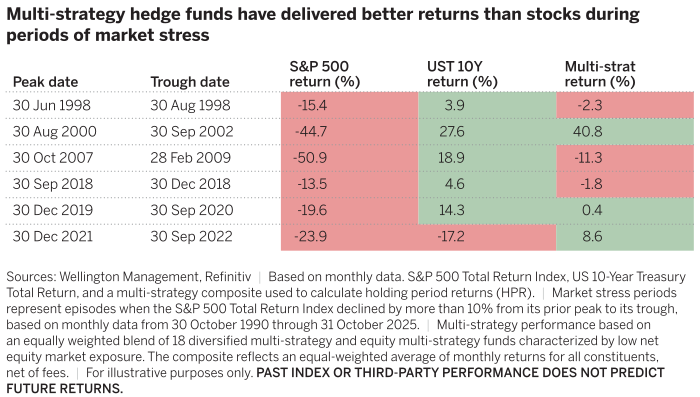
All of that said, if we’ve truly moved away from a deflationary world, driven by deglobalization, loose labor markets, and other factors, investors may need to think about fixed income allocations differently from the traditional core or core-plus approach within a 60/40 portfolio. Fixed income can still provide diversification, but I think it may call for more dynamic approaches — for example, with the ability to navigate different parts of the curve and to toggle the credit switch on or off as conditions change. Dynamic approaches may include total return strategies, multisector strategies that seek to add value through sector selection/rotation, opportunistic strategies that focus on out-of-favor sectors due for a recovery, and fixed income hedge funds.