






Hong Kong (香港), Individual

Changechevron_right
menu
search
Skip to main content

Wellington credit total return fund

Credit total return

Wellington US Quality Growth Fund

US quality growth fund

Over 95 years in active fixed income investing

Fixed income

Invest in Quality

Invest in Quality

2026 Outlook

Practical portfolio considerations for a new economic age

search

Chart in Focus: Where are rates headed?

Alex King, CFA, Investment Strategy Analyst
Joshua Riefler, Product Reporting Lead
2 min read
2026-09-29
Archived info
Archived pieces remain available on the site. Please consider the publish date while reading these older pieces.
Little boy looking for road direction on a beautiful green plateau. Slovenia, Europe.

The views expressed are those of the authors at the time of writing. Other teams may hold different views and make different investment decisions. The value of your investment may become worth more or less than at the time of original investment. While any third-party data used is considered reliable, its accuracy is not guaranteed.

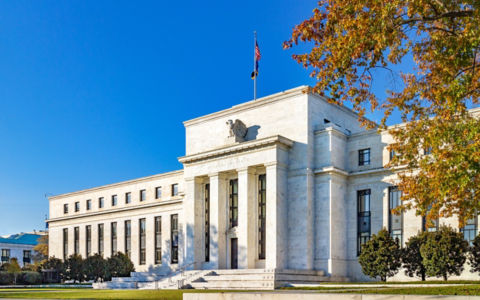
The Federal Reserve (Fed) has been on hold this year, making its last cut in December 2024, citing inflation risks tied to tariffs and policy uncertainty since then. Globally, developed markets have largely pressed forward continuing to cut rates. However, it appears the Fed may not be far behind, acknowledging that addressing potential cracks in the job market may take precedence over inflation, which tariffs have yet to accelerate.

The chart highlights the magnitude of cumulative rate hikes across developed markets to address pandemic-related inflation, as well as the subsequent scale of rate cuts currently underway to restore normalcy. With inflation having receded over the last couple of years, cuts have been aiming to move rates from a restrictive stance to a neutral stance — meaning to reach a level at which they are neither restrictive nor stimulative. More recently (rolling 3-month data), cuts have slowed, suggesting central banks are waiting to assess the impact of US tariff policy and other upside risks to inflation.

Historically, developed market central banks have largely moved in tandem with the Fed. However, complex dynamics such as tariff policy, aggressive fiscal global stimulus, and political interference with central banks could fracture this alignment, leading to potential policy divergence and disruption of cutting paths. 

rates-directions

Investment implications

  • Rate cuts tied to normalization often boost risk assets more than recession-driven easing. However, a smooth path from here may be thwarted not only by tariffs but also continued global fiscal stimulus, which is occurring at a time of reasonably strong economic growth. The context of the cuts matters and should cuts eventually be necessary to address poor growth, risk assets may face renewed volatility and headwinds. 
  • Even if the Fed ultimately cuts deeper to ward off a recession, rates are likely to remain at a higher level than they have been for the last decade. With bond yields likely to remain elevated, we believe the income environment will remain attractive for fixed income allocations, with potential for capital gains from duration. 
  • Higher inflation has driven cross-asset correlations higher in recent years, with bonds providing less protection in equity sell-offs. Going forward, some central banks seem to be focusing more on growth worries than inflation concerns, giving them more capacity to cut rates in growth-induced sell-offs. While contingent on keeping inflation at bay, this could improve the diversification benefit of including equities and bonds in multi-asset portfolios. 

What we are watching

  • Monitor changes in the inflation-versus-growth dynamic that may indicate the level of policy flexibility central banks may, should tariffs eventually induce weaker growth and higher inflation.
  • Political pressure on the Fed and whether any perceived erosion of its autonomy damages US credibility, including US-dollar value and term premia. 
  • Desynchronization of global economies and whether growth patterns that are harder to predict will lead to more volatile asset class returns as well as increased sector and country dispersion. 

Experts

Related funds

Read next

DISCLOSURE

This material and its contents may not be reproduced or distributed, in whole or in part, without the express written consent of Wellington Management. This document is intended for information purposes only. It is not an offer or a solicitation by anyone, to subscribe for shares in Wellington Management Funds (Luxembourg) III SICAV (the Fund). Nothing in this document should be interpreted as advice, nor is it a recommendation to buy or sell shares. Investment in the Fund may not be suitable for all investors. Any views expressed are those of the author at the time of writing and are subject to change without notice. Investors should carefully read the Key Facts Statement (KFS), Prospectus, and Hong Kong Covering Document for the Fund and the sub-fund(s) for details, including risk factors, before making an investment decision. Other relevant documents are the annual report (and semi-annual report).

© 2025 Morningstar, Inc. All Rights Reserved. The information contained herein: (1) is proprietary to Morningstar; (2) may not be copied or distributed; and (3) is not warranted to be accurate, complete or timely. Neither Morningstar nor its content providers are responsible for any damages or losses arising from any use of this information. The Overall Morningstar Rating for a fund is derived from a weighted average of the three, five, and ten year (if applicable) ratings, based on risk-adjusted return. Past performance is no guarantee of future results.

Issued by Wellington Management Hong Kong Limited. Investment involves risk. Past performance is not indicative of future performance. This document has not been reviewed by the Securities and Futures Commission of Hong Kong.