
Explore our insights
Asset class
Formats
2026 Midyear Investment Outlook

2026 Midyear Investment Outlook
The views expressed are those of the speaker(s) and are subject to change. Other teams may hold different views and make different investment decisions. For professional/institutional investors only. Your capital may be at risk.
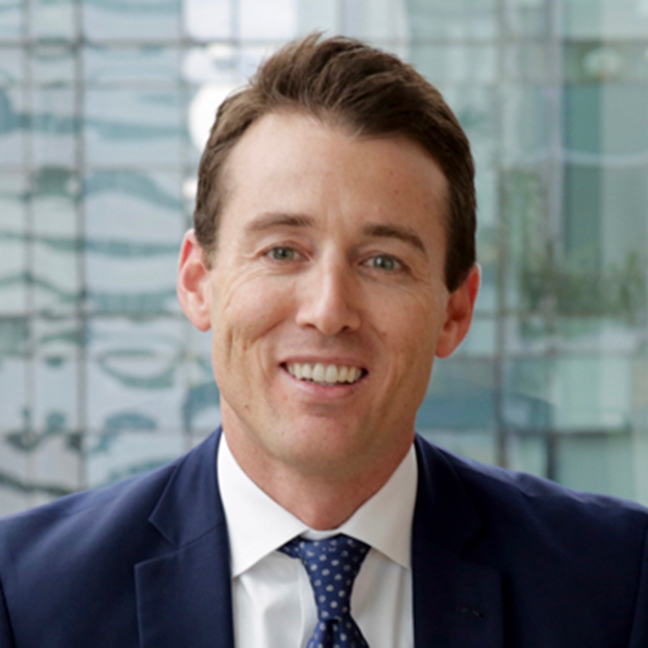
Mark Sullivan explores the evolution of hedge funds and explains where he believes the industry is heading.
2:00 – Meet Mark Sullivan
2:55 – Wellington’s hedge fund platform
4:20 – The evolution of the (highly competitive) hedge fund industry
7:30 – How and why clients are thinking more carefully
9:15 – What does the next decade in hedge fund investing look like?
Mark Sullivan: I would agree that the industry has gone through a significant evolution. I think the role of a hedge fund in the client portfolio has evolved alongside that. Really, post-global financial crisis, we've seen this shift happen. I generally think most clients think of their portfolio as 60% return seeking, 40% diversifying. That used to be 60% equity, 40% fixed income. Now, I think people take a broader view and are much more likely to use alternative products in the pursuit of those two areas. And what we've seen is hedge funds have really migrated, from the return-seeking part of the client portfolio into the diversifying part of the portfolio.
Chris Perret: Thirty-two years ago, Wellington took a momentous leap, launching its first hedge fund. Despite decades of success, as is often said in the industry, you're only as good as your last trade. The game has changed, investor expectations have sharpened, business models have evolved, and the competition is the fiercest it's ever been. Hello and welcome to the Wellington Investor Exchange. My name is Chris Perret, platform leader within Wellington's $36 billion hedge fund business. I'm hosting a new podcast miniseries with a focus on Wellington's long/short capabilities. Over the coming weeks, I will have the pleasure of sitting down with business leaders, portfolio managers, and analysts across our platform. My first guest is Mark Sullivan, partner and Head of Hedge Funds at Wellington. Mark is the chief architect of the firm's transformation from a provider of single-strategy hedge funds to what you see today is a proper hedge fund platform. Mark is a visionary leader, business builder, and successful investor — all subjects we’ll be exploring today. Mark, welcome to the show.
Mark Sullivan: Great to be here.
Chris: So, Mark, let's start with your story. How did you arrive at Wellington and what's been your journey from PM to platform leader?
Mark: I've been at Wellington for the entirety of my career — came here right out of undergrad and progressed, ultimately becoming a portfolio manager focused on REITS and FX, which I did for about 11 years. And then following the retirement of the prior team leader, Bob Evans, in 2016, I was given the opportunity to take over the lead role for the macro business. In 2019, the firm did a big review of its alternative businesses and concluded that the hedge fund business here was pretty good, but had the potential to be a great business. And Brendan Swords, who was the CEO at the time, thought it was important for us to achieve that potential that the business needed a new role, called the head of hedge funds. I was asked at that time to take on that role, and really provide the strategic, leadership for the hedge fund business.
Chris: So, Mark, let's talk a little bit about Wellington's hedge fund platform today. What does it look like in its current form?
Mark: So, today, I'm proud to say that Wellington's hedge fund platform is a platform. When I first took on this role, I think what Wellington was doing would better be described as a hedge fund provider of single-strategy funds into the market without a lot of cohesion across them — and, again, not a lot of strategy as to what we were trying to do. And so, over the last five-plus years, we've had a strategy of transforming, what we had into a true hedge fund platform. And that's really meant that we've had to do a few different things. One was re-underwrite and, in many cases, reorient the strategy lineup to be more consistent with the types of strategies we thought we needed to be able to run a hedge fund platform. The second was to also fill in the other capabilities that are really important to running a hedge fund platform. So what are some examples of that? The first one is about the manager selection and allocation process and framework. The second is risk capabilities, which are really important — both risk analytics technology models but also the risk professionals that you need. A third one is our Treasury function, what we call capital solutions. So, you know, this is the area that ensures that we are taking advantage of opportunities to be as capital efficient as possible — very important skill set for, for in our platform search front platform.
Chris: So, Mark, I think we have a good understanding of how things are structured today. A big topic in the industry is obviously competition. You mentioned it yourself — competition is fierce. How do you envision Wellington competing in this space?
Mark: This is a globally scaled performance industry, and as such, it has all of the characteristics that an industry like that has as it relates to talent. The competition for talent is fierce. And it's really important for us to think about what our value proposition is for portfolio managers and analysts as they think about where they will sit. And, and so we put a lot of thought into what our value proposition is. Ultimately, the way you have the most success as a PM is by being able to deliver performance to clients. And you really want to think about what is it you need besides yourself to be able to do that? Wellington, because it is a scaled organization, and it's a diverse organization in terms of the activities we do, provides a great platform for many PMs. We're really looking for PMs that believe being part of a firm like Wellington, that is a collaborative firm across a diverse set of specialists in the investment industry, will be a place that they thrive, and as a result, there are people that will also contribute to that culture.
Chris: Mark, let's talk about the hedge fund industry a little bit. The industry has gone through a notable evolution over the past decade. What do you think the next decade looks like and what are the opportunities and challenges the industry ultimately is going to face?
Mark: I would agree that the industry has gone through a significant evolution. I think the role of a hedge fund in the client portfolio has evolved alongside that. Really, post-global financial crisis, we've seen this shift happen. I generally think most clients think of their portfolio as 60% return seeking, 40% diversifying. That used to be 60% equity, 40% fixed income. Now, I think people take a broader view and are much more likely to use alternative products in the pursuit of those two areas. And what we've seen is hedge funds have really migrated, from the return-seeking part of the client portfolio into the diversifying part of the portfolio. Though, more recently, I think we're seeing the reemergence of interest in the return seeking part as well. But that's had a big effect on the industry itself. And you've seen the growth of the platform hedge fund through that period. And it means scale is a barrier to entry for hedge funds. It's no longer the case that hedge funds are run by three people in a garage.
Chris: Why is scale such a barrier?
Mark: Scale, is a barrier, one because of the resources you need as a firm — if you think about the investment required in technology today to run a hedge fund, the investment in a Treasury function to ensure that you are using leverage efficiently, etc. — and then also you have to be relevant to the street, right? Because running a hedge fund requires access to street resources, and you need to be big enough to matter to the street firms such that you'll get access to those resources to be able to deliver on your approach.
Chris: Mark, you meet a lot of investors around the world as part of your responsibilities. You know, what are some of the things that you're hearing from clients today?
Mark: There's a lot going on in the world, right? It is a period of regime change — there are a number of features of that. But it's one where I think people are thinking more carefully about how they're going to achieve their objectives, and within that, really thinking about how to get there in more creative ways because certain asset classes, like fixed income more recently, hasn't really played its role to the extent most people expect. As a consistent return — it's been okay, not great, still a liquid portfolio. But the part that's probably been the most troubling for people is its inconsistency as a diversifier. Its correlation to the equity market has become somewhat unstable and has resulted in a more risky portfolio than many clients originally expected, which is really helping, or, forcing people to think more creatively about how they get the objectives they need from their allocations. And again, that's led to more interest in hedge funds, certainly more interest in private asset portfolios, both on the equity and credit side. And I would expect that innovation in this area continues, and probably even picks up pace as we see, you know, the rise of digital assets, tokenization of funds, and then the impact of AI, as it starts to become more mainstream.
Chris: Mark, can you explain for listeners what you mean by the tokenization of funds?
Mark: Sure, so the tokenization of funds is a concept related to digital assets. And iIt's the use of blockchain technology to make funds and assets or generally anything, transactable, in a very efficient way. Again, using blockchain technology. And the term that's used to describe that is tokenization.
Chris: What do you think the next decade looks like for the hedge fund industry?
Mark: My hypothesis is that the next decade looks similar to what we've seen more recently in that you've seen consolidation of the top talent in the industry onto larger and larger platforms. I think it's likely that continues and that those capabilities are delivered to a broader set of client portfolios. As the, you know, the, wealth platforms get bigger and bigger and are becoming larger and larger and more consolidated themselves, they are becoming more sophisticated users of alternative products. I would guess that as the hedge fund platforms themselves continue to scale, they actually play a bigger role in those portfolios as well.
Chris: Who do you look up to in the industry, Mark?
Mark: I have a lot of respect for all the firms that are now at the top of the table. All those firms took a long time to build. They all faced challenges along the way. And this is an industry that has a strong survivorship bias, because the fail rate in the hedge fund industry is extremely high. So I have tremendous respect for the firms that exist today and are at scale and are really at their top of their game. There's a lot we can learn from what they've done well. And also appreciate that they're all very different from each other. They often get lumped together as one group. And while their objectives are similar to the way they get there is actually quite different, by firm, and so there's a lot to learn from all of those.
Chris: So, Mark, you're clearly a student of this industry, so I might actually put you in a little bit of a different seat to end the last question here. Imagine yourself, in a teaching role. What would be something you'd want to teach?
Mark: That's a good question. You know, I would probably teach economics, as you know, that's my background. But I think within that, I would definitely include some more real world education around finance that I think is often left untaught and for many people is something that they would really benefit from understanding how the mortgage market works or how to think about what banks do and how to navigate taxes and things like that.
Chris: So, Mark, first thing I'll say is I'm going to take that class. But secondly, Mark, I just want to thank you. It's been an absolute pleasure having you on the show today. So, thank you.
Mark: Thanks for having me.
Views expressed are those of the speaker(s) and are subject to change. Other teams may hold different views and make different investment decisions. For professional/institutional investors only. Your capital may be at risk. Podcast produced October 2025.
Wellington Management Company LLP (WMC) is an independently owned investment adviser registered with the US Securities and Exchange Commission (SEC). WMC is also registered with the US Commodity Futures Trading Commission (CFTC) as a commodity trading advisor (CTA) and serves as a CTA to certain clients including commodity pools operated by registered commodity pool operators. WMC provides commodity trading advice to all other clients in reliance on exemptions from CTA registration. WMC, along with its affiliates (collectively, Wellington Management), provides investment management and investment advisory services to institutions around the world. Located in Boston, Massachusetts, Wellington Management also has offices in Chicago, Illinois; Radnor, Pennsylvania; San Francisco, California; Frankfurt; Hong Kong; London; Luxembourg; Milan; Shanghai; Singapore; Sydney; Tokyo; Toronto; and Zurich. This material is prepared for, and authorized for internal use by, designated institutional and professional investors and their consultants or for such other use as may be authorized by Wellington Management. This material and/or its contents are current at the time of writing and may not be reproduced or distributed in whole or in part, for any purpose, without the express written consent of Wellington Management. This material is not intended to constitute investment advice or an offer to sell, or the solicitation of an offer to purchase shares or other securities. Investors should always obtain and read an up-to-date investment services description or prospectus before deciding whether to appoint an investment manager or to invest in a fund. Any views expressed herein are those of the author(s), are based on available information, and are subject to change without notice. Individual portfolio management teams may hold different views and may make different investment decisions for different clients. In Canada, this material is provided by Wellington Management Canada ULC, a British Columbia unlimited liability company registered in the provinces of Alberta, British Columbia, Manitoba, New Brunswick, Newfoundland and Labrador, Nova Scotia, Ontario, Prince Edward Island, Quebec, and Saskatchewan in the categories of Portfolio Manager and Exempt Market Dealer.
In Europe (excluding the United Kingdom and Switzerland), this material is provided by Wellington Management Europe GmbH (WME) which is authorized and regulated by the German Federal Financial Supervisory Authority (Bundesanstalt für Finanzdienstleistungsaufsicht – BaFin). This material may only be used in countries where WME is duly authorized to operate and is only directed at eligible counterparties or professional clients as defined under the German Securities Trading Act. This material does not constitute investment advice, a solicitation to invest in financial instruments or information recommending or suggesting an investment strategy within the meaning of Section 85 of the German Securities Trading Act (Wertpapierhandelsgesetz). In the United Kingdom, this material is provided by Wellington Management International Limited (WMIL), a firm authorized and regulated by the Financial Conduct Authority (FCA) in the UK (Reference number: 208573). This material is directed only at eligible counterparties or professional clients as defined under the rules of the FCA. In Switzerland, this material is provided by Wellington Management Switzerland GmbH, a firm registered at the commercial register of the canton of Zurich with number CH-020.4.050.857-7. This material is directed only at Qualified Investors as defined in the Swiss Collective Investment Schemes Act and its implementing ordinance. In Hong Kong, this material is provided to you by Wellington Management Hong Kong Limited (WM Hong Kong), a corporation licensed by the Securities and Futures Commission to conduct Type 1 (dealing in securities), Type 2 (dealing in futures contracts), Type 4 (advising on securities), and Type 9 (asset management) regulated activities, on the basis that you are a Professional Investor as defined in the Securities and Futures Ordinance. By accepting this material you acknowledge and agree that this material is provided for your use only and that you will not distribute or otherwise make this material available to any person. Wellington Investment Management (Shanghai) Limited is a wholly-owned entity and subsidiary of WM Hong Kong.
In Singapore, this material is provided for your use only by Wellington Management Singapore Pte Ltd (WM Singapore) (Registration Number 201415544E). WM Singapore is regulated by the Monetary Authority of Singapore under a Capital Markets Services Licence to conduct fund management activities and is an exempt financial adviser. By accepting this material you represent that you are a non-retail investor and that you will not copy, distribute or otherwise make this material available to any person. In Australia, Wellington Management Australia Pty Ltd (WM Australia) (ABN 19 167 091 090) has authorized the issue of this material for use solely by wholesale clients (as defined in the Corporations Act 2001). By accepting this material, you acknowledge and agree that this material is provided for your use only and that you will not distribute or otherwise make this material available to any person. Wellington Management Company LLP is exempt from the requirement to hold an Australian financial services licence (AFSL) under the Corporations Act 2001 in respect of financial services provided to wholesale clients in Australia, subject to certain conditions. Financial services provided by Wellington Management Company LLP are regulated by the SEC under the laws and regulatory requirements of the United States, which are different from the laws applying in Australia. In Japan, Wellington Management Japan Pte Ltd (WM Japan) (Registration Number 199504987R) has been registered as a Financial Instruments Firm with registered number: Director General of Kanto Local Finance Bureau (Kin-Sho) Number 428. WM Japan is a member of the Japan Investment Advisers Association (JIAA), the Investment Trusts Association, Japan (ITA) and the Type II Financial Instruments Firms Association (T2FIFA). WMIL, WM Hong Kong, WM Japan, and WM Singapore are also registered as investment advisers with the SEC; however, they will comply with the substantive provisions of the US Investment Advisers Act only with respect to their US clients.
©2025 Wellington Management Company LLP. All rights reserved.
Guest(s)

MORE EPISODES