




- Fixed Income Portfolio Manager
FEATURED EQUITY FUNDS
FEATURED FIXED INCOME FUNDS
Asset classes

FEATURED EQUITY FUNDS
FEATURED FIXED INCOME FUNDS
Asset classes
The views expressed are those of the author at the time of writing. Other teams may hold different views and make different investment decisions. The value of your investment may become worth more or less than at the time of original investment. While any third-party data used is considered reliable, its accuracy is not guaranteed.
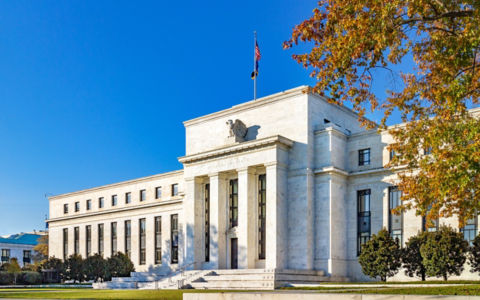
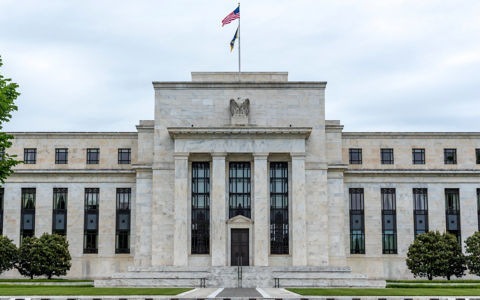
The September 2025 meeting of the Federal Open Market Committee (FOMC) arrives at a pivotal moment for US monetary policy. With inflation still elevated, labor market signals turning decisively weaker, and political pressures mounting on US Federal Reserve (Fed) independence, policy decisions over the balance of this year are likely to shape the trajectory of the US economy well into 2026.
As expected, this meeting, the FOMC cut interest rates by 25 basis points (bps) to a range of 4.0% to 4.25%, with just one dissenting vote. Stephen Miran, who was just confirmed this week as the newest member of the Fed Board of Governors, advocated for a larger, 50 bps reduction. The Fed’s updated Summary of Economic Projections reflects a more dovish outlook from the last publication in June. Now, short-term rates are expected to end 2025 and 2026 at lower levels than the Committee expected then, despite an upgrade to its growth forecast.
Inflation remains stubbornly above the Fed’s 2% target, with core personal consumption expenditures — the Fed’s preferred measure — ticking up to 2.9% year over year through August. While some policymakers argue that tariff-induced inflation may be transitory, others worry that the cumulative effects of trade policy and fiscal stimulus could entrench price pressures. My view is that inflation will remain closer to 3% than 2% over the next year as financial conditions remain loose — a dynamic likely to be reinforced by fiscal easing, deregulation, and reduced trade policy uncertainty.
After months of resilience, the labor market is showing signs of strain. Recent payroll growth has fallen short of expectations and there have been sizable downward revisions to prior months. The unemployment rate increased to 4.3% in the latest reading and constrained labor supply — exacerbated by immigration policy — has further complicated the Fed’s calculus.
These developments have shifted market expectations sharply, with futures markets now pricing another 132 bps of interest-rate cuts over the next year, which would bring the policy rate slightly below the FOMC’s estimate of neutral. This seems unduly aggressive to me, given the overall strength of the economy and still uncertain labor market supply-and-demand dynamics.
Perhaps the most consequential development is the political reshaping of the Fed itself. President Trump’s firing of Governor Lisa Cook — for which he cites pre-appointment mortgage fraud allegations — has ignited a constitutional debate over the limits of executive power.
While the Supreme Court has previously ruled in favor of Fed independence, this precedent stands on uncertain footing. Arguably vague language permitting executive action “for cause” may now be exploited to remove dissenting voices.
Governor Cook’s removal has been overruled for now, with Trump vowing to have the Supreme Court weigh in. If the final arbiter sides with Trump, his appointees could soon hold a majority on the Board of Governors, and thus steer policy in a more dovish direction. This shift could have profound implications:
At its September meeting, the FOMC restarted its journey toward a more neutral policy setting. As inflation remains sticky and labor markets soften, the Fed must balance its dual mandate with growing political interference. The firing of Governor Cook and the pressure on Fed Chair Jerome Powell to conform to executive preferences threaten to erode the Fed’s credibility at a time when its impartiality is most needed.
Whether the Fed can maintain its institutional integrity while navigating economic crosscurrents will define not only the path of monetary policy but also the resilience of the US dollar and US financial markets in the face of political volatility.
Expert

Related funds

Wellington Credit Income Fund
A multi-sector credit fund seeking attractive long-term total returns and consistent income through active sector rotation
Wellington Credit Total Return Fund
A long-only cash and bond fund seeking long-term total returns by investing primarily in US Dollar-denominated treasuries, corporate bonds and emerging markets issuers.

Wellington Global Quality Growth Fund
Global equity fund investing in high-quality growth companies
Wellington US Quality Growth Fund
US equity fund aiming to invest in high-quality growth companies
Past results are not necessarily indicative of future results and an investment can lose value. Funds returns are shown net of fees. Source: Wellington Management
© 2026 Morningstar, Inc. All Rights Reserved. The information contained herein: (1) is proprietary to Morningstar; (2) may not be copied or distributed; and (3) is not warranted to be accurate, complete or timely. Neither Morningstar nor its content providers are responsible for any damages or losses arising from any use of this information. The Overall Morningstar Rating for a fund is derived from a weighted average of the three, five, and ten year (if applicable) ratings, based on risk-adjusted return. Past performance is no guarantee of future results.
The content within this page is issued by Wellington Management Singapore Pte Ltd (UEN: 201415544E) (WMS). This advertisement or publication has not been reviewed by the Monetary Authority of Singapore. Information contained on this website is provided for information purposes and does not constitute financial advice or recommendation in any security including but not limited to, share in the funds and is prepared without regard to the specific objectives, financial situation or needs of any particular person.
Investment in the funds described on this website carries a substantial degree of risk and places an investor’s capital at risk. The price and value of investments is not guaranteed. The value of the shares of the funds and the income accruing to them, if any, and may fall or rise. An investor may not get back the original amount invested and an investor may lose all of their investment. Investment in the funds described on this website is not suitable for all investors. Investors should read the prospectus and the Product Highlights Sheet of the respective fund and seek financial advice before deciding whether to purchase shares in any fund. Past performance or any economic trends or forecast, are not necessarily indicative of future performance. Some of the funds described on this website may use or invest in financial derivative instruments for portfolio management and hedging purposes. Investments in the funds are subject to investment risks, including the possible loss of the principal amount invested. None of the funds listed on this website guarantees distributions and distributions may fluctuate and may be paid out of capital. Past distributions are not necessarily indicative of future trends, which may be lower. Please note that payment of distributions out of capital effectively amounts to a return or withdrawal of the principal amount invested or of net capital gains attributable to that principal amount. Actual distribution of income, net capital gains and/or capital will be at the manager’s absolute discretion. Payments on dividends may result in a reduction of NAV per share of the funds. The preceding paragraph is only applicable if the fund intends to pay dividends/ distributions. Performance with preliminary charge (sales charge) is calculated on a NAV to NAV basis, net of 5% preliminary charge (initial sales charge). Unless stated otherwise data is as at previous month end.
Subscriptions may only be made on the basis of the latest prospectus and Product Highlights Sheet, and they can be obtained from WMS or fund distributors upon request.
This material may not be reproduced or distributed, in whole or in part, without the express written consent of Wellington Management.