






- Fixed Income Portfolio Manager
Skip to main content
- Funds
- Capabilities
- Insights
- About Us
Asset classes
Hong Kong (香港), Individual
Changechevron_rightThe views expressed are those of the authors at the time of writing. Other teams may hold different views and make different investment decisions. The value of your investment may become worth more or less than at the time of original investment. While any third-party data used is considered reliable, its accuracy is not guaranteed.
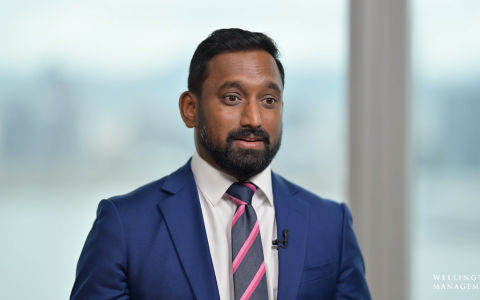
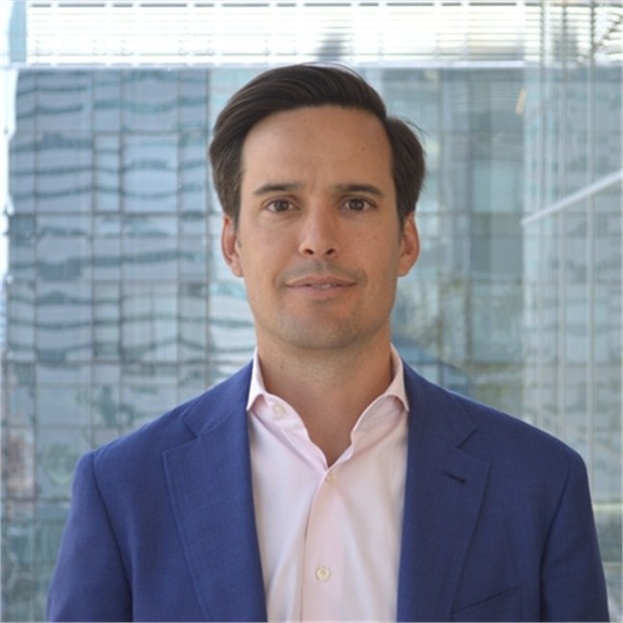
Paul Skinner, discusses the US election results and the implications for the bond market with Fixed income Portfolio Manager Connor Fitzgerald. Below is a transcript of the interview.
Paul Skinner: It's the day after the US election and we have the result. Fortunately, I have Connor Fitzgerald here with me who is from Boston, and he hopefully can shed a little bit of light on what has gone on. Connor, were you surprised by the Trump result?
Connor Fitzgerald: I would say we're a little bit surprised in terms of the margin of victory, for sure. I think our view going into the election, it was going to be really tight, looking like a toss-up. Happy to talk about some of the market implications and how we’re positioning.
Paul Skinner: That's key. How were you positioned going in, if you were 50-50? And what do you think you’re going to do as you go forth?
Connor Fitzgerald: Sure, going in, we've had this view that on a longer-term structural basis, the fiscal deficits in the US are definitely a concern. We didn't think that was going to change regardless of who won the presidency, or the House or the Senate. If anything, we think there is a risk that a Trump administration — depending on how much of a win they have in the Republican Senate or in the House – we think it does pull forward those fiscal issues, and we think that's important for the bond market.
Going into this week, we've been favoring positioning in on the Treasury curve. Owning shorter maturity securities and trying to keep our duration down, thinking that a Trump victory would lead to a steepening of the Treasury curve. We've definitely seen that play out in the past couple of weeks as his odds move higher and have continued to see it this morning. But we still think on a longer-term structural horizon, there's still scope for the yield curve to steepen and that's driven by a couple of things. Regardless of how they do in the House and the Senate, we think he can make moves on immigration, which we think is inflationary, make moves on tariffs which is also inflationary, deregulation, pro-growth... Most of his policies, we think, are pro-growth and pro-inflation for the immediate investable time horizon. That's what we are focused on and why we're keeping the duration down.
Paul Skinner: Ok, so duration down. What about your position in risk assets? How are you looking at credit as we go through?
Connor Fitzgerald: Credit spreads have run a lot this year, and even just in the past month, have moved tighter by a pretty significant amount. We still think it's a pretty good time to be invested in credit, but we do want to acknowledge the valuation equation is not as good as it was at the beginning of the year. Frankly, I would say there's probably more upside in equities at this point, as we're sort of later in the spread cycle. But I think there are still some good, idiosyncratic opportunities in different sectors, high yield, and sectors in emerging markets. The overall yield equation still looks pretty good in fixed income to earn some income without taking a ton of credit risk, or a ton of duration.
Paul Skinner: So, that duration credit all looks sensible, but we got a Trump presidency. What could go wrong? What are the risks in both those areas?
Connor Fitzgerald: I think a lot of his policies are kind of challenge-the-status-quo. He could get really aggressive on tariffs. He's talked about having his administration be involved with the Federal Reserve decision-making process. He's obviously pro-American business and onshoring, which is going to potentially accelerate the deglobalization theme, fragmented supply chains, etc.
I would say the biggest risk is the back end of the Treasury curve. I don't want to say it becomes unanchored, but it just becomes more volatile. So that's definitely something we're focused on as we get an idea of what he plans to do in his first 60 to 90 days.
Paul Skinner: Okay, and do you think there's going to be a lot of activity in that early stage? Or will you wait for them to do a calculated move on these various things, like tariffs?
Connor Fitzgerald: I think it will be calculated, but I think he's been pretty clear on what he wants to do. So, I think he'll get going pretty quickly.
Paul Skinner: Excellent, all right. We'll look forward to the market implications, and we'll definitely be talking to you again. Thank you, Connor.

Experts
Related funds
Low tide, sharp eyes: What to pick up
Continue readingPractical portfolio considerations for a new economic age
Continue readingRapid Fire Questions with Ross Dilkes
Continue readingChart in Focus: Is the Fed rate cut positive for risk?
Continue readingURL References
Related Insights
Low tide, sharp eyes: What to pick up
Fixed Income Managers Campe Goodman and Rob Burn share their outlook for credit in 2026 and discuss how investors can reposition for an environment where opportunities are harder to find.
Practical portfolio considerations for a new economic age
Solutions Director Andrew Sharp Paul explores practical portfolio considerations for a new economic age, focusing on quality equities, discerning bonds, and local APAC opportunities.
Rapid Fire Questions with Ross Dilkes
In this edition of “Rapid Fire Questions,” fixed income portfolio manager Ross Dilkes shares his views on the Asia credit market—covering the macro outlook, China’s momentum, the most compelling opportunities across the region, and key risks shaping the next 12 months.
Chart in Focus: Is the Fed rate cut positive for risk?
In this edition of Chart in Focus, we examine how the Fed’s long-awaited interest rate cut may influence risk assets.
Chart in Focus: What do higher long-end yields mean?
Long-end yields have climbed on concerns over structural growth and fiscal expansion. In this edition of Chart in Focus, we explore how shifting yield curves are reshaping opportunities across asset classes.
Chart in Focus: Fed rate cuts resume — What’s next for investors?
In this edition of Chart in Focus, we explore the Fed’s return to rate cuts after a strategic pause. We examine how this move, alongside diverging central banks paths, could shape the outlook for risk assets.
FOMC: Cushioning the US labor market
Fixed Income Portfolio Manager Jeremy Forster analyzes the Fed's decision to cut interest rates at the September FOMC meeting.
How a changing Europe is reshaping credit markets
Portfolio Managers Derek Hynes and Konstantin Leidman explore how a changing Europe is reshaping the region's credit markets and identify key takeaways for investors.
Chart in Focus: Where are rates headed?
In this edition of Chart in Focus, we take a look at where rates have been headed and potential implications moving forward.
(Re)emerging markets: 10 reasons for optimism
Our experts identify 10 reasons why now may be the time for investors to reconsider emerging markets.
Multiple authors
Facing a new economic reality
We summarize our 2025 mid-year outlooks.
URL References
Related Insights
DISCLOSURE
This material and its contents may not be reproduced or distributed, in whole or in part, without the express written consent of Wellington Management. This document is intended for information purposes only. It is not an offer or a solicitation by anyone, to subscribe for shares in Wellington Management Funds (Luxembourg) III SICAV (the Fund). Nothing in this document should be interpreted as advice, nor is it a recommendation to buy or sell shares. Investment in the Fund may not be suitable for all investors. Any views expressed are those of the author at the time of writing and are subject to change without notice. Investors should carefully read the Key Facts Statement (KFS), Prospectus, and Hong Kong Covering Document for the Fund and the sub-fund(s) for details, including risk factors, before making an investment decision. Other relevant documents are the annual report (and semi-annual report).
© 2025 Morningstar, Inc. All Rights Reserved. The information contained herein: (1) is proprietary to Morningstar; (2) may not be copied or distributed; and (3) is not warranted to be accurate, complete or timely. Neither Morningstar nor its content providers are responsible for any damages or losses arising from any use of this information. The Overall Morningstar Rating for a fund is derived from a weighted average of the three, five, and ten year (if applicable) ratings, based on risk-adjusted return. Past performance is no guarantee of future results.
Issued by Wellington Management Hong Kong Limited. Investment involves risk. Past performance is not indicative of future performance. This document has not been reviewed by the Securities and Futures Commission of Hong Kong.
We seek to exceed the investment objectives and service expectations of our fund investors and their advisers worldwide
© Copyright 2025 Wellington Management Hong Kong Limited. All rights reserved.
WELLINGTON MANAGEMENT® is a registered service mark of Wellington Group Holdings LLP.
Wellington Management Hong Kong Limited 威靈頓管理香港有限公司 is a private company incorporated with limited liability in Hong Kong, with its address at 17/F Two International Finance Centre, 8 Finance Street, Central, Hong Kong. It is licensed and regulated by the Securities and Futures Commission of Hong Kong with CE Number AJB478.