


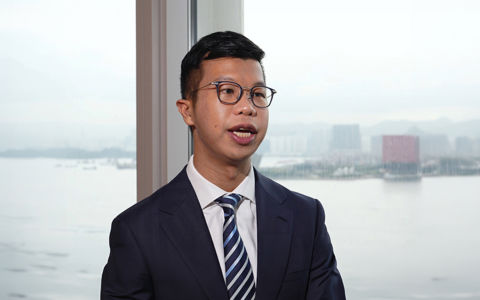

- Investment Strategist
- Hong Kong
FEATURED EQUITY FUNDS
FEATURED FIXED INCOME FUNDS
Asset classes

Asset classes
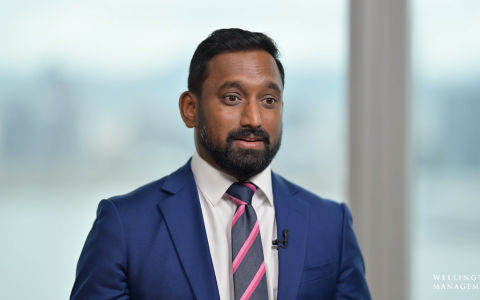
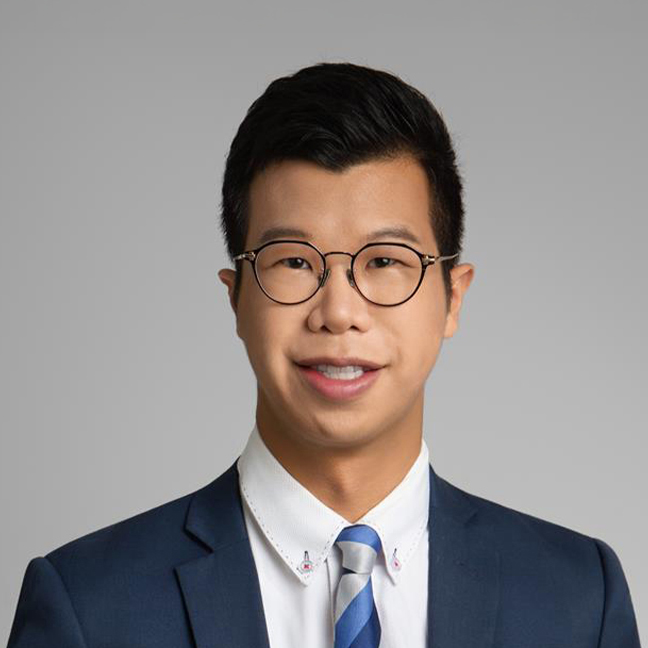
In a recent interview with AASTOCKS, Investment Strategist Steve Cheung shared our perspectives on Asian equities. Steve discussed the region’s rich opportunities — from key AI enablers and beneficiaries to quality dividend opportunities — and how this combination can provide upside potential with greater resilience.
The interview is available in Cantonese only.
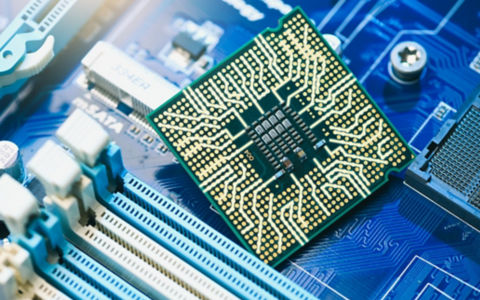
Asia plays a central role in the AI supply chain ecosystem and, in particular, holds key positions in the semiconductor value chain. Japan is home to critical materials and tools, Korea leads in memory, and Taiwan continues to set the bar in advanced fabs and packaging and testing.
Beyond the AI supply chain, Asia is also a leader in industrial automation, with more than 65% of the global industrial robots operating in the region1. On the other hand, Asia also has a clear structural edge in gaming, underpinned by its ownership of globally valuable intellectual property and technical expertise.
Today’s leading Asian technology companies tend to have relatively resilient business models, strong competitive moats, and robust cash flows. Technology leaders, especially in Taiwan and Korea, are returning capital to shareholders through dividends and share buybacks. Investors can potentially capture both capital appreciation and income through AI opportunities.
Asia accounts for about one-third of the global high-dividend universe2. Opportunities span traditional sectors such as financials, utilities, and REITs, as well as technology and industrials. Over the long term, dividends have accounted for around 65% of total returns in Asia3, and we believe payout ratios still have room to grow.
Key drivers for Asian equities include AI adoption, better corporate governance, and improved shareholder returns. A balance approach may include growth exposure to AI-related industries, such as semiconductors and automation, on one hand, and income exposure through high-dividend stocks, such as REITs and financials, on the other.
With rapid changes driven by AI and geopolitics, a passive approach may not fully capture the breadth of opportunities. AI’s impact extends well beyond the technology sector — from software and semiconductors to industrial automation, healthcare, consumer sectors, and digital platforms. In other words, AI beneficiaries are not limited purely to “technology stocks.” This is where active management can add value: by identifying opportunities across sectors to build a more diversified portfolio positioned for future growth.
Our team of Global Industry Analysts includes 12 technology specialists with an average of 17 years of experience4. They cover areas ranging from semiconductors and hardware to automation, as well as digital content and platforms, allowing us to assess opportunities across the full value chain.
In selecting stocks, the Asia technology team focuses on factors such as structural growth, technology leadership, and industry structure. The team seeks companies with the potential to achieve revenue growth and margin expansion.
Our Asia quality income team focuses on three types of companies:
We conduct in-depth analysis of corporate cash flow and balance sheets to identify companies capable of maintaining sustainable dividend payouts.
1Source: International Federation of Robotics, World Robotics 2025 report. Asia includes China, Japan, South Korea, Taiwan, and India. | 2Sources: MSCI and FactSet, as of 31 December 2025. Asia ex Japan accounts for 34% of the global universe of companies with market capitalization above USD 3 billion and dividend yields over 3%. | 3Sources: Bloomberg Finance L.P., Wellington Management. Monthly cumulative return data from 1 January 1988 to 31 December 2025. Indexes used: MSCI AC Asia ex Japan Price Return USD and MSCI AC Asia ex Japan Gross Total Return USD. Dividend return is calculated as cumulative gross total return less cumulative price return. PAST INDEX PERFORMANCE DOES NOT PREDICT FUTURE RETURNS. | 4Source: Wellington Management, as of 31 December 2025.
The views expressed are those of the speaker at the time of filming. Other teams may hold different views and make different investment decisions. The value of your investment may become worth more or less than at the time of original investment. While any third-party data used is considered reliable, its accuracy is not guaranteed.
DISCLOSURE
This material and its contents may not be reproduced or distributed, in whole or in part, without the express written consent of Wellington Management. This document is intended for information purposes only. It is not an offer or a solicitation by anyone, to subscribe for shares in Wellington Management Funds (Luxembourg) III SICAV (the Fund). Nothing in this document should be interpreted as advice, nor is it a recommendation to buy or sell shares. Investment in the Fund may not be suitable for all investors. Any views expressed are those of the author at the time of writing and are subject to change without notice. Investors should carefully read the Key Facts Statement (KFS), Prospectus, and Hong Kong Covering Document for the Fund and the sub-fund(s) for details, including risk factors, before making an investment decision. Other relevant documents are the annual report (and semi-annual report).
© 2026 Morningstar, Inc. All Rights Reserved. The information contained herein: (1) is proprietary to Morningstar; (2) may not be copied or distributed; and (3) is not warranted to be accurate, complete or timely. Neither Morningstar nor its content providers are responsible for any damages or losses arising from any use of this information. The Overall Morningstar Rating for a fund is derived from a weighted average of the three, five, and ten year (if applicable) ratings, based on risk-adjusted return. Past performance is no guarantee of future results.
Issued by Wellington Management Hong Kong Limited. Investment involves risk. Past performance is not indicative of future performance. This document has not been reviewed by the Securities and Futures Commission of Hong Kong.