United Kingdom, Professional

Changechevron_right
menu
search
Skip to main content
search

Beyond beta: solving today’s portfolio diversification challenge

4 min read
2027-04-28
Archived info
Archived pieces remain available on the site. Please consider the publish date while reading these older pieces.
engine insight
Maria Vittoria Venezia, Investment Analyst
engine insight
Christian Erazo, Investment Specialist
engine insight

Key points

  • The portfolio construction approaches of the past are coming under strain in the new economic era.
  • Equity and bond correlations are increasingly unstable, and fixed income alone may no longer be a reliable diversifier.
  • Additionally, in an environment of lower expected equity beta returns, alpha has become more important in achieving investors’ return objectives.
  • These challenges are prompting investors to look beyond traditional portfolio building blocks and towards potentially more reliable sources of absolute return that are less dependent on market direction and more resilient across cycles.

The challenge

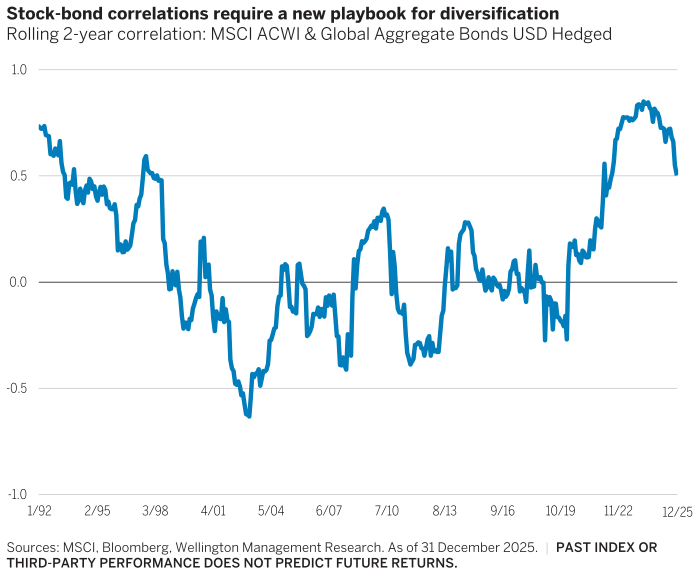
Historically, investors have diversified their portfolios through a mix of equities and bonds, with broad market exposures and asset allocation driving returns. But with stocks and bonds moving together more frequently in recent times, the traditional rules of portfolio diversification are being put to the test. Duration may act as a less reliable ballast to equity risk, given a more explicit inflation-growth trade-off and the potential for more inflation surprises to shift cross-asset correlations.

Figure 1

Stock bond correlations require a new playbook for diversification

The views expressed are those of the author(s) at the date of publication and are subject to change. Other teams may hold different views and make different investment decisions.

To add to the challenge facing investors, equity market returns are likely to be lower in the years ahead, given higher starting valuations and heightened drawdown risks. In this environment, finding alpha is becoming increasingly important to meet investors’ return objectives. Put simply, 2% alpha on a market return of 6% makes a bigger difference than on a market return of 20%.

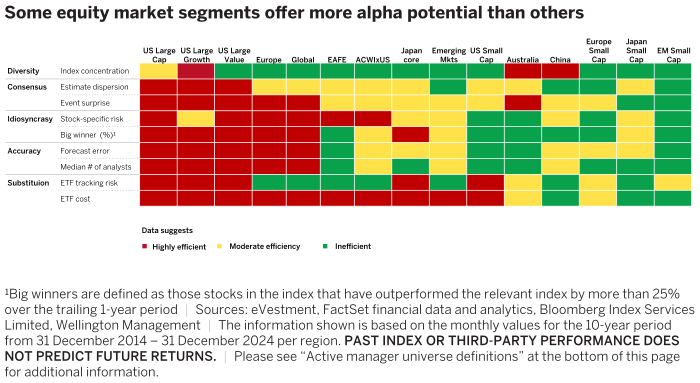
For investors focused on finding that additional alpha, the question becomes where to source it. Less efficient segments of the equity market — such as small caps, ex-US mandates or value — may offer the best hunting ground for active managers. But investors often don’t want the factor, style and sector risk associated with overweighing these areas. Many prefer broad global equity beta exposures, but this potentially leaves them structurally underexposed to the most alpha-rich opportunity sets. This tension highlights the need to recalibrate portfolios’ alpha-beta footprint by finding straightforward ways to introduce more alpha potential without the less desirable betas.

Figure 2

Some equity market segments offers more alpha potential than others

The solution

Investors are increasingly grappling with a core portfolio construction question: how to respond to these conditions with minimal disruption, while introducing reliable diversification and addressing the absolute return challenge.

One potential solution is to introduce a multi-manager absolute return equity strategy that provides access to diversified alpha without relying on market beta to drive outcomes. When isolated from market factors, alpha can emerge as a genuinely uncorrelated return source. The idea is to separate manager skill (alpha) from market risk. In simple terms, find managers who are generating alpha above their benchmark in inefficient parts of the market, and mitigate the market and factor exposure through hedging. Combining multiple managers generating alpha from different regions, styles and opportunity sets, while mitigating market and factor risk, introduces further diversification and complementary alpha profiles. The result is a diversified, market-neutral return profile.

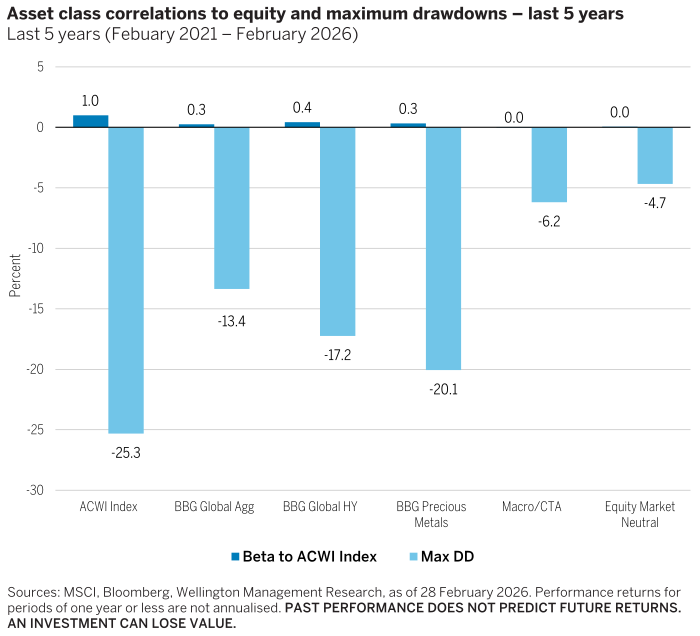
A multi-manager allocation can be paired with “beta” achieved through other core long-only allocations to enable investors to access alpha-rich segments of the equity market while helping to bridge the gap between required and expected portfolio returns. If this approach is implemented well, and the factor risks are mitigated in a precise way, the remaining uncorrelated alpha can provide real diversification to multi-asset portfolios. Funding this allocation from existing fixed income and equity allocations can improve overall portfolio diversification and reduce drawdowns during periods of market stress, as the recent experience across major asset classes has shown.


Figure 3

asset class correlations to equity and maximum drawdowns - last 5 years

Bridging the gap between growth and resilience

We think the case for truly diversifying strategies is becoming increasingly compelling. The lesson, in our view, is simple: diversification works best when deliberately built from an independent return driver, rather than assumed through asset-class exposure alone. We believe that isolating alpha as an independent return driver can provide that diversification, while offering a potentially reliable source of market-neutral absolute return to bridge the gap between market beta and return objectives. In essence, multi-manager absolute return global equity solutions can offer a practical solution for investors seeking resilience, reliability and return.

The views expressed are those of the author at the time of writing. Other teams may hold different views and make different investment decisions. The value of your investment may become worth more or less than at the time of original investment. While any third-party data used is considered reliable, its accuracy is not guaranteed. For professional, institutional or accredited investors only.

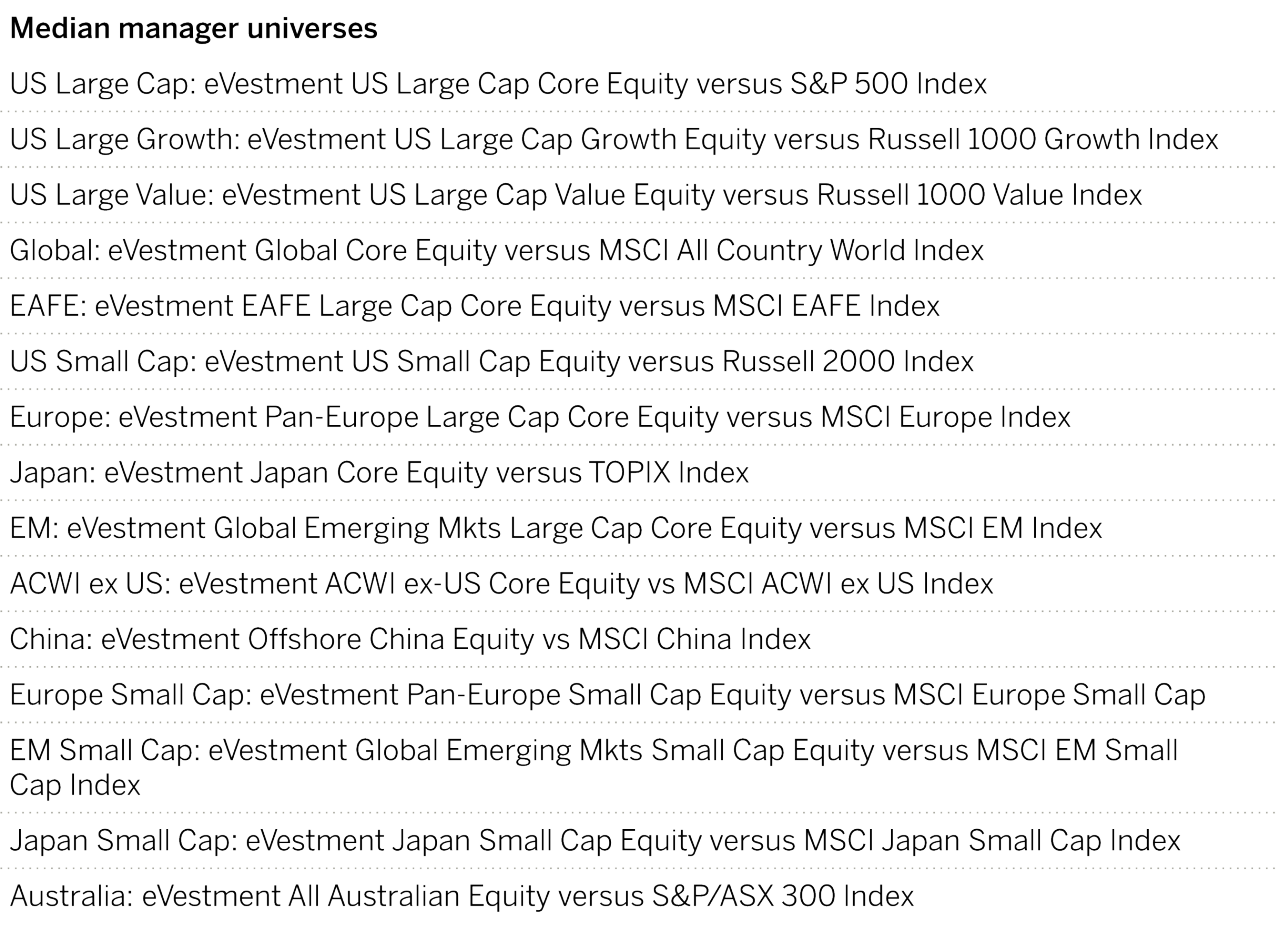
Active manager universe definitions

asset class correlations to equity and maximum drawdowns - last 5 years

The views expressed are those of the authors at the time of writing. Other teams may hold different views and make different investment decisions. The value of your investment may become worth more or less than at the time of original investment. While any third-party data used is considered reliable, its accuracy is not guaranteed. For professional, institutional or accredited investors only.

Experts

Get our latest market insights straight to your inbox.

Read more from our experts