





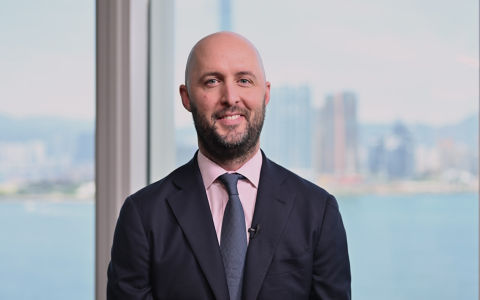

- Fixed Income Portfolio Manager
FEATURED EQUITY FUNDS
FEATURED FIXED INCOME FUNDS
Asset classes

FEATURED EQUITY FUNDS
FEATURED FIXED INCOME FUNDS
Asset classes
In this edition of “Rapid fire questions,” fixed income portfolio manager Schuyler Reece shares his read on the evolving macro backdrop amid the Middle East conflict, why he remains constructive on emerging markets debt (EMD), and where he sees the most compelling opportunities and risks across hard currency, local debt and EM currencies.
Q: How do you interpret the current macro environment in light of recent market developments?
Coming into 2026, we had high conviction in the macro backdrop, with strong expectations for growth, a belief in broadly accommodative central banking, and a view of low volatility persisting throughout the year. The events of the past eight weeks have challenged these assumptions. We've lowered our expectations for growth in light of a significant energy price shock. We've adjusted our expectations for rate cuts, but, really importantly, we see very stable and supportive emerging market fundamentals, which define our outlook in the year ahead.
Q: With that in mind, what is your outlook on EMD?
Over the past five years, we've seen broad consolidation across emerging markets: Credible central banking, which we believe puts emerging markets in a favorable position to absorb shock. Emerging markets offer incredible opportunities today. This is a diverse asset class with multiple levers for us to pull during a period of market volatility.
We're most favorable on:
with a lesser preference for investment grade sovereigns and corporates.
Our optimism about sub-investment grade sovereigns is driven by fundamental improvement, consolidation, and broad multilateral support from lenders like the IMF, and deep market access for countries who are most reliant on debt capital markets for funding.
Local markets’ optimism is driven by a view that we've entered a period of structural dollar weakness, which is very supportive both for local currency returns and also accrues fundamental benefits to the countries that we cover.
Q: Do you see AI influencing EMD fundamentals or technicals going forward?
AI-driven issuance is dominating developed market credit, and the large accumulation of debt across both investment grade and high yield in the United States is drawing significant investor concerns. Emerging markets are behaving very differently. We don't have the same capital needs. In many cases, we're seeing consolidation. The divergence in fundamentals across emerging and developed market credit, I think, is one of the most appealing factors behind investor interest in our asset class today; and it's one that, I think, will define a more benign default outlook over the medium term.
Q: What are your 1-2 highest conviction ideas right now?
We’re particularly excited about opportunities in Latin America. This is grounded in the increasing importance of geopolitics, and our analysis alongside traditional fundamental variables. Countries like Venezuela, Brazil, and Colombia are attractive across both hard currency and local markets today, as we believe the United States is increasingly incentivized to deliver economic support to countries across Central and South America.
We also have increasing conviction that we’ve entered a period of structural dollar weakness. This is driven by policy unpredictability in the United States, alongside worrisome debt dynamics. Across the landscape of emerging market currencies, presently, our highest conviction is in parts of Latin America and frontier markets, but also, very importantly, in places like China, where we believe that there’s significant scope for Chinese currency.
Q: What are the key risks to watch over the next 6-12 months?
Front of mind today is the duration and intensity of the ongoing conflict in the Middle East. High levels of starting inventories across all energy products offer a finite buffer against impaired energy flows from the Strait of Hormuz. To the extent that the conflict extends for another month or two, we would have greater fears of a worse growth-and-inflation tradeoff in the months ahead.
Relatedly, global central banking has become much more complicated, as inflationary impulses have increased—and are at risk of increasing further—in light of higher energy prices globally. We’re monitoring additional pressures on the Federal Reserve, as President Trump seeks to install Kevin Warsh as the new head of the FOMC.
Q: How do you leverage Wellington’s research ecosystem to inform your investment decisions?
Amidst the ongoing conflict in Iran, global monetary policymaking has become more complicated as central bankers face a difficult decision regarding the growth and inflationary tradeoffs. At the Federal Reserve, issues are even more profound, as there are political pressures on the Fed to lower interest rates, which can further erode global perceptions of policy credibility in the United States.
Wellington's Emerging Markets Debt team is one of its most global. We have investors in Boston, London, Hong Kong and Singapore. Our regional alignment allows us to connect with issuers, both sovereign and corporate, on a daily basis. Even more importantly, however, is our position within Wellington's broad investment ecosystem, which affords us the ability to benefit from insights across experts in macroeconomics, commodities, equities and other credit markets.
Over the past eight weeks, I've been so impressed with the partnership that I've seen across our sovereign and corporate researchers during this times of crisis, alongside our commodity experts and other macro strategists, as we try to understand how the world will cope with the ongoing energy price shock.
The views expressed are those of the speaker at the time of filming. Other teams may hold different views and make different investment decisions. The value of your investment may become worth more or less than at the time of original investment. While any third-party data used is considered reliable, its accuracy is not guaranteed.
Past results are not necessarily indicative of future results and an investment can lose value. Funds returns are shown net of fees. Source: Wellington Management
© 2026 Morningstar, Inc. All Rights Reserved. The information contained herein: (1) is proprietary to Morningstar; (2) may not be copied or distributed; and (3) is not warranted to be accurate, complete or timely. Neither Morningstar nor its content providers are responsible for any damages or losses arising from any use of this information. The Overall Morningstar Rating for a fund is derived from a weighted average of the three, five, and ten year (if applicable) ratings, based on risk-adjusted return. Past performance is no guarantee of future results.
The content within this page is issued by Wellington Management Singapore Pte Ltd (UEN: 201415544E) (WMS). This advertisement or publication has not been reviewed by the Monetary Authority of Singapore. Information contained on this website is provided for information purposes and does not constitute financial advice or recommendation in any security including but not limited to, share in the funds and is prepared without regard to the specific objectives, financial situation or needs of any particular person.
Investment in the funds described on this website carries a substantial degree of risk and places an investor’s capital at risk. The price and value of investments is not guaranteed. The value of the shares of the funds and the income accruing to them, if any, and may fall or rise. An investor may not get back the original amount invested and an investor may lose all of their investment. Investment in the funds described on this website is not suitable for all investors. Investors should read the prospectus and the Product Highlights Sheet of the respective fund and seek financial advice before deciding whether to purchase shares in any fund. Past performance or any economic trends or forecast, are not necessarily indicative of future performance. Some of the funds described on this website may use or invest in financial derivative instruments for portfolio management and hedging purposes. Investments in the funds are subject to investment risks, including the possible loss of the principal amount invested. None of the funds listed on this website guarantees distributions and distributions may fluctuate and may be paid out of capital. Past distributions are not necessarily indicative of future trends, which may be lower. Please note that payment of distributions out of capital effectively amounts to a return or withdrawal of the principal amount invested or of net capital gains attributable to that principal amount. Actual distribution of income, net capital gains and/or capital will be at the manager’s absolute discretion. Payments on dividends may result in a reduction of NAV per share of the funds. The preceding paragraph is only applicable if the fund intends to pay dividends/ distributions. Performance with preliminary charge (sales charge) is calculated on a NAV to NAV basis, net of 5% preliminary charge (initial sales charge). Unless stated otherwise data is as at previous month end.
Subscriptions may only be made on the basis of the latest prospectus and Product Highlights Sheet, and they can be obtained from WMS or fund distributors upon request.
This material may not be reproduced or distributed, in whole or in part, without the express written consent of Wellington Management.