Luxembourg, Institutional
Change



Key points
- The upcoming Spanish election is the first in a series of ballots in the euro area with potentially significant investment implications.
- The race is tightening, but we are likely to see a rightward shift, echoing a broader trend across Europe.
- We see limited near-term macro implications and maintain a neutral to positive outlook for Spain over the medium term.
- Key investment implications to watch include the relative performance of Spanish government bonds, the domestic equity market and specific sectors, as well as how potentially restrictive immigration policy and greater EU alignment may affect Spain’s growth trajectory.
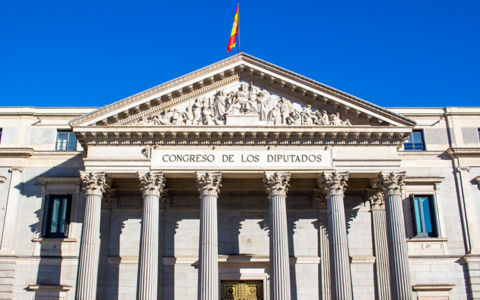
Outgoing Spanish Prime Minister Pedro Sánchez’s decision to call a snap general election for 29 November kicks off a series of pivotal European ballots, with potentially significant investment implications.
A last political gamble?
Pedro Sánchez appears to be attempting to repeat the strategy of calling a snap election after major setbacks, which helped to turn around the fortunes of his centre-left Spanish Socialist Workers’ Party (Partido Socialista Obrero Español, or PSOE) ahead of the 2023 election. This time, however, the backdrop is less favourable for the Spanish Socialists: corruption controversies have weighed on Sánchez’s popularity; support for the party’s left-wing allies has fallen; and some regional partners have distanced themselves from the government.
While opinion polls point to an increasingly tight race, we still see a right-wing victory as most likely. Reflecting a broader trend across much of Europe, we anticipate a rightward shift, with the far-right Vox party increasing its share of the vote. The rise of Vox could deprive opposition leader Alberto Núñez Feijóo and his centre-right People’s Party (Partido Popular, or PP) of the majority needed to govern on a standalone basis. This would result in either a PP minority government supported by Vox or a PP/Vox coalition, as already seen in several regions. A PSOE victory remains possible, particularly if turnout is high, but would likely mean another fragmented parliament and lack of majority.
What are the macro implications?
- The near-term implications are limited. Even though Spain has been unable to pass a budget in almost four years, strong growth and tax revenues, combined with nominal spending freezes and around €100 billion of NextGenerationEU (NGEU) funding, have supported the economy and helped to reduce deficits. Passing next year’s budget will likely be the government’s first priority. While a small fiscal expansion is likely with a PP/Vox government — to the tune of approximately 0.5% of GDP — we believe the solid starting position could reduce possible market concerns, while growth could see some extra support. Fiscal slippage risks would be higher with another PSOE-led government, given the need to secure support from other left-wing allies.
- Our medium-term outlook is neutral to positive. A PP-led government would likely favour lower corporate taxes, spending restraint and more business-friendly reforms, while relying less on windfall taxes. Combined with Spain’s competitive energy costs and labour market, such policies could, in our view, further support investment and growth. However, a PP/Vox coalition may lead to a deterioration in relations between central and regional governments, especially given the upcoming regional elections. In contrast, a re-elected PSOE government would likely mean broad policy continuity but could find it harder to pass budgets and implement reforms.
- Spain’s economy remains on a strong footing. Growth is running at around 2.5%, roughly twice the euro-area pace, and Spain is generating nearly half of the euro area’s growth in employment. Fiscal metrics continue to improve, with the deficit likely to fall to around 2% of GDP this year. We think this favourable background creates room for modest fiscal support without necessarily jeopardising debt sustainability. However, with NGEU funding expiring at the end of this year, a hung parliament could become more damaging by delaying budgets and reforms and increasing policy uncertainty. In addition, a drastic change in immigration policy — albeit unlikely — could limit one of the main drivers of Spain’s growth in recent years. The housing crisis is the main medium-term risk: addressing it could be costly, but failure to do so could weaken social cohesion and undermine Spain’s immigration-led growth model.
While we think the macro implications may be limited, we believe investors need to be alert to the potential investment impact of the election at both the domestic and EU level.
Five potential investment implications to monitor
- A PP/Vox government could make fiscal consolidation more market-friendly: Although Spain’s fiscal position is less challenging than France’s or Italy’s, the next government will need to continue reducing the budget deficit. A PP/Vox coalition would likely place greater emphasis on spending restraint and tax reductions, making fiscal consolidation more palatable to bond markets. This is particularly relevant as NGEU funding, of which Spain has been a major beneficiary, comes to an end this year. More market-friendly fiscal consolidation could also bolster Spain’s resilience against contagion risk from potentially renewed concerns about France’s fiscal sustainability in the run-up to the French presidential elections.
- A PP/Vox coalition could support domestically exposed equities: The Spanish stock market is more sensitive to domestic economic and political developments than most European markets, with financials and utilities accounting for more than 70% of the MSCI Spain Index. On balance, a PP/Vox coalition may be positive for many domestic sectors given its more market-friendly stance and likely lower reliance on one-off taxes.
- Supply-side housing reforms could support the construction sector: Housing is a key election issue. In simple terms, the PP views Spain’s housing crisis primarily as a shortage of privately supplied homes, whereas the PSOE sees it as both a supply shortage and a market-regulation problem. Arguably, the PP’s emphasis on private-sector construction, lower taxes, lighter regulation and stronger property rights would be more supportive of construction activity than the PSOE’s approach.
- Tighter immigration policy could constrain growth and labour supply: Both the PP and Vox favour a more restrictive approach to immigration. A meaningful tightening could result in slower-than-expected labour-force growth, affecting potential growth and the supply of labour in sectors such as construction.
- A PP/Vox government could remove an obstacle to greater EU alignment: Although this may not be an immediate priority, the current Spanish government has been an important obstacle to several European foreign- and trade-policy initiatives. Sánchez has opposed tougher trade measures against China while remaining a vocal critic of US President Donald Trump. A change of government in Madrid could make it easier for the EU to respond to Chinese exports and ease tensions with the US. On balance, these benefits would probably outweigh any additional friction arising from Vox’s Euroscepticism.
In essence
Regardless of the outcome, we think the election will not radically affect Spain’s macroeconomic trajectory, albeit that a PP/Vox coalition would likely be marginally more positive for the economy. However, in our view, a PP/Vox government would have potentially meaningful investment implications. In short, it could make Spain less of an economic and political outlier and may reinforce markets’ relatively favourable view of Spain compared with France.
The views expressed are those of the authors at the time of writing. Other teams may hold different views and make different investment decisions. The value of your investment may become worth more or less than at the time of original investment. While any third-party data used is considered reliable, its accuracy is not guaranteed. For professional, institutional or accredited investors only.