Denmark, Institutional
Change


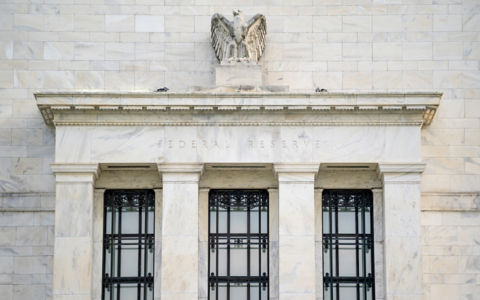
President Trump has announced Kevin Warsh as the next Fed chair, subject to Senate confirmation. As I’ve discussed before, “personnel is policy” and the Fed chair is an incredibly important voice not only in the direction of monetary policy but also in the way the central bank carries out its supervisory and regulatory responsibilities.
With that said, here are my five key takeaways on Warsh:
1. On interest rates — The choice of Warsh, who has advocated “hard money” policies over the course of his career, should allay concerns to some degree that managing inflation will take a back seat to political priorities. Markets will be more willing to believe that economic data will dictate how monetary policy is conducted, which should stabilize the dollar from a debasement risk perspective.
2. On the balance sheet — Warsh has been consistently vocal about a new Treasury/Fed accord. This suggests room for more creative maneuvering to change the composition and size of the Fed balance sheet, so that the Treasury and Fed row together — for instance, in terms of Treasury issuance and Fed purchases, or policies around mortgage-backed securities as another example. Term premia were up a touch as of this writing as markets tried to factor in this lean from the nominee. The specific actions Warsh might take and the time frame are up in the air, but I would emphasize that with his experience in the markets and at the Fed during the global financial crisis, he may be more willing than most to experiment with Treasury Secretary Scott Bessent on how to think about deficits, bond yields, housing affordability, and other thorny issues.
3. On deregulation and supervision — I would view Warsh as supportive of the new Fed directive toward deregulation and expect him to be an active ally to Fed Board member Michelle Bowman in her efforts on that front. Since he left the Fed, Warsh has been one of the most consistent critics of what he sees as its “mission creep.” This leaves room for banking supervision to perhaps move back to the FDIC, as one example — an idea Bessent has advocated. Something not discussed as much is whether we could see a tiering of interest the Fed pays on excess reserves that banks hold — money that’s paid out to primarily large and sometimes foreign banks, rather than being remitted to the Treasury. This would go hand in glove with the balance sheet point above and would be a big deal for markets in terms of tightening financial conditions and potentially weighing on US equity market multiples. The offset to these effects would be presumably lower short-term interest rates; but again, whether and when that will occur is not clear.
4. On Fed architecture — As a critic of the Fed, Warsh may also be likely to scrutinize the model-based approach of the Fed staff, the central bank’s personnel, or its research agenda. There could be a material change in how the Fed approaches market data as opposed to economic data. I could also imagine a nod of support to the idea of a comprehensive audit of the Fed proposed by many of its critics.
5. On markets/crises and politics — Warsh is a pragmatist and politically astute. He would also bring strong communication skills and valuable market experience to the role from his time at the Fed. Warsh will need these qualities given the complex issues surrounding the US deficit/debt and the need to walk a fine line between an activist president, a more strident Congress, and vigilant markets. He has shown he can pivot and shift views, which may be especially important if bond yields come under pressure given the large US fiscal deficit. Expect the unexpected from Warsh, including a willingness to do what is necessary even if it is not “ideal.”
Final thoughts
Warsh may take a step forward in reducing the power of the Fed from its current broad mandate. He may also be instrumental in changing the Fed architecture and working more closely with the Treasury in managing the Fed balance sheet. The level of control the Trump administration has over interest rates, as well as over broader regulatory and supervisory decisions, will depend on the ultimate makeup of the Fed Board, including whether Jerome Powell chooses to keep his seat. It will take some time before these decisions are made and before they matter to the markets, but over the medium term I would expect them to prove consequential for the conduct of monetary and broader policies.
The views expressed are those of the author at the time of writing. Other teams may hold different views and make different investment decisions. The value of your investment may become worth more or less than at the time of original investment. While any third-party data used is considered reliable, its accuracy is not guaranteed. For professional, institutional or accredited investors only.



















Monthly Market Review — September 2026
A monthly update on equity, fixed income, currency, and commodity markets.
By