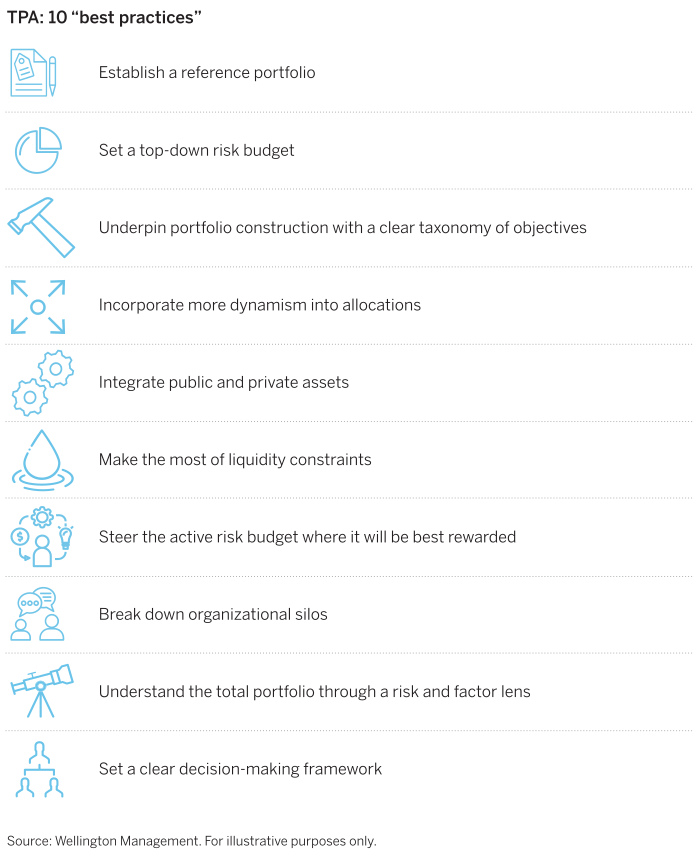
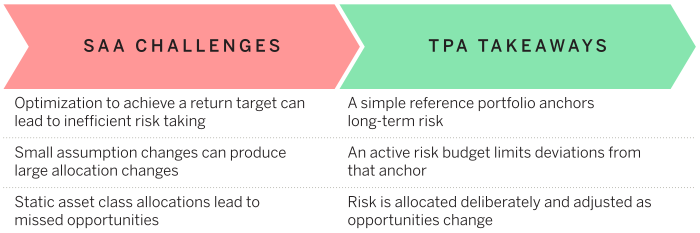
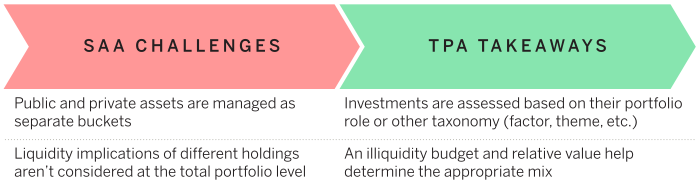
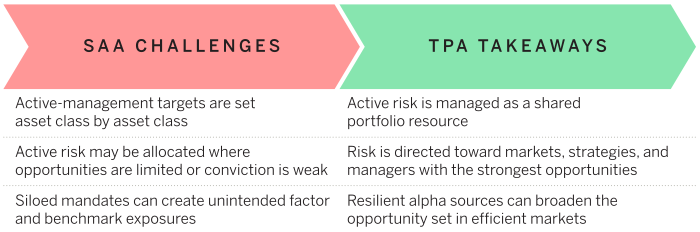
More TPA best practices
There are a few other TPA best practices allocators may want to consider adopting. As noted, the spirit of TPA lies partly in breaking down silos between asset classes and, often, between the investment teams that oversee them. For some, this may not come naturally. After all, a core precept of investment management is that focus is essential to long-term success. At the same time, “tunnel vision” is not good for any investor, and a key to avoiding it may be to promote more dialogue across asset class specialists. Equity investors may glean insights from credit experts — and vice versa. At Wellington, we see the benefit of cross-asset and cross-sector dialogue all the time in our Morning Meetings.
Allocators who do not have access to robust portfolio analytics may also want to consider enhancing their ability to assess their overall portfolio through a risk and factor lens. Aggregating the full complement of portfolio holdings data into one system can be challenging, but the rewards — when combined with creative portfolio and risk analytics — can be substantial.
Investment teams that can take a holistic view of the portfolio will have a clear, real-time understanding of what they own (and do not own). Combining this aggregate, top-down view with stress tests and exposure analysis allows for more deliberate decision making. It also opens the door to adjust the risk posture — across the portfolio or within specific assets and strategies — in line with the team’s confidence in those investments at any point in time. This capability typically falls into the category of behind-the-scenes infrastructure, but its portfolio impact — it’s potential “alpha” — may be meaningful.
Finally, we think the TPA programs best positioned for success are those that recognize that turning a “mindset” into a portfolio requires a clear decision-making framework. That includes accountability for portfolio decisions, especially for how the top-down risk budget is defined and ultimately translated into specific allocations of capital. The final decision may rest with an individual or a committee, and — even under TPA — different responsibilities can be delegated to different individuals or teams. But ultimately, these decisions require clarity, transparency and, above all, a well-defined process.
Take what you need from the TPA toolkit
For all its appeal, a fully integrated TPA framework may not be practical or necessary. TPA typically asks boards to set broad objectives and risk limits while delegating more day-to-day allocation authority to investment staff. This approach may not be for everyone.
Team size is also a potential sticking point. A smaller team may find it easier to bring the relevant decision makers together, compare ideas, and act quickly — but it may struggle with data and analytics. A larger organization may have more of the necessary specialist expertise and better risk management technology — but also more layers of governance that make decision making slower and more complex.
Ultimately, many allocators may be best served by adopting elements of TPA like those discussed in the examples above. Selected practices can be introduced incrementally and within existing governance structures. Pilot programs, cross-team forums, and total-portfolio dashboards can allow an institution to test the approach before making broader organizational changes. For some, a hybrid model blending selected SAA and TPA practices may offer a more workable balance.
Again, the goal is not to adopt TPA for its own sake, but to identify practices that can effectively strengthen the portfolio and the investment process. We would welcome the opportunity to help allocators determine which elements best fit their objectives, governance, and capabilities, and translate those choices into action.