- Solutions Director, APAC
Explore our insights
Asset class
Formats
2026 Midyear Investment Outlook


2026 Midyear Investment Outlook
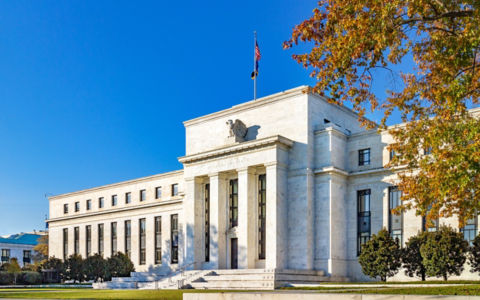
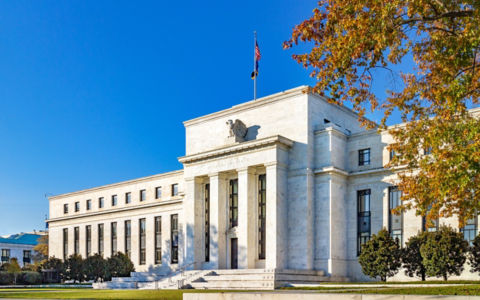
Kevin Warsh’s appointment as chair of the US Federal Reserve (the Fed) comes as income investors face a more complex opportunity set across fixed income and credit markets, amid higher bond yields, persistent inflation, and greater fiscal uncertainty.
Higher yields have restored income potential, but capturing that potential may require a more deliberate approach than investors relied on during the era of low rates following the global financial crisis (GFC).
We asked four Wellington experts to assess the investment implications, opportunities, and risks investors should consider.

Today’s higher yields have made fixed income attractive again, particularly for investors seeking income rather than relying on falling yields to generate capital gains. However, the starting yield is only part of the story. A more uncertain backdrop for inflation, fiscal policy, and bond supply may mean greater interest-rate volatility and more frequent periods when bonds provide less protection against equity weakness. That makes portfolio construction increasingly important — and investors may benefit by approaching it through a framework built around focus, flexibility, and resilience.
Focus starts with defining the role of each fixed income allocation — whether that role is to provide income, preserve capital, diversify the portfolio, or maintain liquidity — and then identifying the duration, credit, and liquidity risks taken to fulfill that role. Attractive yields provide a useful return cushion, but they do not make every bond or credit exposure attractive. This underscores the importance of flexibility.
Flexibility, in its simplest form, means treating duration and credit as separate investment decisions rather than relying on static allocations or familiar relationships. As conditions change, investors may need to adjust duration and credit exposure independently. A broader, more dynamic income toolkit can also help investors access different sources of return rather than depending on a single market, asset class, or macroeconomic outcome.
Finally, resilience means recognizing that bonds remain important but cannot be expected to carry the entire burden of portfolio defense. Investors should combine the improved income available from fixed income with diversified sources of liquidity, uncorrelated returns, and downside protection. Put simply, the opportunity is better than it has been for some time, but capturing it requires a more deliberate and adaptable approach.

In my view, one of the most important changes in today's market is that income is once again making meaningful contributions to total return.
For much of the post-GFC period, investors often relied on falling yields or rising asset prices to meet their return objectives. Today, they can lock in yields significantly higher than those available during much of the past decade, creating an opportunity to build portfolios in which income does more of the return work.
Our interpretation of the new Fed regime is not necessarily that policy rates will be materially higher. Rather, monetary policy may place greater emphasis on preserving inflation-fighting credibility. For investors, that could mean a world where long-term bond yields are increasingly influenced by fiscal deficits, government bond supply, corporate funding needs, and term-premium dynamics, rather than Fed policy alone.
As a result, interest-rate outcomes may become less predictable, with periods of elevated volatility even during an easing cycle. A greater focus on inflation relative to real growth could also mean that bonds provide less diversification benefit than investors became accustomed to before 2021.
Importantly, investors should consider looking beyond bonds alone within the multi-asset income opportunity set. With credit spreads remaining relatively tight, equity-income and option-writing strategies may provide complementary sources of income and growth potential, particularly in a more volatile market environment.
The key risk is that investors remain overly focused on the path of Fed policy while overlooking the broader structural forces reshaping markets. In our view, building resilient portfolios through diversified market exposures, tactical exposure management, and multiple genuinely differentiated sources of income is becoming increasingly important.

Chair Warsh’s arrival could mark a shift toward less forward guidance and greater emphasis on price stability and institutional credibility. In our view, this may leave market yields and term premia playing a larger role in determining financial conditions, rather than investors looking primarily to the policy rate for direction. With US growth resilient and inflation still above target, the hurdle for easing remains high and policy-rate risks remain skewed to the upside.
Structurally, fiscal deficits, a capital-intensive AI investment cycle, and persistent inflation may also keep real interest rates above the levels investors became accustomed to before the pandemic. At the same time, today’s higher starting yields provide attractive income and considerably more cushion against price declines than investors had entering 2022.
For us, this environment reinforces an important portfolio-construction principle: duration and credit exposure are distinct investment decisions. Supply-driven shocks can periodically push yields and credit spreads higher together, so we actively manage interest-rate exposure based on our macro outlook and relative-value opportunities while independently calibrating credit risk. This flexibility allows us to seek attractive income without automatically taking more credit beta or relying on duration solely as a hedge.
That distinction matters because attractive yields do not necessarily mean credit is cheap. Broad index spreads remain tight, but dispersion across sectors and issuers is unusually wide. A broad multisector toolkit allows us to rotate toward areas where we believe investors are being better compensated — currently including selected high yield, emerging-market credit, securitized assets with attractive collateral-backed cash flows and structural protection, and convertibles — while maintaining liquidity to take advantage of future dislocations. This is an environment where we believe active sector allocation and security selection can matter considerably more than simply owning broad credit beta.

While investors naturally focus on the views of a new Fed chair, monetary policy decisions remain a committee process. In our view, incoming economic data is likely to matter more to the Fed's reaction function than any individual policymaker's preferences. For Asia credit investors, that distinction matters.
Chair Warsh's desire to reduce the Fed's influence beyond interest rates could mean further efforts to shrink the balance sheet and rely less on forward guidance. We believe these changes may take time and carry risks, but maintaining the Fed's credibility is likely to remain central.
From an investment perspective, we have been cautious on duration for more than a year, arguing that markets have underestimated the strength of underlying nominal growth and spending. Government deficits have played a role, but so has corporate capital expenditure, particularly related to AI. This remains a supportive backdrop for corporate earnings and profitability, underpinning our constructive view on credit.
Asia has faced specific challenges from sensitivity to imported energy costs in 2026, reflected in slower growth and weaker currencies in some markets, but corporates have remained fundamentally resilient, containing spread volatility.
Against this backdrop, we continue to find attractive opportunities in Asia credit markets. Within high yield, many issuers remain fundamentally sound, offering attractive carry in cases where credit improvement is not yet fully reflected in valuations. We see pockets of value in markets such as India, Thailand, and Malaysia. Within investment-grade credit, we favor financials over corporates more broadly, with banks and insurers in Hong Kong and Singapore offering a combination of resilience, balance-sheet strength, and attractive relative value.
At the same time, we remain mindful of risks associated with elevated debt-funded capital expenditure in AI-adjacent sectors and the potential for slower growth in 2027. Overall, we believe resilient corporate fundamentals and a selective, issuer-by-issuer approach across both high-yield and financial issuers continue to support a constructive outlook for Asia credit.
The views expressed are those of the authors at the time of writing. Other teams may hold different views and make different investment decisions. The value of your investment may become worth more or less than at the time of original investment. While any third-party data used is considered reliable, its accuracy is not guaranteed. For professional, institutional or accredited investors only.
Experts
Related insights
Oil is the spark — the cost of capital is the story
Continue readingBand-aids, bazookas, and boomerangs: Equity investing in a volatile US rate regime
Continue readingTaking stock of the energy shock: 9 macro and market insights
Continue readingFOMC: Holding the line amid geopolitical crosscurrents
Continue readingURL References
Related Insights