




- Investment Director, Alternatives & Hedge Funds
Portugal, Intermediary
ChangeThe views expressed are those of the speaker at the time of filming. Other teams may hold different views and make different investment decisions. The value of your investment may become worth more or less than at the time of original investment. While any third-party data used is considered reliable, its accuracy is not guaranteed. For professional, institutional, or accredited investors only.
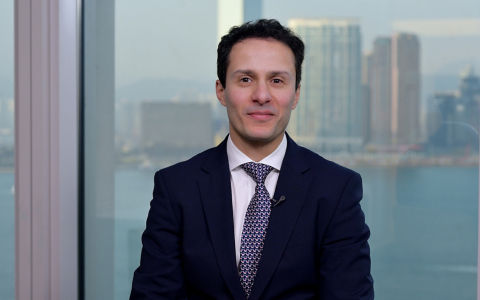
In this edition of “Rapid Fire Questions,” Director of Alternatives, Hedge Funds, APAC, Alex Chambers explores the role and opportunities of hedge funds in today’s market.
Question: What is your take on the role of hedge funds amid today’s market backdrop?
Diversification today remains the number one reason in our view for considering a hedge fund. Although there are a wide range of hedge fund strategies out there in all shapes and sizes, this continues to be the primary benefit for considering an allocation to the asset class. Hedge funds play an important role, being one of the very few liquid alternatives out there, and also typically uncorrelated to both global equities and global fixed income. As such, they can be complimentary and diversifying. Over the past few years, we have witnessed some compelling reminders of this potential value of a hedge fund as equities and fixed income have grown increasingly positively correlated. For example, we only have to look back to 2022, when diversification was lacking in traditional assets with both equities and fixed income broadly selling off. Today, that relationship still remains intact. And in an environment marked by elevated volatility and lingering geopolitical and inflationary concerns, we continue to see the benefit of adding a hedge fund as an additional layer of diversification.
Question: Why consider hedge funds now?
Over the past few years, we have witnessed a much-improved environment for hedge funds and this is starting to show in the recent performance in general, something we have not seen since pre-global financial crisis. Unlike the 2010s, we are now in a very different economic regime, with structurally higher inflation, a tricky monetary policy balancing act and more active government involvement through increased fiscal and industrial policy. This is all leading to higher interest rates, more volatile markets and increased dispersion – market factors that have been historically favorable for hedge funds.
Question: What approaches can we take to capture the opportunities?
With such an improving backdrop for hedge funds in general, we believe that a core allocation to a multi-strategy hedge fund can be a suitable solution to take advantage of the opportunities across various hedge fund strategies. Such an approach can allocate in a diversified and balanced way. Importantly, with a strong emphasis on alpha generation rather than market beta, hence potentially providing an uncorrelated stream of returns to equities and bonds.
Alongside this, in particular today, we are seeing a wide range of exciting opportunities across equity long/short strategies, a space where we have extensive experience going back over three decades. For example, within sectors there may be more acute dispersion in those areas undergoing rapid transformation such as energy, financials and technology. Take for instance in US financials where we are seeing regulatory restrictions easing potentially creating a new wave of M&A activity.
Elsewhere, we are also seeing regional opportunities with higher dispersion driven by a new regime of structural shifts. Take a diverse region like Europe where political and economic issues will vary greatly across countries and as a result will impact sectors and countries in distinct and differing ways.
Question: What are the risks we should watch out for when investing in hedge funds?
When investing in hedge funds, alongside the various benefits, there are also important considerations for allocators as well. Today, there are many hedge funds out there in all shapes and sizes, so manager selection is very critical. Many factors around transparency, liquidity, leverage and fees are all common considerations and should be areas of focus we believe when selecting a hedge fund. Today, for example, we hear a lot from allocators talking about the concerns around the amount of leverage in the system, and potentially crowding effects in certain themes and trades, which are concerns in the industry today.