Finland, Institutional
Change


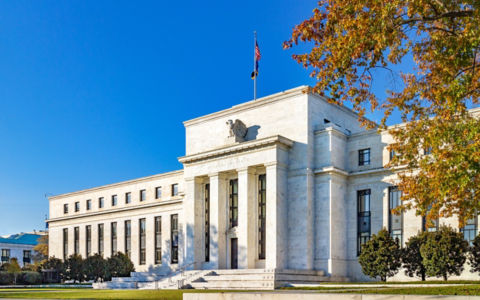
The Fed holds rates steady as uncertainty intensifies
At its March 2026 meeting, the Federal Open Market Committee (FOMC) held its federal funds rate target unchanged at a range of 3.5% to 3.75%. Governor Stephen Miran once again dissented in favor of a cut. This meeting, policymakers contended with a more complex mix of economic and geopolitical signals and weighed the risk that recent inflation progress could prove uneven. Ultimately, the US Federal Reserve (Fed) chose to preserve flexibility amid moderating but still elevated inflation, signs of gradual cooling in the labor market, and rising external risks that could complicate its policy outlook.
Inflation progress, with new upside risks emerging
Recent inflation data has shown mixed results, with the core consumer price index (CPI) pointing to continued gradual improvement at 2.5% year over year, while the core personal consumption expenditures (PCE) measure has increased to 3.1% year over year. Fed Chair Jerome Powell highlighted that for the FOMC to resume easing policy rates, it will need to see a moderating impact of tariffs on goods prices in the middle of this year. This outcome may be confounded if energy prices stay elevated and exert upward pressure on non-energy goods prices.
Against this backdrop, the committee raised its inflation forecasts for the end of this year and next in its Summary of Economic Projections, signaling that the final mile of disinflation may prove uneven. Despite this unevenness, the median FOMC participant still expects to ease policy rates by an additional 25 basis points this year, in line with the median projection from December 2025. Given their potential to disrupt the Fed’s expected easing path, upside inflation surprises are likely to carry greater policy significance than downside growth risks in the near term.
Recent geopolitical developments have introduced a new layer of risk to the inflation outlook. After confronting several supply shocks during the COVID pandemic and in the years since, the US economy is once again navigating both a labor supply shock and an energy and transportation supply shock. Escalating tensions in the Middle East have pushed energy prices higher, raising the prospect of renewed cost pressures filtering through transportation, production, and consumer prices, in addition to limiting the transportation of other goods through the Strait of Hormuz. From my perspective, sustained geopolitical pressure on oil markets could slow the pace at which inflation converges to target, reinforcing the Fed’s cautious stance.
An additional risk to the inflation outlook comes from the potential for further fiscal measures proposed by Trump administration officials aimed at cushioning households from higher energy and living costs. While such policies may help stabilize near-term consumption, they could also blunt the demand destruction that would otherwise reduce the inflationary impulse from higher energy prices. To the extent that fiscal support sustains demand at a time when supply-side pressures are intensifying, the risk is that inflation proves more persistent, complicating the Fed’s efforts to return inflation sustainably to target.
Labor market cooling, but no sharp deterioration
The US labor market has continued to show signs of gradual normalization rather than abrupt weakness. Job growth has moderated in recent months and wage growth has eased, but unemployment remains historically low at 4.4%, already in line with the FOMC’s year-end forecast. Labor demand and supply appear to be moving into better balance, which should reduce upside pressure on wages without triggering widespread job losses.
Forward-looking indicators — including hiring intentions and quit rates — suggest further cooling ahead, though not at a pace that would yet threaten the Fed’s maximum employment mandate. In my view, this dynamic supports the case for patience: Labor market conditions are softening enough to help contain inflation but are not yet weak enough to compel near-term easing. This remains a very delicate balance, though, as other risks to the labor market emerge through tighter financial conditions.
Fed independence remains an overhang
Beyond the economic data, political considerations continued to loom over this meeting. Last week, a US District Court judge blocked Department of Justice (DOJ) grand jury subpoenas against Chair Powell, with the DOJ indicating it would appeal the ruling. The administration’s nominee to succeed Powell, Kevin Warsh, has yet to be confirmed, prolonging uncertainty around the future leadership of the Fed. Senator Thom Tillis, who serves on the Senate Banking Committee, which must advance a nominee to the Senate for confirmation, has threatened to vote against any nominee until the investigation into Powell is resolved.
Market participants remain sensitive to the risk that prolonged confirmation delays — or a perceived shift in the Fed’s leadership philosophy — could undermine confidence in the institution’s independence. During his post-meeting press conference, Chair Powell indicated he would continue to serve as “Chair pro tempore” until a new chair is confirmed, and that he would stay on as a governor until the DOJ case is fully resolved.
Looking ahead
The Fed’s decision to hold rates steady in March underscored a preference for caution as crosscurrents intensify. Inflation progress has been meaningful but remains vulnerable to external shocks, the labor market is cooling but trying to find balance, and political uncertainty persists in the background. While market pricing continues to reflect eventual easing, the bar for interest-rate cuts remains high in the absence of clearer disinflation progress. As a result, policy is likely to remain restrictive for longer than markets anticipated earlier this year.
The views expressed are those of the author at the time of writing. Other teams may hold different views and make different investment decisions. The value of your investment may become worth more or less than at the time of original investment. While any third-party data used is considered reliable, its accuracy is not guaranteed. For professional, institutional or accredited investors only.





















Monthly Market Review — September 2026
A monthly update on equity, fixed income, currency, and commodity markets.
By