



- Macro Strategist
Formats
2026 Midyear Investment Outlook

2026 Midyear Investment Outlook
AI has the potential to revolutionize the workings of the US economy, but we are still in the early days of the adoption process. In this note, I discuss the progress to date, the path forward, and the macro and market effects. Among the key takeaways from my research:
Let me begin with an overview of AI’s growing role among US businesses.
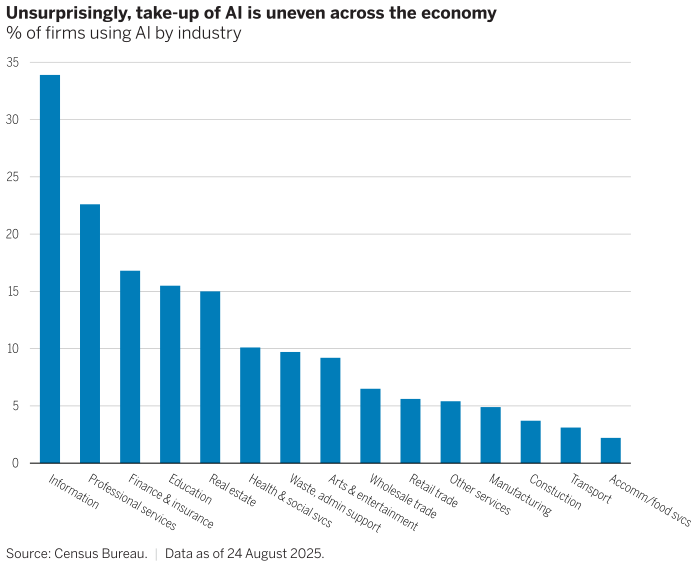
Since 2024, the percentage of companies reporting they had used AI in the past two weeks has doubled to about 10% and the percentage of companies planning to use AI in the next six months has more than doubled from 6% to nearly 14%.1 Importantly, those results include small companies, which are less likely to use AI than large companies, so the findings are on the low end of estimates. A broad survey of polling data suggests that 10% – 40% of companies use AI and 20% – 40% of employees use AI in the workplace.
From an industry standpoint, information, professional, and financial services are leading the way in the use of AI (Figure 1). This diffusion into the service economy sets the AI revolution apart from prior technological developments in terms of its transformative potential. Meanwhile, leisure & hospitality, transportation, and construction are among the AI laggards. With adoption concentrated in a narrow number of industries, there is clear scope for use to expand significantly over time.
Figure 1
The declining cost of deploying AI should support more rapid diffusion across industries. For example, the cost of large language models, which can now deliver PhD-level outputs, has declined 80% – 99% by some estimates. And for a system performing at the level of GPT-3.5, the “inference cost” (the expense associated with running a trained AI model to make real-time decisions based on new data) dropped more than 280-fold between November 2022 and October 2024.2
Another factor that’s likely to support adoption: relative labor scarcity, which tends to create an environment in which companies look to automate processes and adopt new technologies. The Trump administration has contributed to this incentive with its immigration policies.
Finally, I think the historical pattern of increasingly rapid adoption of new technologies is likely to hold. Ten years after electricity was made available, 23% of US companies were using it. But at their 10-year mark, the internet had a 40% adoption rate and mobile phones had a 60% adoption rate.3 This trendline suggests an even more accelerated pace of AI adoption ahead.
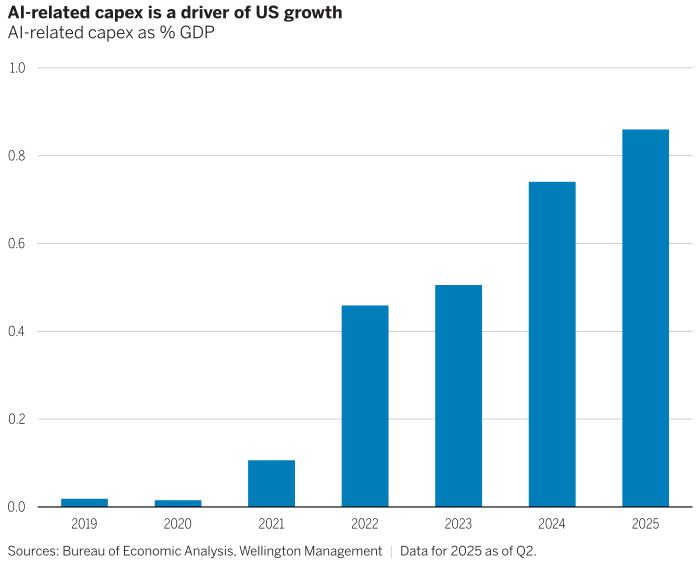
I estimate that AI-related activities reflected in GDP are growing at a rate of more than 50% on a year-over-year basis, and in the first half of 2025, AI-related activities contributed 30% of US growth. In addition, AI-related capex spending as a share of GDP is approaching 1% on a rapidly rising trajectory (Figure 2).
Figure 2
The potential for AI to boost US economic growth for an extended period will depend on its ability to improve productivity. Studies have shown evidence of impressive AI-driven productivity gains in areas like coding and customer service. But even if the five most exposed sectors of the economy (tech, telecom, publishing & media, finance, and professional services) enjoyed efficiency gains of 30%, that would drive only middling gains for the economy in aggregate.
So, expanding the use cases across sectors and industries will be a key to generating a greater impact over time. Those use cases will fall into several categories, including cost savings (using AI-driven automation as a substitute for labor), labor augmentation (using fewer workers but adding AI to maintain output), and transformation (using AI to propel innovation in unexplored areas).
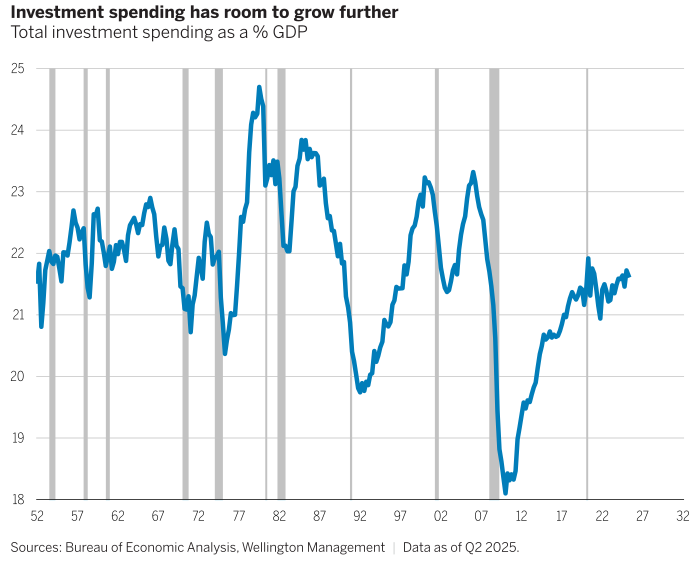
Thus far, we’ve seen evidence of the first two categories, but not the “transformative” impact of AI, with the potential to spark a burst of innovation across many industries. That will require continued growth in investment spending. To date, we haven’t reached the aggregate spending levels that tend to precede a big pick-up in productivity (Figure 3). This speaks to the current woes in some cyclical industries, but spending on information processing, R&D, and software as a share of GDP has been steadily climbing and is approaching the highs we saw in 2000. As I wrote recently, the One Big Beautiful Bill’s provisions for R&D tax credits, bonus depreciation, and higher interest deductibility on a permanent basis are likely to trigger a pickup in investments, and recently announced capex plans of many “hyperscalers” point in that direction as well.
Figure 3
With all of that said, how do I assess the outlook for productivity? First, I think a little historical perspective is needed. Figure 4 shows a long-term history of US productivity growth, highlighting meaningful gains driven by innovations like the advent of the steam engine, railways, automobiles, and aviation. Along the way, there were also lulls and busts in productivity that dragged on economic growth and the country’s wealth levels.
Figure 4
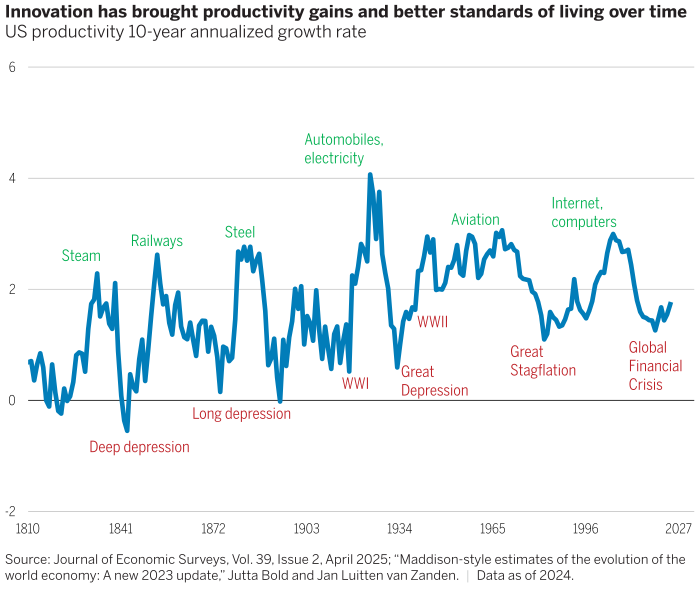
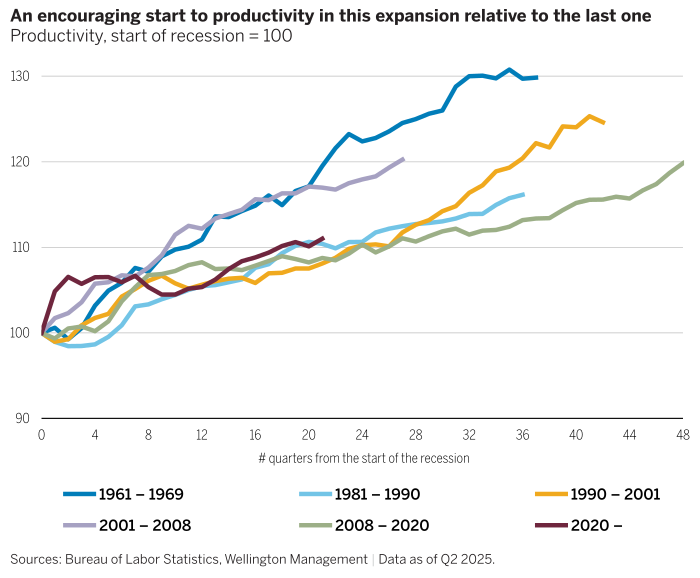
Over the long run, US productivity growth has averaged about 2.1% per annum.4 In the current expansion, productivity is close to average levels and better than the prior expansion (see Figure 5, which shows productivity over the course of a business cycle), but it’s still well below the outsized gains that often accompany the wide adoption of a technological breakthrough.
Figure 5
Extrapolating from prior technological breakthroughs and assuming that AI reaches a broader set of industries and adoption surpasses 50%, I think a reasonable estimate is that we will see a 1.3% increase in annual labor productivity growth within the next 15 years. On a more near-term basis, I think that, given an adoption rate of roughly 10%, a productivity bump of 0.3% is within reach in the next few years, while a middle ground range of 0.6% – 0.9% is possible in the coming decade.
How does this outlook compare to prior breakthroughs? In some of the most impactful examples, including the electrification era, we’ve seen productivity growth spike as much as 2% above average in a peak year and 1% above average consistently for a decade or more. Like AI, electricity required a capital-intensive build-out, so the track record suggests the potential for a similarly strong and enduring productivity outcome. My caveat here is that the use cases for AI thus far are more sector and workplace specific. That is, AI is not the pervasive, general-purpose technology that electricity is — at least not yet.
Productivity trends can have a profound impact on many facets of the economy and the market. Let me highlight several areas worth watching:
The labor market — Technological breakthroughs tend to be disruptive not just for incumbent companies but also for their workers, driving change in organizational structures, processes, and required skills, and potentially making some existing jobs redundant. Thus far, AI’s impact is most apparent in high-skill areas, with scientists, engineers, business professionals, and IT professionals most exposed to competition from AI. Lower-skill areas, such as agriculture and food preparation, are more shielded from AI competition.
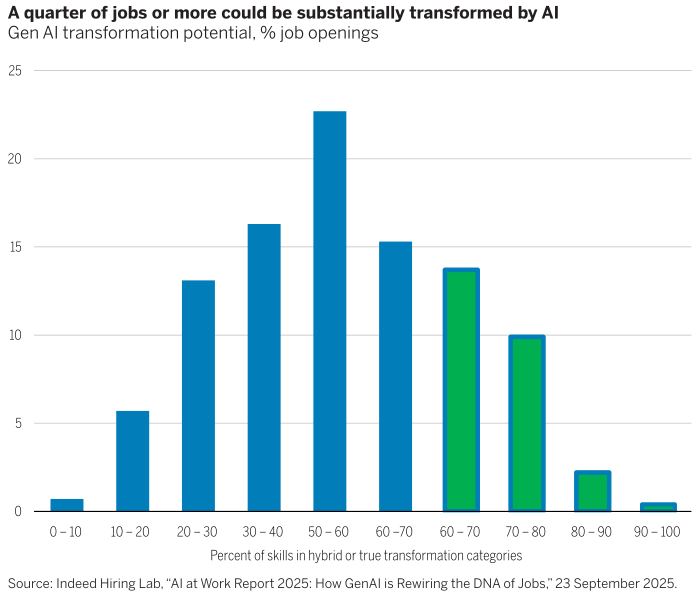
One study estimates that about 26% of jobs in the US seem likely to be substantially transformed by AI (green bars in Figure 6), and potentially up to 50% if AI’s reasoning power, efficacy, and deployment cost keep improving over time. AI’s impact is already evident in the rising unemployment rate of recent college graduates and in above-average unemployment rates of scientists and computer science professionals — with the latter being a significant departure from trends of the past couple of decades, when college graduates in STEM fields were in high demand and returns on their education were strong.
Figure 6
As noted, immigration flows are also a key issue for the labor market. As long as immigration remains at a virtual standstill, economic growth will be heavily dependent on productivity trends.
Interest rates — By enabling stronger growth, higher productivity would, all else being equal, allow the US economy to support higher interest rates over time. Of course, interest rates will also be a function of labor force growth.
Public debt — Higher growth via improved productivity would be something to celebrate in the context of America’s ballooning public debt, which is sustainable if nominal GDP growth is above current interest rates.
The business cycle — Higher productivity can also elongate a business cycle by keeping profit margins higher than normal as companies are able to absorb wage costs with operational and other efficiency gains, which in turn mitigates the need for the Fed to raise rates to choke off demand.
Earnings — The technology sector broadly accounts for roughly a quarter of S&P 500 earnings, and elevated medium-term earnings estimates have persisted for the last five years, giving aggregate stock market returns a boost. My calculations show that as of Q2 2025, the “AI 8” stocks5 alone accounted for 22% of S&P 500 earnings.
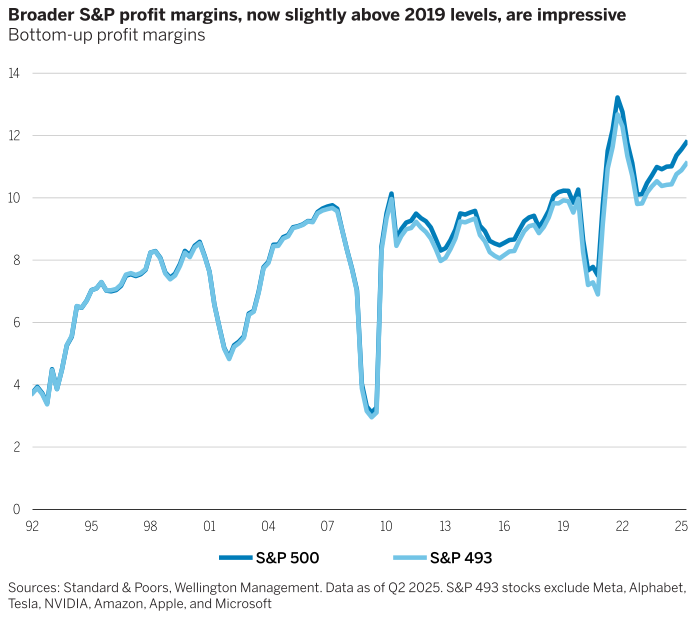
Profit margins of the S&P 500 have enjoyed a dramatic lift thanks largely to the tech sector. But I would argue that recent improvements in margins for the rest of the S&P 500 — notably, in the first half of 2025, amid a weaker revenue backdrop — suggest we may be seeing green shoots of productivity emerging across a broader set of companies (Figure 7).
Figure 7
The pace of AI capital investment is picking up dramatically based on company announcements about new data centers and other developments, and stocks are still tending to rise meaningfully on the news even though cash flows are not as strong as before. As the scale of the build-out grows, we are seeing a transition toward debt financing, with vendor financing starting to become visible as well, in order to sustain sales. In addition, finance leases are being added to expand data center capacity, but they are not included in the capex intentions of these companies, suggesting that the capex numbers are undercounting the strength of the build-out. Undercounting could raise the risk of overbuilding and creating excess supply (an issue that arose during some previous technological breakthroughs, including railways and the internet).
Another potential yellow flag: Rising stock prices are being used to conduct deals, and there is evidence of the companies involved in the deals buying each other’s products. In the past, deals like this have proven to be important signals to stay vigilant about whether future return expectations will materialize in the stated time frame.
The role of private equity and credit in funding the AI technology diffusion is also something to watch, given the potential of such investments to account for a large share of those asset classes. With less public information available around deals in this space, judging the quality of underwriting and whether lending standards are eroding will be critical.
Finally, the US backdrop of an interventionist government should be monitored. While AI may displace white collar workers and slow wage growth, immigration restrictions could mean that industries reliant on low-skill workers will face rising wage pressure as growth improves across the broader economy. In addition, while the Trump administration is pro AI, its stance on skilled talent from overseas could hinder AI adoption.
The contrast between the current government backdrop and what we witnessed in the tech revolution of the 1990s is stark. Back then, the US was encouraging globalization, free trade, and immigration. Today, we’re seeing the opposite, and the current policies could interrupt the virtuous cycle of higher investment spending and productivity that has captured the market’s attention. This key risk/tension should be on investors’ radar.
Clearly, a great deal is riding on the future of AI, from both an economic and a market standpoint. Looking through a historical lens, I think there are strong reasons for excitement about the promise of this era of innovation. At the same time, the benefits for productivity and growth will not emerge overnight, and there may be policy- or macro-driven bumps along the way, suggesting that patience and a long-term perspective will serve investors well.
1Source: US Census Bureau, 21 September 2025 | 2Source: Stanford Institute for Human-Centered Artificial Intelligence, The 2025 AI Index Report | 3Source: OECD | 4Source: Bureau of Labor Statistics, Historical Statistics of the United States. Data is for the period 1901 – 2024. | 5AI8 companies include Meta, Broadcom, Alphabet, Amazon, Oracle, Microsoft, Nvidia and Palantir
The views expressed are those of the author at the time of writing. Other teams may hold different views and make different investment decisions. The value of your investment may become worth more or less than at the time of original investment. While any third-party data used is considered reliable, its accuracy is not guaranteed. For professional, institutional, or accredited investors only.
Expert