Formats
2026 Midyear Investment Outlook

2026 Midyear Investment Outlook
This article was originally published in Barron’s on 23 January 2026.
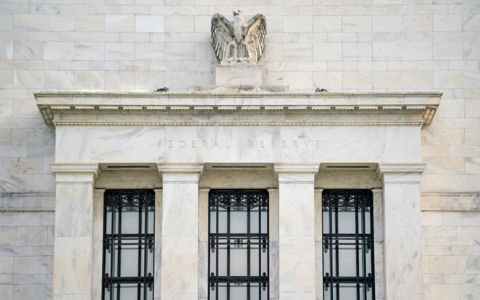
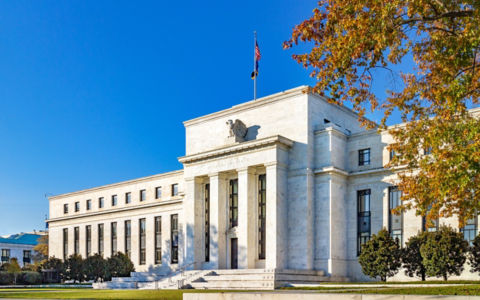
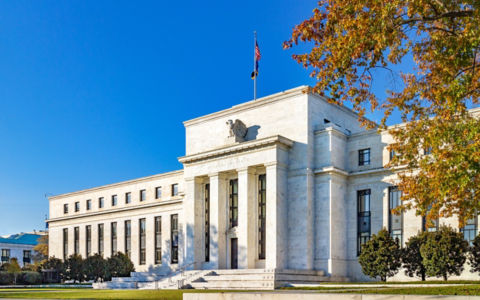
At its December meeting, the Federal Reserve (Fed) Board made two important decisions. First, it cut interest rates. Second, and less noticed, it announced that it would once again expand its balance sheet, creating more money to help banks whose reserves were no longer “ample.”
Fed officials were careful to stress this wasn't a return to quantitative easing (QE). QE is a stimulus policy that started with the purchase of trillions of dollars of long-term US Treasuries following the 2008 – 2009 global financial crisis (GFC) and continued after the COVID pandemic.
This time, the Fed is only buying short-term government bonds. But to the market, any increase in the Fed’s balance sheet means more money in the system, which can push up prices for stocks and other reflationary assets. The equities rally in December suggests that the Fed’s latest attempt at balance-sheet expansion is already influencing asset prices.
Why is this a problem? The US economy is increasingly “K-shaped,” with a small segment of wealthier households disproportionately driving spending. Expanding the balance sheet risks increasing asset prices further, encouraging spending by the wealthy but reheating inflation for the masses.
Before 2008, the size of the Fed’s balance sheet wasn’t germane to monetary policy. The Fed controlled interest rates by adjusting the federal funds rate, the rate at which banks lend to each other on an overnight, unsecured basis. Because reserves were scarce, the Fed could influence the federal funds rate simply by increasing or decreasing reserves. After 2008, the Fed initiated large-scale QE, purchasing Treasuries and creating excess reserves at the banks. The abundant reserves and the Fed’s large balance sheet made it difficult to raise the federal funds rate when the central bank wanted to tighten policy.
To solve this, the Fed implemented a “corridor system” of two rate levels. The “floor” in this system is the rate the Fed pays to money market funds for secured overnight loans. The “ceiling” is the rate that it pays to banks for their reserves. The effective federal funds rate — the rate that the public pays attention to — falls in between. Another important rate is the Secured Overnight Financing Rate, which financial institutions use to facilitate trading and hedge funds use to make leveraged investments.
This system worked well until 2019, when a confluence of corporate tax payments and Treasury settlements triggered a sudden scramble for cash. Banks lacked the necessary reserves, and overnight repo rates briefly surged to nearly 10%. The Fed responded by expanding its balance sheet and introducing the Standing Repo Facility (SRF), allowing large banks to borrow cash overnight from the Fed against high-quality collateral.
Today, the Fed’s balance sheet is much larger relative to bank loans and gross domestic product than it was in 2019, and the SRF prevents the kind of funding stress that previously forced the Fed’s emergency interventions. While banks may be reluctant to use the SRF for fear of appearing desperate for cash, the Fed could encourage participation by lowering the rate, expanding eligible banks, or compelling the largest banks to use it. The Fed could also temporarily add reserves to cushion quarter-end and tax payment dates, rather than rely on the blunt tool of balance-sheet expansion.
Against this backdrop — and given recent regulatory changes that reduced banks’ leverage requirements — the claim that the Fed must create money to protect banks feels weak.
Another major change since 2019 is the government’s debt load, which has grown by US$14 trillion. The Fed says expanding its balance sheet supports Treasury market liquidity, and that helps the government borrow more cheaply. But a major beneficiary of the Fed’s large balance sheet has been hedge funds, who use borrowed money to profit from small price differences in Treasuries and Treasury derivatives. These trades require substantial leverage and depend on abundant repo financing. Hedge fund-leveraged trading strategies create systemic risk that the Fed shouldn’t tacitly support.
The costs of increasing the Fed’s balance sheet deserve more attention. The Fed maintains that its recent balance-sheet expansion is not full-blown QE because it is just replacing “near money” (short-term Treasuries) with money (bank reserves). Markets, however, interpret a large Fed balance sheet as an inflationary risk. Investors tend to bid up reflationary assets, such as stocks, real estate, and gold, to protect against debt monetization and currency debasement.
Which brings us back to the K-shaped economy. Because higher-income households own a disproportionate share of these assets, the resulting wealth effects of balance-sheet expansion can sustain excess consumption and contribute to sticky inflation. This is bad for lower-income households.
Debt monetization is also more likely. In response to the Fed’s increased demand for short-dated notes, the Treasury might issue more lower-yielding, front-end securities and fewer higher-yielding, long-end bonds. A large Fed balance sheet supports the idea that there is a free lunch to government spending. But a growing deficit, coupled with higher inflation, would exacerbate the affordability crisis.
Rather than wholesale balance-sheet expansion, I prefer to see the Fed take incremental measures, periodically boosting reserves to deal with acute liquidity problems, while reducing its overall balance sheet. This should help keep prices under control and avoid overinflating asset prices.
The views expressed are those of the author at the time of writing. Other teams may hold different views and make different investment decisions. The value of your investment may become worth more or less than at the time of original investment. While any third-party data used is considered reliable, its accuracy is not guaranteed. For professional, institutional or accredited investors only.