Despite adverse headlines and events, risk markets have remained constructive this year, but the rally has become narrower, stronger in some areas than others, and increasingly dependent on a limited set of market leaders. That has created meaningful opportunities, particularly where earnings strength and AI-related optimism coincide. But it also raises an important question for the second half of the year: How robust can markets be when so much depends on momentum continuing unchecked?
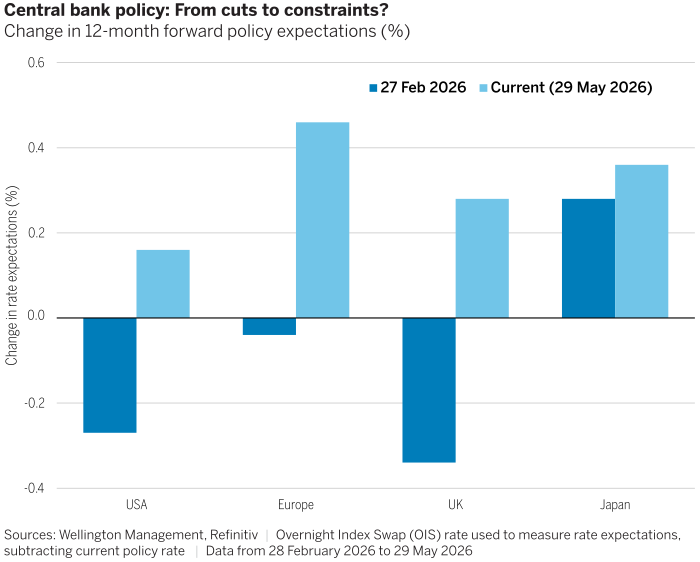
The challenge is that the macro backdrop is not becoming simpler. Far from it: Growth has been resilient, but inflation remains unsettled. Policy paths are diverging and bond markets are paying closer attention to fiscal conditions. Meanwhile, geopolitical risks, especially those linked to the Middle East and energy supply, have escalated. Markets may continue to move higher, but the range of possible outcomes is wide, and leadership may become less stable.
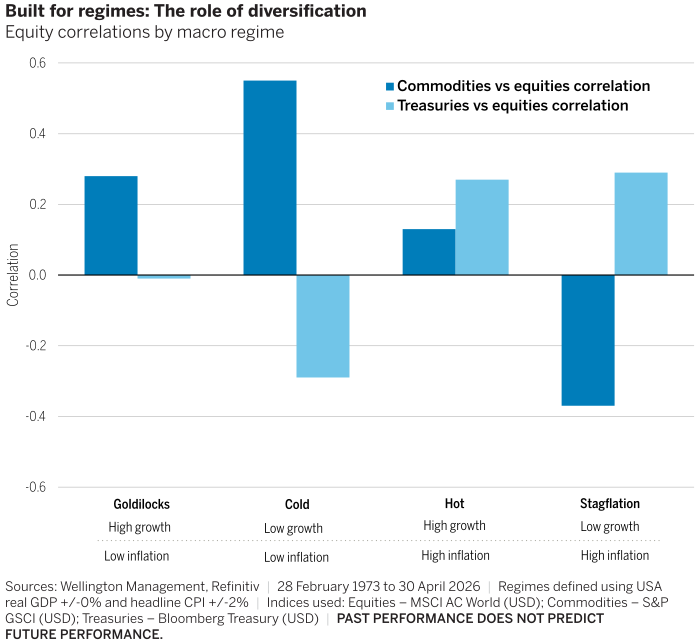
That is why we think this is a moment to return to first principles. Rather than relying on the assumptions that shaped portfolios in an earlier regime, investors may need to be more deliberate about portfolio design: clearer on where returns come from, more adaptable as conditions change, and more thoughtful about how diversification is built. In our view, that means focusing on three practical priorities: focus, flexibility, and resilience.
Focus: Be clearer about where returns are coming from
In a more macro-driven and structurally unsettled market, taking large active risk positions becomes more challenging. Leadership can change quickly, relationships can become less reliable, and headline-driven markets can create more whipsaw risk.
Within equities, that strengthens the case for being deliberate about the equity exposures you are taking. The goal is not to eliminate active risk, but to align it more closely with manager skill and market opportunity rather than unintended macro, factor, or benchmark-relative positions.
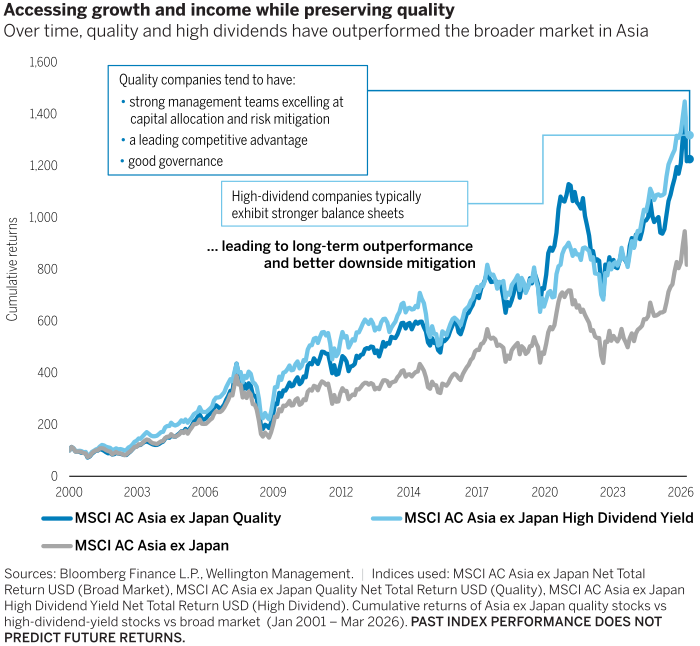
What this means in practice: Continue to focus on quality but do so in a disciplined way, targeting market segments with promising potential. Asian quality equities are a case in point: They can provide exposure to some of the more exciting parts of today’s equity universe without sacrificing quality (Figure 1). Being deliberate and selective may help to optimize the risk/return equation even further.