Sweden, Intermediary
Change


This article was originally published in Barron’s on 12 June 2026.
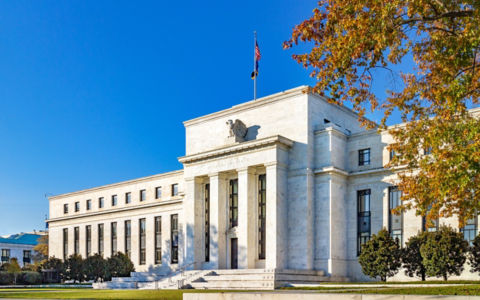
In his rise to the US Federal Reserve (Fed) chairmanship, Kevin Warsh has cast himself as a change agent. In his acceptance speech, he pledged to “lead a reform-oriented Federal Reserve, learning from past successes and mistakes, escaping static frameworks and models.” That reform is long overdue.
The US economy has changed profoundly since the pandemic, and the Fed’s mantra of “data dependence” is ill-suited to today’s challenges. The more important questions are structural. The Fed must rethink some of the assumptions underlying modern monetary policy.
First, how should the Fed respond to the declining effectiveness of monetary policy itself?
Economists have traditionally argued that monetary policy influences the business cycle primarily through investment. Investment is highly sensitive to interest rates: When the Fed wants to slow the economy, it raises rates, dampening investment, growth, and inflation. Yet the current AI-driven investment boom appears relatively insensitive to borrowing costs, blunting monetary policy’s ability to slow economic activity and inflation.
At the same time, much of today’s inflation volatility has originated in the supply side of the economy. The Fed’s tools have historically been better suited to managing demand-driven inflation than inflation caused by supply constraints.
Monetary policy is also becoming less effective in shaping longer-term interest rates. Historically, when the Fed cut short-term rates, long-term yields declined as well. Yet since the Fed began its current 175 basis-point (bp) easing cycle in September 2024, 10-year Treasury yields have risen by roughly 85 bps. This reflects resilient US growth and large fiscal deficits, which have muted the effects of Fed cuts.
Should the Fed prepare markets for more forceful and less predictable rate adjustments — and does forward guidance still have a useful role in a supply-driven economy?
A related question is how monetary policy should interact with fiscal policy in an era of structurally large government deficits. US President Donald Trump has made clear that he wants lower interest rates to reduce the government’s financing burden. Historically, the Fed has avoided acknowledging the extent to which monetary policy incentivizes government borrowing, preferring to defer responsibility to elected officials. Yet the Fed routinely considers leverage in the household and financial sectors because excessive leverage can create systemic risk.
Government debt can create systemic risk as well, complicating the Fed’s ability to achieve its dual mandate of maximum employment and price stability. First, if foreign investors, who largely finance US debt, trim their Treasury holdings and the Fed responds by expanding its balance sheet, the dollar could weaken, fueling inflation.
Second, heavy Treasury issuance has created distortions between government bonds and derivatives linked to them. Hedge funds have used substantial leverage to arbitrage these discrepancies. Estimates suggest that US$1.5 trillion of such trades are outstanding, posing a risk to financial stability. Finally, government spending has helped lift equity markets, supporting wealth-driven consumption and keeping services inflation persistently high.
So what is the path forward? Perhaps the Fed should shrink its balance sheet so the real cost and liquidity of government debt is known. Maybe it should use interest-rate and balance-sheet policy to lean against debt-fueled asset price appreciation regardless of where that debt originates. Finally, the Fed may need to reconsider how it measures success in achieving its dual mandate.
Tighter immigration policies and retiring Baby Boomers are decelerating labor-force growth. At the same time, advances in AI are reducing labor demand. Does a stagnant labor market marked by a low unemployment rate constitute genuine economic strength, or should the Fed place greater weight on other indicators of labor-market health, such as real wage growth?
The same question applies to inflation measurement. Nearly a third of the Consumer Price Index is tied to housing costs, yet the US housing market remains frozen for reasons related to interest rates and supply shortages. Is the sector still an accurate barometer of broader inflationary pressure?
These are difficult questions that go to the heart of monetary policy and the Fed’s role in the economy. In recent years, the central bank’s answer to these questions has largely been “data dependence” — using contemporaneous data to determine whether policy is overly restrictive or accommodative. But monetary policy operates with long and variable lags, meaning that excessive reliance on backward-looking data risks leaving the Fed perpetually behind the curve. Nor does data dependence adequately acknowledge the extent to which the Fed itself shapes economic behavior through interest-rate policy and the management of its balance sheet.
Chair Warsh has an opportunity to adapt the Fed to the realities of today’s economy. His challenge is not simply to lead the world’s largest central bank, but to rethink how it should operate in a structurally different economic era.
The views expressed are those of the author at the time of writing. Other teams may hold different views and make different investment decisions. The value of your investment may become worth more or less than at the time of original investment. While any third-party data used is considered reliable, its accuracy is not guaranteed. For professional, institutional or accredited investors only.