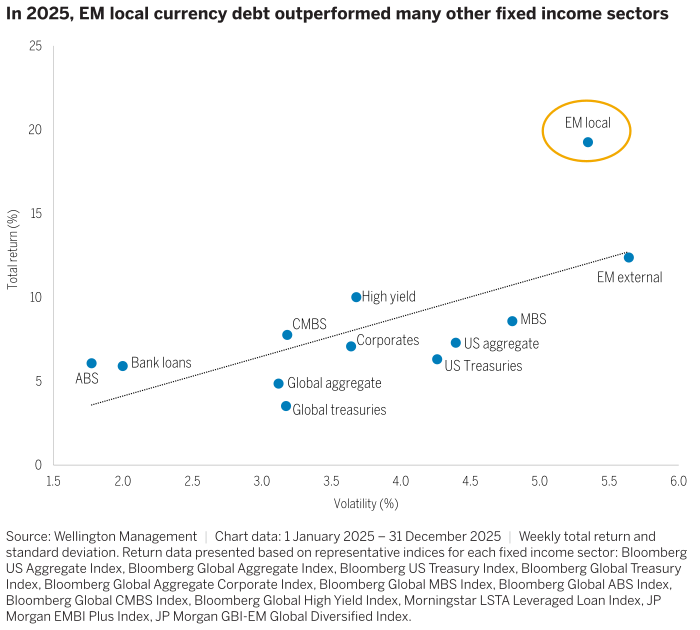
The sector printed a return-to-risk ratio greater than three for the first calendar year in its history.1 For perspective, the long-run return-to-risk ratio has been 0.55 since the inception of the Index in 2003 and 0.23 since the global financial crisis.
Last year was also the first since 2017 in which EM local debt posted a positive total return in each quarter of the year and outperformed the US aggregate index in every quarter. With such strong returns throughout the year, one could say EM debt investors had very few sleepless nights in 2025.
What’s more, while investors often think of EM local debt returns as analogous with currency risk, returns in 2025 were well balanced between local rates and local currencies. No single risk factor dominated the sector’s 19.3% total return. Of the total return, 8.3% came from EM currencies and the remainder from EM local rates. Returns were also well balanced across the index from a country perspective. In fact, 15 of the 19 countries in the JPM GBI-EM Global Diversified Index, a proxy for EM local currency debt, posted total returns in US dollar terms greater than 10% for the year.
Four reasons the bull market in EM local debt could continue in 2026
We believe EM local debt can continue its run throughout this year for four key reasons:
1. Improving sentiment — In the decade prior to 2025, the EM local debt sector underperformed other areas of fixed income from a risk/reward standpoint, producing a flat annualized return with 11% volatility. This engendered negative sentiment, which can take several years to unwind, even after fundamentals begin to turn positive, as we’re seeing in the asset class now. So, even though sentiment has begun to lift, it could improve further, which means there’s room for the bulls to keep running.
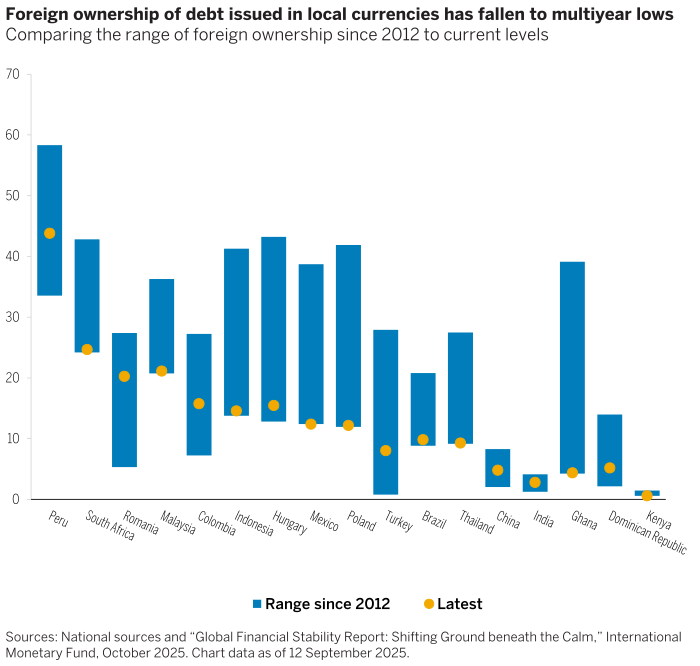
2. Ratio of foreign to domestic ownership — Because EM local currency debt has a recent track record of muted returns and relatively high volatility, many fixed income investors have been reluctant to commit capital. This is positive for the asset class for two reasons:
- With foreign investment so low, many countries rely more on demand from domestic investors. Greater domestic ownership of local currency debt reduces EM debt’s sensitivity to global shocks, which supports the asset class from a structural perspective.
- At the same time, from this point, there is room for foreign investment to tick up, which would also benefit the asset class.