

- Head of Investment Platform, Equity Portfolio Manager
Norway, Institutional
Change
Artificial intelligence is among the most influential forces shaping the economy and markets today. Views on AI range widely. Some see it as a potential profit windfall for beneficiaries; others see it as an investment bubble fraught with risk. Regardless of where one lands on that spectrum, the pace of change and evolution is dizzying.
From an investment perspective, AI will touch most sectors and businesses in the economy over time. Exactly how and how much remains an open question. At Wellington, our internal debate is vibrant and spans all industries, asset classes, and time horizons. We believe those who can connect the dots across the different dimensions of the AI debate may be best positioned to capitalize on the positive and negative impacts of this rapidly evolving technology paradigm.
Below, we profile four of our experts’ perspectives on AI and its investment implications. While they each bring something different to the table, broadly, we all agree that flexibility, open-mindedness, and collaboration are necessary to address the significant, dynamic investment opportunity in AI.

The trajectory of AI today looks a lot like the recent evolution of chess. In the early 1990s, humans beat machines. In 1997, this flipped. Computer Deep Blue defeated chess grandmaster Kasparov. From roughly 1998 to 2012, the strongest players were human-machine combinations, or “centaurs” (nomenclature inspired by half-man, half-horse creatures of Greek mythology). This suggested that human judgment plus machine calculation outperforms either independently, but this proved temporary.
From 2013 to 2016, pure AI systems began to outperform centaurs. Human input shifted from being additive to subtractive. Since 2017, self-learning systems haven’t just matched human play, they’ve expanded it, uncovering strategies outside established theory. The key point is: Collaboration may be a phase ― not an endpoint.
Today’s consensus assumes a centaur equilibrium of humans and AI working together across industries. Chess suggests otherwise. Once AI capabilities cross a threshold, displacement can happen quickly.
There is a caveat. Chess is a closed system; the real world is not. Economic and social systems are far messier, which will probably slow the transition. But AI is improving its ability to operate in increasingly ambiguous environments. Directionally, the implication is clear: This framing matters for markets.
Investment implications
Today’s AI models are highly capable and are underutilized relative to what they can do. As a result, substantial changes across multiple industries are imminent. Parts of IT, internet, financial services, marketing, and other services will be affected. Markets have started to react with indiscriminate selling of software, internet services, and IT service companies.
Are there opportunities within these companies that are perceived as losers? Simplistically, I see the biggest potential alpha sources in companies that are considered AI losers today who could use AI to “supercharge” their businesses tomorrow. For example, companies that introduce AI features to make their products more compelling, leverage AI to optimize costs while increasing efficiency, or serve traditional companies to help them become AI-ready can be winners. In these cases, AI is not a threat, it’s an accelerant.
Finally, second-order effects matter. If AI compresses parts of the labor market, time and attention reallocate. That makes me incrementally more cautious on jobs, and more constructive on how people may spend their free time, such as consuming media, playing video games, and engaging with social platforms.
At the same time, AI is unlikely to displace inherently human experiences. We could spend more time playing and watching sports, attending live events, traveling, and participating in in-person leisure activities. Investment opportunities linked to these types of activities could benefit from AI. After all, just because bikes can go faster than Usain Bolt doesn’t mean we stopped watching 100-meter races, and even though AI can beat human chess grandmasters, chess has never been more popular.

AI models are a new form of software, but they rely on immense computing power to operate. Many investors are looking to capture AI’s value through software, yet the democratization of intelligence may ultimately shift more of that value to infrastructure, which provides the necessary computational scale.
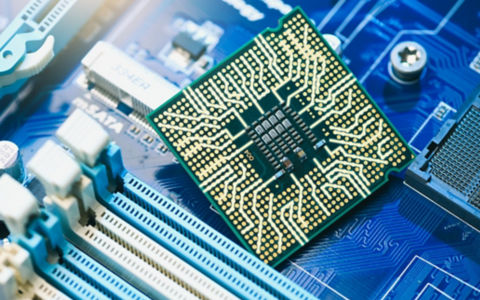
This infrastructure includes semiconductors, their supply chains, and the cloud ecosystem. We continue to see exceptionally strong prospects for AI infrastructure providers. Capital expenditures among hyperscalers, or large-scale cloud service providers, are expected to reach roughly US$667 billion in 2026 ― a 60% increase year over year.1
Despite rapidly increasing capital spending across the ecosystem, supply constraints remain widespread throughout the infrastructure stack. Large cloud providers have recently asserted they would be spending more if the supply chain could support a faster ramp.2 Accelerators such as GPUs,3 which are critical to the computations behind today’s (and presumably tomorrow’s) AI systems, remain in exceptionally tight supply. Shortages are also present across CPUs,4 networking equipment, optical components, and memory. These constraints are likely to endure as global data center capacity scales to meet surging AI demand.
Investment implications
As it relates to AI, I see the greatest opportunities for structural growth in infrastructure. Demand is expected to continue to exceed supply for some time because AI adoption continues to grow faster than the supply chain can fully support. Companies positioned across the AI infrastructure universe are likely to remain key beneficiaries of this investment cycle. We’re also seeing dislocations in companies the market has labeled as “have nots” in an AI world, such as certain software companies, which we expect to be key innovators in and beneficiaries of the growth in AI.
I don’t think it’s an exaggeration to say technology is currently undergoing its fastest pace of innovation, most nonlinear change, and most disruptive period in history ― and periods of disruption offer both volatility and opportunity. Markets often struggle to price long-term structural change and frequently overshoot in both directions. For active investors, these dislocations can create compelling opportunities where strong fundamentals diverge from prevailing market narratives.

The outlook for software is the most complicated it’s been in decades. The near insatiable demand for AI capacity, which has only accelerated with the incredible year-to-date AI coding explosion, is driving earnings revisions and capital flows to other tech sectors, such as semiconductors. By contrast, software investors are debating the sector’s “terminal value risk” in context of the AI model companies’ extraordinary growth and rapid product releases. Investors are also asking harder questions about stock-based compensation and capital deployment as valuations reach multiyear lows.
Investment implications
There isn’t a single right answer on how to incorporate software in an investment portfolio, as the appropriate approach depends heavily on portfolio construction and investment framework. The sector includes a diverse menu of end-market exposures, pricing models, and unit economics. Across the sector, there are a variety of company-specific AI headwinds and tailwinds. Moreover, there is also a range of intensity with which management teams are driving AI to accelerate their product roadmaps and drive margin improvements, as well as tightening their financial discipline. Investors are looking for the combination of improving “growth + margin” profiles, durable AI-safe competitive moats, and revenue acceleration attributable to AI innovation.

Conversations about AI and productivity are deeply intertwined with questions about the future of the labor force. To assess the risks AI has on jobs ― a legitimate, important concern ― it’s crucial to discern between public sentiment, which is frequently divorced from actual progress in tech adoption, and more fundamental and systemic risks that may lead to strong policy and labor responses.
In practice, I think we should expect an adoption curve for agentic AI that mirrors the realities of prior technology waves, including GenAI most recently. Most companies are still in the process of establishing core AI capabilities and data governance. They’re navigating internal compliance and industry-specific AI regulatory factors. Agentic AI introduces the possibility of reshaping entire workflows, and we’re hearing from some companies that they’re stepping back to reassess IT spend, broader budgeting, and team structures as they test out agentic AI integration across roles and functions.
These constraints meaningfully regulate the pace of adoption even as total adoption is robust. This, in turn, can moderate the speed of job displacement, which leaves room for retraining and new job creation.
In parallel, public concern about mass unemployment is a real factor in the debate about the direction of AI, with many unresolved questions from workers and policymakers. At the most extreme end of the spectrum of potential outcomes, some AI proponents have suggested that AI could replace most human labor in the future. There are many unknowns about how this might change fundamental economic assumptions, let alone what policy response might be sufficient to address a rate of job losses that outpaces the rate of new job creation from AI. This has the potential to spark unusually strong public reactions.
Investment implications
If public sentiment about jobs becomes more negative, it could affect the trajectory of AI and investment implications in a few ways. For example, there are already instances of local pushback on new data centers that are linked to growing AI demand. Any extreme impact of AI on jobs could significantly cool support for data center expansion. Negative public sentiment could also inspire white-collar unionization, which we’ve seen already in some job categories. This would slow adoption across companies, especially those that solely prioritize labor reductions instead of more holistic AI productivity gains.
Concerns about jobs and systemic economic impacts could also tip the scales for policymakers who have already raised questions about the risks that come with this pace of AI innovation, including cybersecurity, information accuracy, high-risk use cases, and the overall safety of further AI developments. All these factors could constrain AI adoption and expansion.
1FactSet, Goldman Sachs Investment Research. The Broadening and Narrowing of the AI Trade. 24 February 2026. | 2Stripe and Youtube, “The history and future of AI at Google, with Sundar Pichai,” 7 April 2026. | 3Graphic processing units. | 4Central processing units.
The views expressed are those of the authors at the time of writing. Other teams may hold different views and make different investment decisions. The value of your investment may become worth more or less than at the time of original investment. While any third-party data used is considered reliable, its accuracy is not guaranteed. For professional, institutional or accredited investors only.
Experts