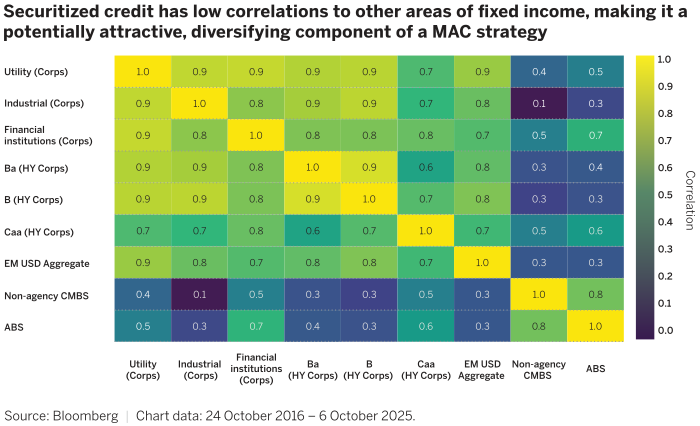
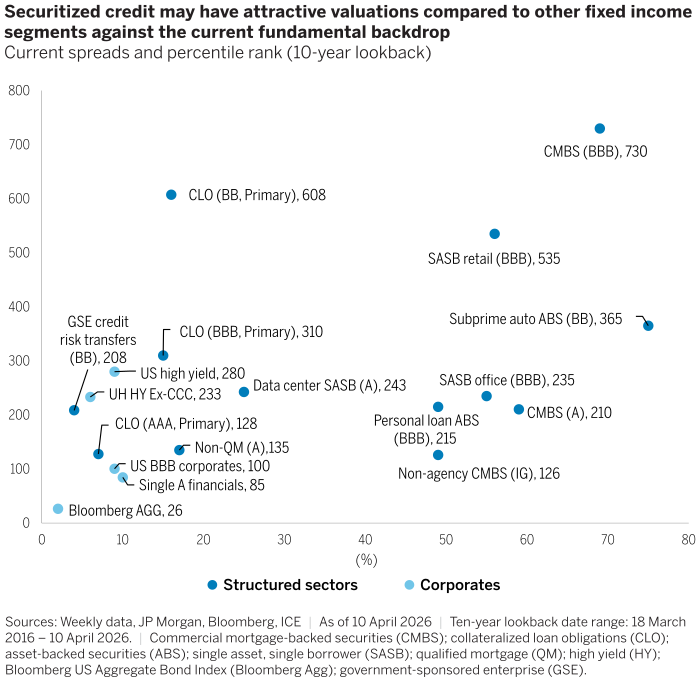
But the sector is not without risk. In times of market or fundamental stress, drawdowns in this space can be large, but so can recoveries. So, an active approach, accompanied by specialization, expertise, and adequate resources, is arguably essential within this space.
The K-shaped economy
Despite policy disruptions, attention-grabbing headlines (namely in AI), and mixed data signals over recent months, we believe the fundamental backdrop in the US is generally strong and will be supportive for risk asset performance. The mixed data signals point to uneven economic growth, which will be exacerbated by recent developments in the Middle East and rising energy costs. Uneven economic growth has created dispersion among sectors, industries, and companies, which, in our view, supports the case for a MAC approach in fixed income.
This type of economic backdrop can be described as “K-shaped,” meaning some parts of the economy are experiencing strong growth while others are declining (the performance of different parts of the economy diverges like the arms of the letter K). We believe this uneven growth dynamic is most acute in consumer health and the housing market ― two major risk factors for securitized credit investing.
Consumer fundamentals
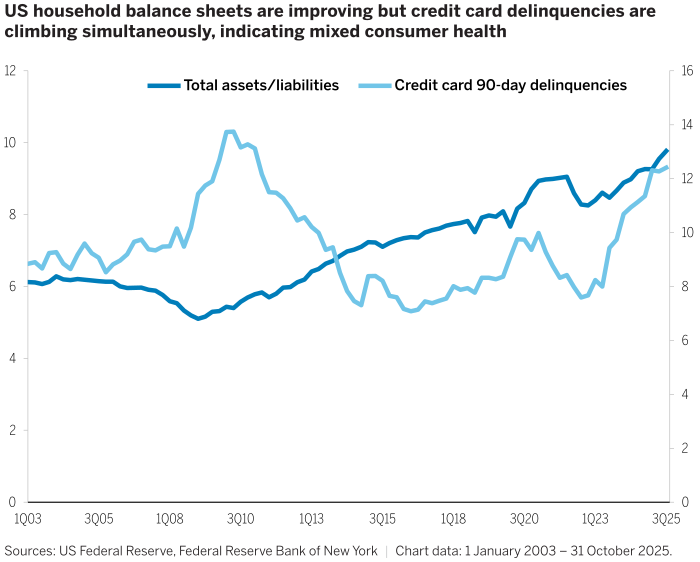
The US consumer continues to demonstrate strength, as evidenced by robust household balance sheets (debt relative to elevated levels of liquid assets) (Figure 2). In aggregate, consumer credit utilization is low relative to history. While the savings rate suggests that consumers are preparing for tougher times, We’d argue this is a false indicator because the way we capture the savings rate is fundamentally flawed in that it doesn’t include income earned from investments. This interest income shouldn’t be ignored, since both higher interest rates and the buildup of assets in money market accounts to all-time highs make this a meaningful source of support for the consumer.
However, when you look deeper at consumer health, the picture is more nuanced. Despite robust household balance sheets in aggregate, credit card delinquencies are rising, suggesting some consumers are struggling (Figure 2). Inflation is still a headwind, especially more recently. But fiscal stimulus in the form of larger tax refunds and smaller tax liabilities in the US has been a tailwind to offset rising prices at the pump. The recent rise in US asset prices (equities and homes) has supported many consumers, but those without invested savings or assets haven’t fared as well, and their credit availability might be limited ― creating dispersion in credit performance as a result.
























Monthly Market Review — August 2026
A monthly update on equity, fixed income, currency, and commodity markets.
By