1. Look beyond the obvious winners
China’s emergence on the global stage was the most significant macroeconomic development of the first quarter of this century. Its admission to the World Trade Organization effectively added nearly a billion workers to the global workforce. This labor-supply shock dramatically increased manufacturing capacity while raising standards of living in China and around the world. Falling goods prices contributed to disinflation and, ultimately, higher global profits.
China’s industrialization also fueled a commodity supercycle and a prolonged bond bull market, as disinflation reduced the need for central banks to raise interest rates. Over time, China’s rise benefited commodity producers, industrial companies, infrastructure providers, exporters, and, eventually, consumer businesses.
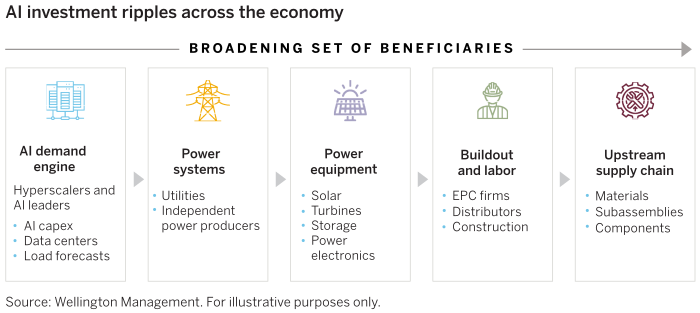
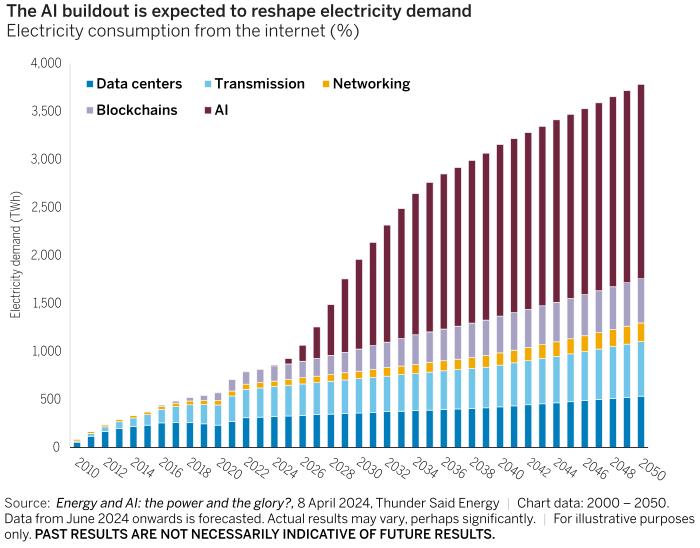
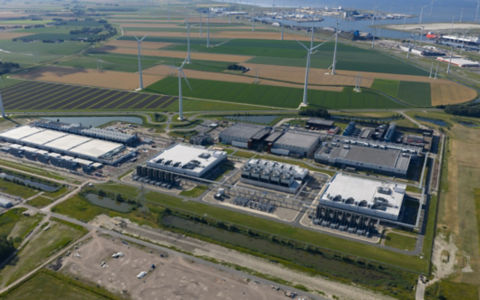
I believe AI could be the most significant development of the next quarter century. The AI revolution’s “second-order” economic beneficiaries may be found beyond the chipmakers, cloud platforms, and model developers leading the first wave. As AI investment drives demand for data centers and power, the effects are already rippling through utilities, grid equipment, construction, and other areas of the AI ecosystem (Figure 1). Over time, the opportunity should broaden further to companies that use AI to improve productivity, reduce costs, and strengthen their existing businesses.
Investment lesson: Treat AI as a cross-asset, cross-sector theme rather than a narrowly defined technology equity allocation. For example, consider infrastructure opportunities and real asset strategies that hold commodities, natural resource equities, and infrastructure-related assets. Read more from my colleagues on the structural growth opportunity in infrastructure and about harnessing that potential.