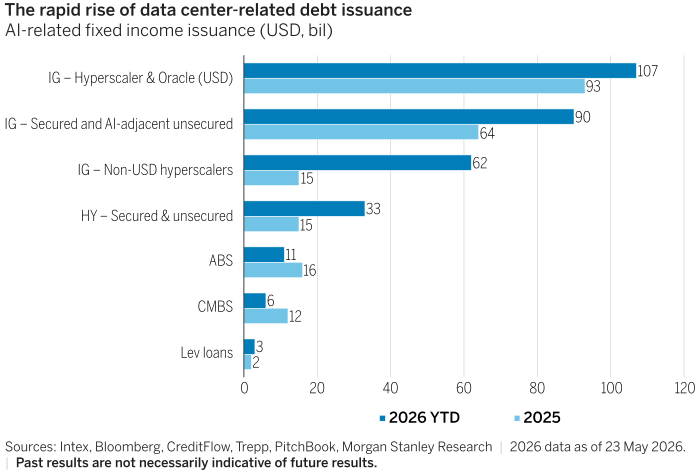
Execution risks and supply chain constraints
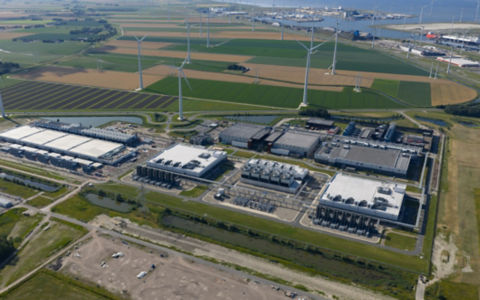
As investment accelerates, execution risks are becoming more visible. Building data centers requires complex supply chains, including semiconductors, power equipment, and specialized labor. Bottlenecks in any area can delay projects or increase costs.
For credit investors, these constraints introduce the risk of uneven outcomes. Even companies with strong demand may face operating challenges that affect earnings and cash flow. Execution capability is therefore likely to become a more significant driver of credit performance.
High yield: AI creates growth — and credit casualties
In high-yield markets, the AI build-out reinforces the theme of resilient spreads alongside rising dispersion. Despite macro uncertainty, spreads have so far remained relatively tight, suggesting continued demand for income and a relatively supportive backdrop.
At the same time, opportunities are becoming more differentiated. Dispersion is increasing across issuers, particularly in lower-rated segments, reflecting both sector-specific dynamics and the uneven impact of AI investment. For some companies, AI-related investment may support growth, while for others it raises capital intensity or disruption risks.
The result is a market with diverging issuer-level outcomes. While spreads may remain range-bound in the absence of a downturn, greater dispersion underscores the importance of selective positioning and bottom-up credit analysis. Moreover, AI exposure in high yield often lies outside traditional technology companies. Beneficiaries increasingly include independent power producers, utilities, telecom infrastructure providers, and industrial suppliers that support the AI build-out.
Private credit: Toll collectors of the AI economy
The AI build-out also has implications for private credit markets, where financing demand may extend beyond public markets. As companies invest in infrastructure, private capital may play a growing role in funding projects that are large, complex, or less suited to traditional bond issuance.
The expanding role of private credit raises questions around underwriting standards and risk selection. As capital flows into the asset class, investors will need to differentiate between transactions supported by durable cash flows and those more exposed to execution risk or optimistic growth assumptions.
As in other areas of credit, AI investment may create attractive opportunities for private lenders, but it demands both rigorous discipline in underwriting and structuring given an environment of increasing capital intensity. As financing demand continues to grow, the ability to structure transactions thoughtfully may become an increasingly important differentiator. Careful structuring and appropriate lender protections may ultimately help mitigate downside risk while allowing lenders to participate in attractive long-term financing opportunities.
Securitized credit: Collateral matters
AI investment is creating opportunities in securitized markets but also highlights the importance of structure and collateral quality. In areas tied to data center and infrastructure financing, investors are increasingly evaluating whether projected cash flows and anticipated takeout financing assumptions will materialize as expected.
A key concern is that some transactions are being structured around optimistic repayment timelines or refinancing assumptions. If projects experience delays, construction challenges, or slower-than-expected cash-flow generation, investors may face significant extension risk. In these cases, headline yields can mask structural vulnerabilities if financing terms rely heavily on favorable future market conditions.
As a result, securitized investors are placing greater emphasis on transaction structure, downside mitigation, and the durability of underlying cash flows rather than simply seeking exposure to AI-related growth. The opportunity remains attractive, but differentiation between well-designed and aggressively structured transactions is becoming progressively more important.
Structural shift in credit markets
The AI capex cycle is still in its early stages, but its implications for credit markets are becoming clearer. It represents a structural shift toward higher capital intensity, a growing source of credit supply, and a key driver of dispersion across sectors and issuers. For investors, it creates significant new opportunities, but careful analysis of capital allocation, financing, and execution risk will be critical as the cycle evolves and increasingly shapes credit market outcomes.