Ireland, Intermediary
Change



As I wrote last year, we are still in the early days of the AI adoption process but the technology clearly has the potential to revolutionize the workings of the US economy. The significance of this era of innovation and the need for timely data to understand it isn’t lost on new Federal Reserve Chair Kevin Warsh, who began his tenure by establishing a task force that will study AI’s economic effects. In this note, I share evidence of AI’s impact on growth, productivity, inflation, and labor, and I discuss the implications for markets and policy.
Among the key takeaways:
- AI-linked investments, driven by a surge in demand, are lifting areas of investment growth in the US economy to a point where they’re contributing as much as consumer spending. Additionally, positive wealth effects from AI-driven equity market gains have boosted spending by affluent households, creating an indirect economic benefit.
- Current labor market benefits are largely in the “augmentation” category (using fewer workers but adding AI to maintain output) — that is, they are improving worker efficiency rather than fundamentally reshaping production or creating entirely new occupations.
- AI’s potential to materially lift US productivity in coming years remains compelling, but evidence suggests its impact is still far from being economy-wide and transformational.
- The surge in demand for AI has added to the pricing power of companies providing the needed compute, power, and infrastructure, pushing US inflation higher at a time when the energy shock is doing the same.
- AI’s impact on US equity market earnings, profit margins, and performance has been substantial and well ahead of the economic impact, which is typical of a capital-intensive buildout.
- Capital-driven economic expansions usually lead to higher real rates over the course of the business cycle.
An update on company adoption and AI’s growing economic impact
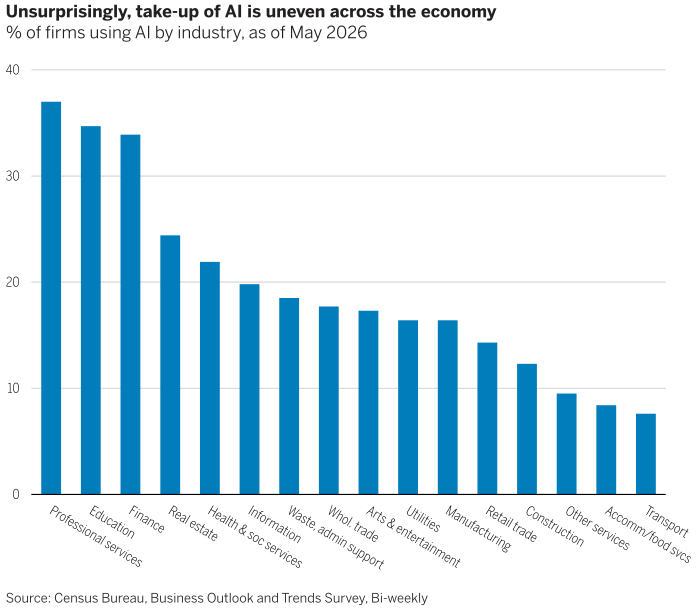
Roughly 20% of US companies use AI today, although the overall share of workers using it is far higher — a reflection of the fact that larger companies are adopting AI more quickly than smaller companies.1 Looking across industries, the take-up of AI remains uneven (Figure 1). For example, more than one third of professional services companies are actively deploying it versus less than 10% of transport companies. We should see take-up rates rise across more industries as innovation expands and the cost of deploying AI declines over time.
Figure 1
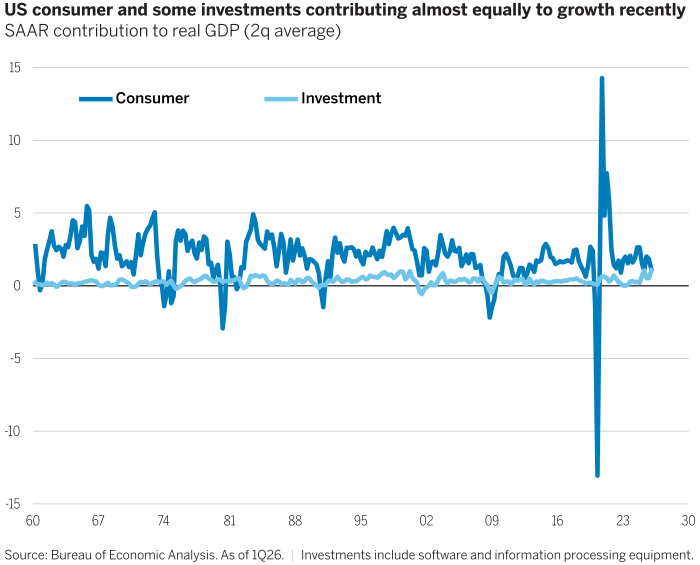
AI’s contribution to the US economy remains strong and its share of output continues to grow rapidly. I estimate that AI-related capex spending as a share of GDP ended the first quarter of 2026 at 1.7% (Figure 2). That represents an 82% increase from the first quarter of 2025 and suggests that, roughly speaking, about 25% of US growth is coming directly from AI, including building blocks like compute, data centers, software, and equipment. As another indication of AI’s growth impact, investment spending on information processing equipment and software alone was contributing roughly the same amount to growth as consumer spending in the first quarter of 2026 (Figure 3).
Figure 2
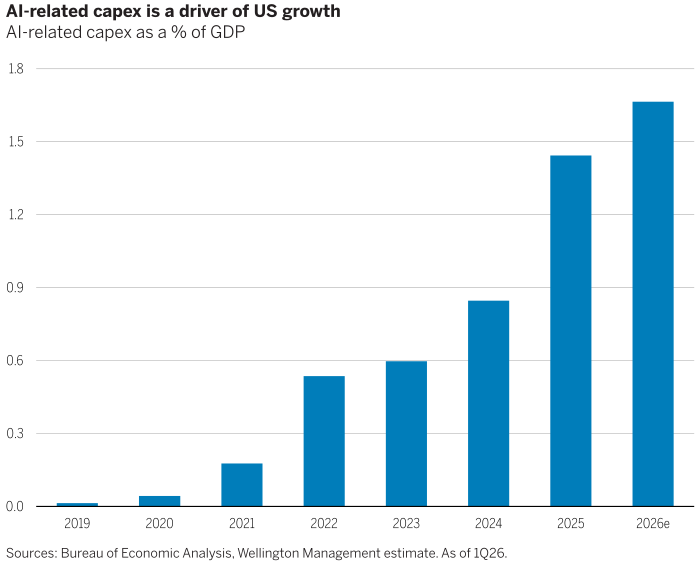
Figure 3
Purists could argue that AI’s economic growth contribution is smaller than my estimates above, given that large amounts of chips and computer products are being imported from outside the US. But on the other hand, there are indirect economic growth benefits of AI being overlooked. In particular, the rising stock market has boosted the wealth of affluent households, and those wealth gains are increasingly driving US consumption. Today, the top 20% of income earners account for about 40% of all consumption, up from 30% in the 1980s — and in recent quarters, we’ve seen that figure spike as high as 50%.
AI is affecting the workforce but not yet in a transformative way
Not surprisingly, technological breakthroughs tend to be disruptive for workers, driving change in organizational structures, processes, and required skills, and potentially making some existing jobs redundant. With that in mind, I’ll offer some observations on the labor market impact to date:
- The share of layoffs attributable to AI is clearly growing. In 2025, 5% of layoffs were driven by AI, up from less than 2% in 2024. Year to date in 2026, the share is about 19% (even as aggregate layoffs remain low).2
- Given the industries at the forefront of AI adoption (professional services, finance, etc.), job losses are weighing more heavily on white-collar workers — especially in entry-level roles. AI-related redundancies began to rise last year in areas like warehousing logistics, retail, services support, and media content, indicating a broadening of impact.
- The percentage of job postings that ask for AI-related skills has doubled to 2.5% since last year.3 For now, the impact of AI seems to be highest in the labor augmentation phase (i.e., increasing worker efficiency) rather than the transformative phase, where we see a rapid creation of new occupations due to wholesale changes in the way work is done.
The recent revival in the US labor market is a reminder that AI’s impact is still concentrated in a handful of industries. In fact, AI ranked only fifth on the list of factors causing layoffs in 2025, well behind economic/market conditions and other causes. This lends credence to the thesis that companies overhired in 2021 – 2022 and needed to recalibrate. In addition, while wage growth has slowed for high-income earners, it has slowed even more for low-income earners — consistent with cyclical factors that have contributed to a tepid hiring environment over the last few years, as opposed to an effect of AI adoption.
In addition, the US administration’s immigration restrictions have constrained the labor supply, and that has limited the rise in aggregate unemployment despite layoffs driven by AI and other factors. As a result, the US economy needs fewer job gains than in the past to keep the unemployment rate steady.
Turning to policy matters, tracking the progress of physical AI will be essential in understanding whether industries such as leisure and home health services will see a meaningful uplift in AI adoption rates. They are consistently among the most labor-intensive areas of the US economy and have faced notable labor shortages. It will be important for policymakers to encourage innovation in AI application in industries and sectors where the needs are greatest. This is particularly true given the current constraints on the labor supply, which could result in bottlenecks in these areas and curtail the length of the business cycle.
Finally, while many fear the widespread automation of white-collar jobs, governments and regulations will likely play a role in moderating the move toward reliance on machines. To date, though, progress in this area has been slow and it will need more attention in coming years.
The productivity picture: Watching for selective gains to broaden
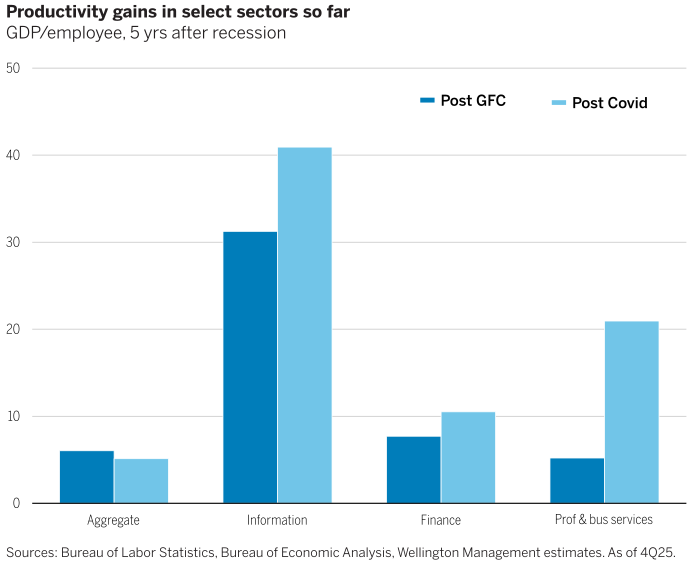
As impressive as AI’s economic impact has been to date, the potential for the technology to boost growth over time will depend on its ability to improve productivity. From an industry standpoint, information, finance, and professional & business services are at the forefront of the productivity lift in the economy. These industries, which collectively account for 40% of US economic output but only 20% of the total job base, are seeing meaningful gains in productivity relative to the last business cycle (Figure 4).
In aggregate though, the productivity performance thus far is similar to what was witnessed in the last business cycle five years after the post-GFC recession (left side of Figure 4). This implies that until there’s AI diffusion across more industries and sectors, there is a cap on how much aggregate productivity can rise.
Figure 4
In thinking about the outlook for productivity, a little historical perspective is needed. Over the long run, US productivity growth has averaged 2.1% per annum, which is about where it has been over the current business cycle.4
My research on past historical innovation cycles stresses the importance of adoption rates reaching 50% across industries before a step up in economy-wide productivity becomes visible. Assuming that happens and extrapolating from prior technological breakthroughs, I think it’s reasonable to expect a 1.3% increase in annual labor productivity growth within the next 15 years, as the technology advances past its initial use cases to a broader set of tasks and functions. Of course, if we see a continued rapid uptake of the technology, these productivity gains may be realized sooner.
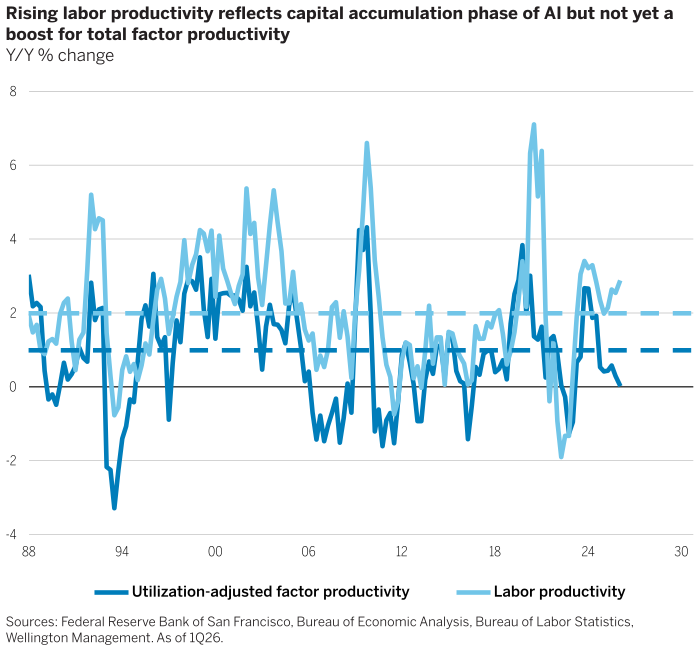
While recent labor productivity data in the US has been strong, much of this can be attributed to the capital accumulation phase underway with the build-out of data centers. Figure 5 shows that utilization-adjusted total factor productivity (a way to isolate the technological impact on efficiency gains) remains low. This corroborates my personal belief that while the potential for AI to improve productivity is significant, its actual impact thus far is not as robust as currently perceived in the marketplace. It also highlights the need for policymakers to remain vigilant in the fight against inflation and not assume that productivity gains are at a level that will do the work for them. As a case in point, the initial capital accumulation phase and the strong demand for AI have been accompanied by a surge in prices of semiconductor chips, power, and many areas of the industrial supply chain — all of which is lifting goods inflation (at a time when the energy shock is also raising inflation) while we wait for higher productivity growth to materialize. With this in mind, the Federal Reserve task force that I mentioned earlier may consider finding data tools that can track AI diffusion within and across industries, and focus on identifying when the capital accumulation phase results in total factor productivity gains that can have a more disinflationary impact on the economy. This would help determine the “right” interest-rate setting for the US economy.
Figure 5
In the equity market, AI is punching above its weight relative to the economy
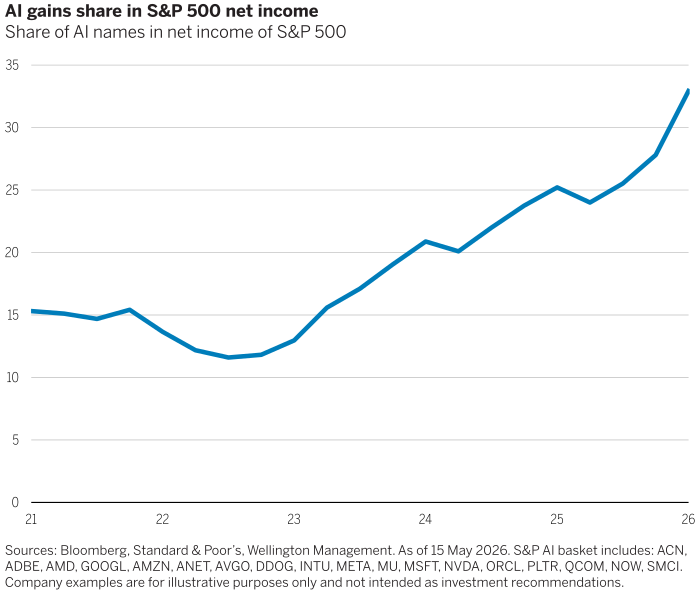
The bump up in earnings growth for US companies from the AI theme has been meaningful (light blue line in Figure 6). Notably, the AI theme accounts for about one-third of the net income of all S&P 500 companies today (Figure 7). And the net income of AI-related names in the S&P 500 is estimated to grow 46% year over year in 2026. That compares with 13% for the rest of the index, which is easily above the long-term trend and continues the broad market recovery in profits of the last few years. The almost 25% increase in profits in the first quarter of this year — remarkable for the sixth year of an expansion — was driven to a large extent by the pop in AI-driven spending (as well as a meaningful rise in energy earnings). While the focus was almost exclusively on the big capex spenders (the Magnificent Seven) a few years ago, it has recently shifted to the beneficiaries of the spending, including the chip makers, power producers, and industrial companies participating in the profit surge.
Figure 6
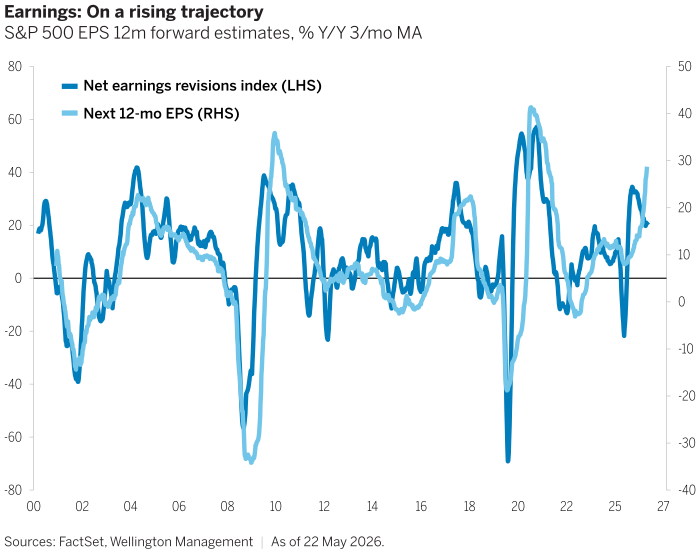
Figure 7
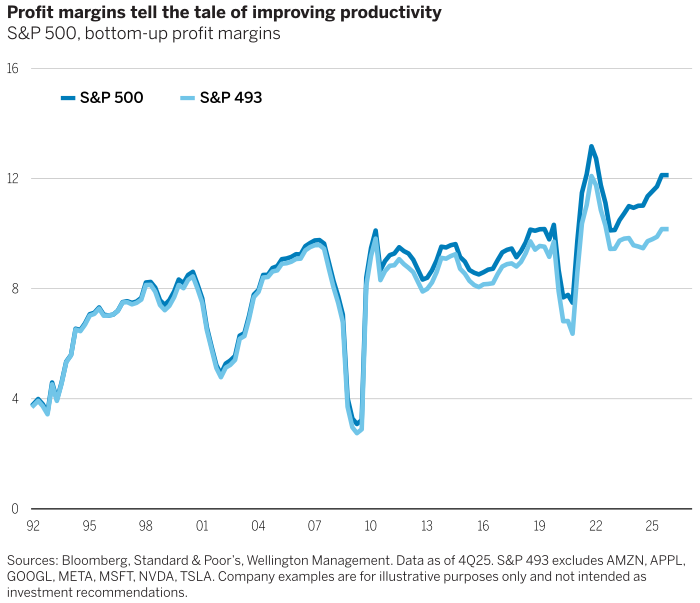
Profit margins also warrant close scrutiny as a marker for diffusion of AI and an increase in aggregate productivity. Aside from the Magnificent Seven companies, margins are in the same range as they were prior to the pandemic (light blue line in Figure 8). If we see a breakthrough increase in them, it will be an important sign of broadening AI diffusion. Or, if they stay steady for a long stretch of the business cycle even as the unemployment rate declines, it will be a sign that companies have been able to gain efficiency thanks to AI and avoid generating inflationary pressures.
Figure 8
Closing thoughts
A broad-based increase in the return on AI-related investments would spur broader adoption of the technology and raise real growth and real interest rates in the US. At the Federal Reserve’s March 2026 meeting, we saw the first upward movement in the central bank’s long-term growth assumption for the US economy since 2014 — an increase of 0.2%. While seemingly small, it is directionally a nod to AI’s eventual impact. For now, the AI use cases are more sector-specific and workplace-related, which limits the potential aggregate productivity gains, at least in the near term, and also suggests the need for continued inflation vigilance by policymakers. But with time and new technological breakthroughs, we should be looking for signs of a more pervasive AI impact on the economy — like some of those from the past (e.g., the electrification era) that have driven strong and enduring productivity outcomes and come with a disinflationary impact that lowers inflation. In the meantime, the capital-intensive buildout of AI means the technology is contributing a considerably bigger piece of the pie in equity market profit, revenue, and margin assumptions.
1Source: US Census Bureau, as of May 2026 | 2Source: Challenger, Gray & Christmas. As of April 2026. | 3Source: Lightcast, as of 2025 | 4Source: Bureau of Labor Statistics, Historical Statistics of the United States. Data is for the period 1901 – 2024.
The views expressed are those of the author at the time of writing. Other teams may hold different views and make different investment decisions. The value of your investment may become worth more or less than at the time of original investment. While any third-party data used is considered reliable, its accuracy is not guaranteed. For professional, institutional or accredited investors only.






















Monthly Market Review — August 2026
A monthly update on equity, fixed income, currency, and commodity markets.
By