
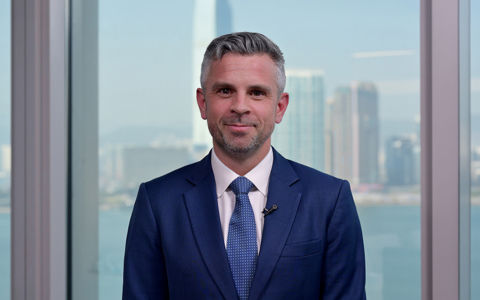

- Solutions Director, APAC
Explore our insights
Asset class
Formats
2026 Midyear Investment Outlook


2026 Midyear Investment Outlook
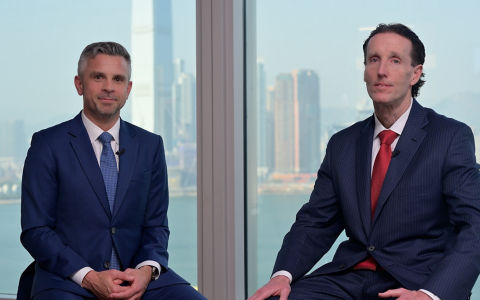
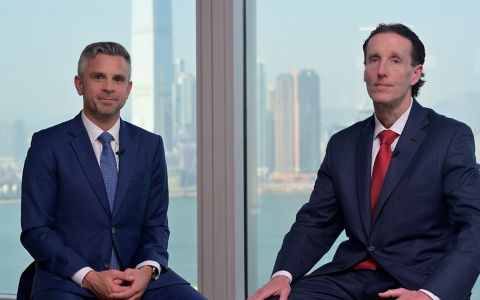
In this video, Andrew Sharp-Paul, Solutions Director, APAC, shares three themes that are top of mind for clients in the region: where to focus portfolio risk, how to add flexibility within multi-asset portfolios, and ways to build resilience as volatility increases.
Hi, I am Andrew Sharp-Paul, APAC Solutions Director at Wellington Management. Part of my role is speaking with clients throughout the region to understand their investment challenges and how Wellington Management can help.
In recent conversations, there have really been three key topics that have been top of mind for our clients here in Asia.
The first is refocusing portfolio risk into the areas of markets where that risk can best be rewarded. The second is thinking about ways in which you can bring flexibility within a multi-asset portfolio to bear on markets and different asset classes. And the third is resilience — thinking about ways in which you can build resilience into a multi-asset portfolio as volatility increases and as uncertainty arises.
So, beginning with focus: Where do you focus risk within your portfolios? Top of mind for our clients in Asia at the moment is equities. Equities have gone through a period that has been challenging for traditional active managers. Issues like index concentration and the dominance of single themes, such as artificial intelligence, have made it challenging for investors to deploy capital into areas of the market where they see the greatest opportunities.
Within our portfolios, and in many conversations we have with clients in the region today, we are emphasizing disciplined core equities as a way to try and overcome some of these specific market issues. What I mean by "disciplined" is a focus on delivering very deliberate tracking error. But importantly, the composition of that tracking error is dominated by security selection, or idiosyncratic risk. By allowing security selection and idiosyncratic risk to drive the bulk of active risk in your equity portfolio, you can more fully tap into the security-selection skill and deep fundamental research of the underlying investment team.
Disciplined core global equities can be accessed in many different ways. It can be traditional, long only; it can be portable, fundamental alpha; it can be accessed through extended strategies; or it can use advanced portfolio construction techniques, such as alpha capture.
The second key area of discussion is around flexibility — how you can think about being more flexible or more dynamic across asset classes. For example, using tactical asset allocation; within asset classes, using techniques such as rotational fixed income; but also across public and private assets as well.
A particular interest has been rotational fixed income. As we move into a different investment paradigm, underpinned by deglobalization, uncertainty around monetary policy and central bank independence, as well as the growing role of fiscal policy within the global economy, one way to think about investing through such a challenging period is to employ a more rotational or more dynamic fixed income process. Such processes are better able to not only think about the right tail, or the upside opportunities within fixed income, but also the downside, or the left tail events, as well.
This can be best described as having a more total return mindset, rather than a benchmark-relative approach. One key lesson in 2022 was that traditional methods of diversification aren't always going to hold up in a more volatile and uncertain world, so utilizing a more total return approach within fixed income helps to add ballast within a portfolio. Specifically, a total return approach allows you to be more flexible across different sectors within the fixed income markets. That flexibility allows the manager to not only think about the right tail, or the upside opportunities, but also, critically, to think about the left tail, or downside risks.
The final area of conversation has been resilience — specifically, in a world of increased volatility, increased uncertainty, and rising geopolitical tensions: How do you ensure that your portfolio has enough resilience to withstand the markets as they evolve from here?
For allocators, there are a few different ways to think about resilience:
One particular area of interest among our clients has been hedge funds and the role they can play within a portfolio as a diversifier to traditional assets. The popularity of hedge funds has increased in recent years, driven by strong performance but also a much more supportive macro background for hedge fund investing. In addition, as market dislocations occur and volatility picks up, the ability for hedge funds to identify opportunities within those dislocations becomes more pronounced.
Another key area of focus is the continued convergence between public assets and private assets — and, within portfolios, how those two interact with one another, both from a return perspective but, more importantly, from a risk perspective.
As you allocate to both public assets and private assets, where are the areas of commonality, where are the areas of diversification, and how do you think about risk through a total portfolio approach? We look forward to continuing this dialogue with you, and if you have any recommendations, questions, or suggestions, please let us know.
The views expressed are those of the speaker at the time of filming. Other teams may hold different views and make different investment decisions. The value of your investment may become worth more or less than at the time of original investment. While any third-party data used is considered reliable, its accuracy is not guaranteed. For professional, institutional, or accredited investors only.