Three pathways within climate investing
We see three broad focus areas within the climate investment opportunity set. Attractive in their own ways, each carries a different risk profile, capital requirement, set of demand drivers, and time horizon. They can also play complementary roles in an investor's portfolio.
Path 1: Deep-tech climate innovation
Many investors initially think of deep-tech when discussing climate investing. This typically involves breakthrough technologies that can change the cost, performance, or emissions profile of large physical markets.
Examples include advanced battery chemistries, next-generation solar materials, advanced fuels, carbon capture systems, nuclear fusion reactors, and lower-emission industrial processes for steel, cement, or chemicals.
These companies can address large markets and advance long-term decarbonization. If one of these technologies achieves line of sight to cost parity and then moves past it to become the market standard, it can attract the capital to scale and become the cheapest option, just as solar photovoltaics and lithium-ion batteries did over the past two decades. Even then, the returns do not always go to the company that developed the technology. In solar and batteries, much of the value went to large incumbent manufacturers that scaled production, rather than the original innovators. These companies also tend to involve a distinct underwriting profile, with greater technical risk, scale-up complexity, and capital requirements than more asset-light models.
Adoption may depend on policy support, strategic customers, or green premiums until technologies become cost competitive with incumbent alternatives. Development is also often asset-intensive, requiring substantial capital and longer time horizons to prove and scale. As a result, this climate opportunity segment often aligns naturally with investors and LPs capable of supporting longer development cycles, higher capital intensity, and greater technology risk.
Path 2: Asset and infrastructure buildout
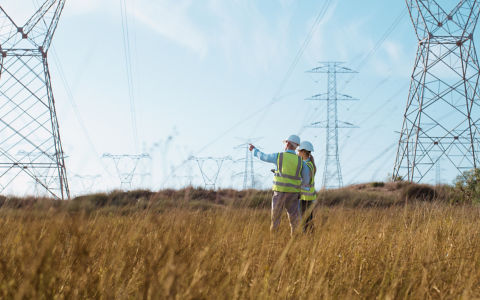
Asset and infrastructure buildout involves financing and constructing the physical infrastructure required for the energy transition and broader economic growth once underlying technologies are sufficiently proven for project deployment. This includes generation, transmission, and storage infrastructure, as well as industrial facilities, buildings, and municipal infrastructure.
Recent growth in renewable energy projects and data centers illustrates the scale of this buildout. Though essential, these projects frequently involve long timelines, permitting complexity, and significant upfront capital requirements, frequently supported through project finance structures.
Consequently, return profiles and investment horizons are often more aligned with infrastructure and real asset strategies than venture or growth equity investing. These assets have the potential to generate attractive risk-adjusted returns, and this part of the opportunity set may align naturally with investors seeking infrastructure-style duration, yield, and risk.
Path 3: Performance optimization
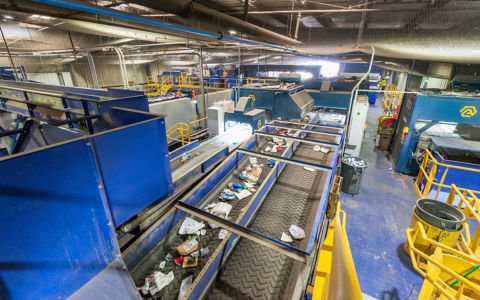
Performance optimization adds an intelligence layer to the physical economy, with the goal of improving operational efficiency of existing systems and enabling better planning, design, and management of new capacity.
These companies apply software and software-enabled hardware, including automation, advanced controls, and artificial intelligence, to help customers unlock constrained capacity, reduce costs, increase uptime and throughput, improve decision making, and manage risk. Grid intelligence, load orchestration, and compute optimization can increase usable power and compute capacity. Robotics, drones, and automation can improve productivity and help address labor shortages. Digital twins and simulation tools can improve planning and design for new infrastructure. Advanced controls allow assets to operate more dynamically based on real-time conditions rather than static operating assumptions.
These solutions address binding constraints in how essential systems operate. Utilities must manage load growth and grid congestion. Manufacturers must increase productivity despite labor scarcity and aging equipment. Building owners must manage energy costs and physical climate risk. Companies across sectors need better forecasting and visibility across supply chains.
The strongest companies in this pathway have the potential to grow because they solve operationally critical problems with measurable customer ROI. Technologies that manage load, automate workflows, coordinate distributed assets, or optimize operations in real time can defer capital expenditures, increase asset utilization, and reduce labor dependence or resource intensity.
Regulation and targeted incentives can accelerate adoption, but durable demand is typically anchored in measurable economic benefits through cost savings, reliability, and risk management.
Climate outcomes remain aligned with product usage. Lower energy consumption, reduced waste, improved asset utilization, and greater resilience can scale alongside commercial growth. We believe this creates a compelling part of the climate opportunity set, particularly within growth-stage private markets.
Asset-light versus asset-heavy
Across these pathways, capital intensity creates another important distinction for investors.
Deep-tech and asset-heavy businesses often require significant capital early in their life cycle, as manufacturing capacity, demonstration facilities, or physical infrastructure must be built well in advance of meaningful revenue generation.
In contrast, asset-light business models tend to scale more linearly through repeatable deployments with lower incremental capital requirements. These companies often apply existing technologies in new ways to physical systems, replicating software, data, or control-layer capabilities across customers without financing substantial new production capacity.
That does not inherently make asset-light companies less risky. They still face execution, procurement, integration, and competitive challenges. However, their scaling profile can differ meaningfully from businesses that require substantial capital investment to prove and expand capacity.