


- Geopolitical Strategist
Portugal, Intermediary
ChangeThe views expressed are those of the speaker(s) and are subject to change. Other teams may hold different views and make different investment decisions. For professional/institutional investors only. Your capital may be at risk.
Commodities are shaping up to be a critical asset class for investors to consider in 2026. Veteran commodities portfolio manager David Chang joins host Thomas Mucha for a wide-ranging discussion on gold's ongoing bull run, the role of central banks, the evolving energy landscape, AI, and the prospect of a new global commodities super cycle.
1:55 – What’s driving gold’s bull run
6:50 – Gold vs. other commodities
8:20 – Entering an energy super cycle?
12:10 – Geopolitics and the future of oil
16:30 – AI, commodities, and national security
20:50 – China’s role in commodities markets
23:35 – Broader macro factors
David Chang: They're the broader macro factors, and we've talked a lot about them, the de-dollarization, de-globalization and the onshoring. Talking about obviously, the huge capex boom in AI. What's interesting is to me, it less cyclically sensitive. It's almost “acyclical” relative to many other forms of capex spending that we've seen in the past, because of the huge commitments that have been made by a very well capitalized part of the economy.
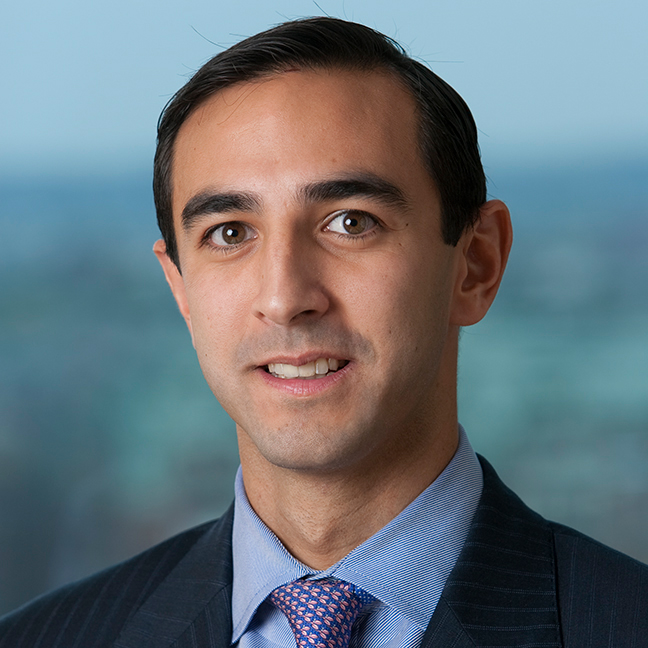
Thomas Mucha: Commodities are central to many goods and products we use each day. From the cars we drive to the food we eat, to the smartphones we increasingly rely on. As a result, commodity prices often reflect supply and demand dynamics and broader economic health. Their importance in global trade, and of course, geopolitics cannot be overstated. And lest we forget, they also represent a highly diverse and expanding investable universe amid secular trends like electrification and artificial intelligence. So, to talk us through the current and future states of global commodities markets, I'm joined once again by commodities portfolio manager David Chang. David has been investing in commodities since 2001 and has seen just about every market permutation imaginable. David, welcome back to Well Said.
David Chang: Thanks for having me back.
Thomas Mucha: All right, David, let's start with what may be the hottest commodity out there right now: gold, of course. This most precious metal is climbing towards all-time highs. It's been a focus of just about every policymaker and client meeting I'm attending these days. So, I want to pick your brain on this. What do you think is driving gold's strong performance? Let's get the basics and then, you know who's behind the buying. And most importantly, do you think this is all sustainable.
David Chang: So really important question to start off with. First of all, gold has made all time highs. And I think that's important. It's up very strongly this year in a market environment which has been characterized by being risk-on. And that's actually a relatively rare occurrence. Typically, gold outperforms in a risk-off type of environment. And here where we're seeing gold perform very strongly when other assets are doing quite well.
Thomas Mucha: It's usually a hedge. Right?
David Chang: It usually a hedge, indeed. And if we had to dissect its performance, well, first of all, it's been very broad. It's not a single source of demand. But probably one of the outsized areas of demand has come from central banks. And this is a multiyear phenomenon. Since really 2021, 2022, we've seen the purchases of central bank essentially double relative to the long-term average. And once again, those purchases are broad. It's not just 1 or 2 central banks. It's really across most emerging markets central banks. And where we're seeing these purchases really reflect the broader theme of de-dollarization, and moving away from Treasuries or recycling Treasuries into gold, into other currencies to the point where currently gold as a percentage of foreign exchange reserves for central banks, are running in the high teens, probably about twice as much as where they were 20 years ago.
Thomas Mucha: Is this a result of the fragmenting global order that we've talked about for a long time? Is this sort of the financialization aspect of that?
David Chang: I think that's certainly the biggest part of it. We're also seeing a disproportionate number of transactions when it comes to trading take place in gold and in non-dollar currencies. So I think that's another element. We see the commentary of central bankers and why they're diversifying into gold. And you're starting to also see a number of them point to what happened in the 1930s importantly, especially within Europe when it came to hyperinflation. So there's a little bit of a hedge against the kind of instability even, that we saw during the pre-World War II period. There there's a little bit of different elements. What's really interesting, in my opinion, is that you look at those largest purchases of gold by central banks, and they're taking place by some of the largest gold producers: Russia, China, which actually is one of the world's largest gold producers, South Africa. So it's almost like that gold is not leaving the country. It's going into those reserves.
Thomas Mucha: What does that say about the sustainability of the rally?
David Chang: Well, we haven't seen a big slowdown in that demand, if anything. I mean, 2024 was a very strong year. And in 2025, things will be different when it comes to the volume, but when it comes to the value, it will outpace 2024. I think that that's important because you continue to see these purchases being once again, very broad, very significant and also we're starting to see a number of central banks that haven't been as active over the last five years start to talk about purchasing gold going forward.
Thomas Mucha: So you think this is likely to continue?
David Chang: I think it's likely to continue. This is on the central banking side. Outside of central banks, we've seen very strong retail demand for gold. You can see it in the purchases of ETFs, for example, that hit an all-time record in terms of the value for the first half of this year. All-time record in terms of a six-month period. What's interesting is if we if we look at the last few years, that retail demand was very much concentrated in Asia, especially in China, to a large extent, also in India. And this year, it's transitioned over. It's moved a few, so to speak, into Europe and especially into the US. One of my favorite statistics comes from Goldman Sachs, where they dissected the 24-hour trading period. If you dissected it between eight-hour periods that characterize the eight hours, in Asia, Europe, and the US, really most of the outperformance of gold during the last few years until the beginning of this year happened during Asian trading hours. So that tells you where that demand was coming from and that moved to Europe and to the US earlier this year. And we continue to see very strong retail flows. The one area that hasn't participated as much, but where we're hearing a lot of interest and then it seems like you are as well, Thomas, is from the institutional side.
Thomas Mucha: So we've got multiple drivers going on here. And David, gold has historically been leading indicator of strength for the rest of the commodities complex. So I'm wondering how you're viewing this current bull run in that context? I mean, what does it mean for other commodities?
David Chang: In many ways, you look at that last big commodity bull market of the early 2000, gold was the first commodity to move. And we found in many instances that it's, as you just said, one of the best leading indicators for the rest of the complex. One is related to the dollar. And generally, a weak dollar tends to be supportive and often a weak dollar and strong gold price tend to go hand in hand.
It's also a sign of liquidity, a sign of Fed action. And with the Fed easing arguably maybe prematurely, you could argue that, that will help growth and help other commodity markets. So going forward, we see that as a potential. But more importantly, when we look at the underlying fundamentals of many of these other markets, they are starting to point more positively, especially in commodities that are related to power, whether it's directly generating power or power infrastructure. We're also seeing a number of agricultural markets perform very strongly. And so there there's a good set up from a supply and demand perspective after a decade-plus of oversupply, where I'm probably the last person you wanted to have in the studio.
Thomas Mucha: Well, let's dig into that energy aspect of it. That's where I wanted to go next. Obviously a banner year for the sector. Do you think we're entering super cycle territory here? And if so, what might make this one different? And which assets could be the biggest beneficiaries of that?
David Chang: It's been a strong year for energy demand when you look at it in aggregate. I think it's worth dissecting a little bit because the most traditional way of thinking about energy demand is on the oil side, and that continues to lag and continues to lag because of the energy transition because of EVs taking share from traditional internal combustion engines. And the price of oil reflects that. The price of oil also reflects the fact that there's just too much supply because of the way that OPEC has brought barrels back into the market, the way that non-OPEC production continues to perform very, very well.
Thomas Mucha: Including in the United States.
David Chang: Yes, the US. Although interestingly, there it's starting to slow down. And I think maybe let's hold on to that when we start talking about the next potential cycle in oil. But if we think about other sources of energy, especially in the power generation side of things, that's where we're beating all sorts of records and, in aggregate, but especially in the OECD, where electricity demand had essentially been flat for over 20 years, it really started to grow in a meaningful ways two to three years ago, on the back of electrification of the vehicle fleet, but more recently because of data centers. And to answer your question about a super cycle, I think we could be on the verge of a third super cycle of the last 50 years, but one that's very different than the last two. The one of the 1970s was driven by the oil embargo. So it was very much an oil driven, energy super cycle. The one of the 2000s was on the back of emerging market demand growth, the strong income growth and the expansion of the middle class within China, India, other emerging markets. And there was not enough oil to be able to meet that demand growth.
And so that was led by oil and every other form of hydrocarbon and energy source followed. This time around, it seems to be driven almost the other way around. It's being driven by power demand, which is growing 5% again in the US when it hadn't grown for 20 years, literally 0% demand growth for 20 years. You're seeing very strong power demand growth in in China. And I think we're seeing the globalization of this theme of electrification. And the thing that that is important and sort of reminds me of the first cycle that I experience in the early 2000s is, the fact that what is driving it has very little thought applied to returns. I remember going to China for the first time for a research trip in 2003. And what was really interesting is we would meet all of these companies that were talking about their demand growth for commodities, for energy, for metals. And we asked them, okay, this is great. What kind of returns are you looking for when you're investing in a power plant and an aluminum smelter? And there was no answer to that. It was not about returns. It was about just trying to meet the voracious appetite for commodities as quickly as possible. And here I think we're starting to see something similar with those hyperscalers. They're talking about trillion dollars of capex. When you ask them what kind of returns are they expecting or what will they’ll be paying for energy and for electricity, it doesn't matter. There's not necessarily an answer to that. It just tells you how return insensitive that demand is once again.
Thomas Mucha: I'm getting the feeling that countries around the world just need to get the stuff, the stuff that they need most for national security, for economic development, or for, you know, standard of living or whatever. And I agree, it does feel like there are echoes of these earlier eras here. I'm going to dig into AI in a bit, but I do want to touch one more piece of this on oil, given my interest in geopolitics and how that oil has traditionally played a role here. But as you and I know we're seeing an unprecedented number of conflicts worldwide. And historically, as I said, geopolitical instability tends to play out in the oil markets. But right now, it seems to be pretty stable. Is that a function of the supply issue that you mentioned earlier, or are there other aspects of this that you think are leading to a weaker correlation between geopolitical risk and oil prices?
David Chang: It's a very important point. So whenever I think about geopolitical risk or geopolitical events, I try to generally separate where there's more risk on paper versus where there's actually physical disruption to these markets. And, we've seen physical disruptions, especially out of Russia. And they're showing up in different ways. And the oil price itself, today we're looking at extremely high refining margins, especially for diesel and, for gasoline to some extent, but especially for diesel, given that Russia is such a large exporter of diesel to the rest of the world and especially to the European continent.
So you're seeing the conflict sort of materialize in those very high refining margins as opposed to the oil price itself. And the reason why the oil price is not being impacted as much has to do with ten years of oversupply. And at this point, actually, experiencing sort of the other side of the very high oil price that we saw only a few years ago. And so when we look at non-OPEC supply growth, it continues to perform very strongly out of Brazil, out of Guyana. And that's a result of the investment that took place five years, ten years, even 15 years ago. The US is slowing down. And I think that's important because the US was such an important source of that supply growth during the 2010’s.
And if the US is not growing as fast going forward, what it means is that OPEC can start to regain the market share it's been since grounding the market in oil back in 2015. So I think it's mostly an oil supply. And then you're seeing some signs of, of sort of these geopolitical conflicts really isolated and in more of the weeds, as we think about them as commodity investors.
Thomas Mucha: One more question on oil before I move on here. And I want to extend the time horizon here a bit. So how do you see the future of oil playing out? I mean, is there another cycle buildup ahead, or are we starting to see it being slowly phased out in the broader energy picture? And in either case, which industries which sectors might benefit from this?
David Chang: The path is once again changing where a year ago, three years ago, the electrification theme could have pointed to a peak in oil demand, within the next decade or so, just to be as vague as possible on the timing. Now it looks like it could be extended. I don't know if it's extended by another five years, ten years, but it's extended again for a number of reasons. One is EVs outside of China are not accelerating to the same extent as they did a few years ago. Second, is sort of this broad theme of an energy super cycle where the demand growth for electricity is translating into the demand growth for anything that can produce electricity. It's translating to renewable demand growth into nuclear, natural gas, even coal. And I think that that's also helping with the pricing of repricing of oil and the demand for oil and so part of the mix.
Thomas Mucha: Its part of that broader mix.
David Chang: Exactly. And I do believe we have another oil cycle that could start as early as 2027, 2028. Once we start to grow into the oversupply of the next 18 months.
Thomas Mucha: So we've talked around this a little bit, but I want to dig into artificial intelligence. Most of the conversations I'm having these days revolve, at least in part around AI. Metals, other commodities are essential components of the AI supply chain. They're right up there on the front lines of great-power competition across both national security, economic, military dimensions. So from your perspective, David, what does this incredible rise of AI mean, for commodities markets?
David Chang: Most commodity markets are being impacted by AI from a demand perspective. And we can always go sector by sector. Because of AI, we could see energy demand grow at a pace that's above GDP. I don't think it's worth talking about which source of energy is going to outperform, which one is going to serve as a substitute for another. I really think right now every source of energy is going to be required to be able to sustain the pace of AI acceleration. And when we look at metals, a number of metals are essential for data centers and here it's for the buildout of the grid. And it's also for the reliability of the grid because one of the things that's most damaging probably to AI is not having great stability.
And so copper is really the main metal there that benefits from this. And the supply side of copper is not prepared to meet the pace of demand growth. Aluminum would be there as well. Uranium if you want to put uranium amongst mined commodities. And then within the agricultural complex, I think this is a little bit more of a stretch. But biofuels are seeing also a renewed acceleration and demand growth. And that's being policy driven. But it's also because every source of energy is being tapped on.
Thomas Mucha: You know, David, in a world of great power competition, in a world of fracturing alliances, the theme that I'm hearing from the policymakers I’ve talked to, the leaders that I talked to, it's all about self-sufficiency. It's all about reducing your dependencies in a much more uncertain world. And I can't think of a more important sector than commodities, critical minerals and others, because the policymakers are viewing that through the national security lens, through the self-sufficiency lens. So it suggests to me that this is a longer cycle for commodities. But it also suggests to me that there are lots of deepening opportunities across the sector. I take it from your answers that you agree.
David Chang: I very much agree, and I think it's still very early. Certainly when we look at outside of gold, the performance of many commodities it has lagged. And that's because most investors still have the scars of the 2010s when commodities was probably the worst asset class out there. And so I think the interest has been very slow to return. But to your to your point, if I think about energy and the priorities when it comes to energy, you might put in there energy affordability, energy access, energy security, climate change. And a few years ago, climate change was probably the main driver of what was driving demand for energy and the relative demand for different energy sources. At this point, what you're seeing is different countries are prioritizing energy security and energy access, and it means very different types of energy for different countries. China has the ability to generate energy out of renewables. It is the fastest growing country when it comes to the addition of renewable capacity. And it's not adding renewables because of wanting to address climate change, it's adding renewables because it's simply can do so in a relatively affordable and quick way. Coal is the other source of energy. And then natural gas will be third. In the US, oil and natural gas, and to some extent uranium and thermonuclear are the ways to address the demand for energy that's coming from the power sector. And then in Europe, I think it's only now that Europe is really trying to focus on this theme. It’s going to be a little bit more challenging for Europe just given the constraints in accessing natural gas since the start of the conflict with Russia between Russia and Ukraine, and what has been essentially ten years of trying to reduce dependency on or on energy.
Thomas Mucha: But opportunities across the board there, in all of those areas. China keeps coming up as a central piece of not only energy demand, but geopolitics and this fracturing world order. How are you thinking about China's role in the commodities markets in a world that has much higher geopolitical competition? And in a world where countries are trying to be more self-sufficient with commodities, how does China drive this narrative going forward?
David Chang: China is still the most important country when it comes to demand for almost every commodity. China is the top consumer. You've seen China really improve its security of supply in many ways. Over the last 20 years been able to grow its domestic capacity of many commodities in a way where it's become self-sufficient. You can think about steel, coal, you can look at aluminum. And then when it comes to those commodities where it's most dependent on imports, it has diversified its sources of supply. You look at soybeans, for example, and agricultural commodities more broadly. It was highly dependent on the US. Now it's really sourcing much of that from South America, for instance. So in a much better position than it has been historically and obviously strategic when it comes to, its supply to the rest of the world of many rare earth and strategic materials. What I think about China's impact on commodities going forward, it's also very different than the last 20 years. The last 20 years, it was very much domestically driven. It was to be able to build its own infrastructure. Obviously, the property market in China was one of the largest sources of demand for commodities and for metals, especially going forward, it seems like the demand growth is coming more from China industrializing the rest of the world. And, you know, this is a very strong statement. But when you look at the last two years, where has been the upside surprise when it comes to Chinese GDP, it's come from exports and the export contribution to growth. And it's come from areas that in the past you would have said China's not necessarily competitive, but today it has become much more competitive. And some of those value-added goods. In a way it's building the infrastructure, building the property side of many emerging markets, especially, across the rest of the world. It's exporting an excess supply domestically.
Thomas Mucha: I think you've hit the nail on the head. I mean, China is using its industrial capacity in a geostrategic sense, and we're moving into a new phase of China's, not only economic but diplomatic approach in this more fractured world.
David Chang:Said so much better than I do.
Thomas Mucha: Well, it does have these very long-term strategic implications. I think you're going to be busy for a long time in this space. David, I want to finish our conversation here by stepping back a little bit by putting on my macro team hat for a moment. So as you look across the world, China, EMs, developed markets, US, what are the broader macroeconomic factors, that are most salient to how you view this sector?
And what do you think the current state of commodities suggests about the broader economy?
David Chang: They're the broader macro, factors, and we've talked a lot about them, the de-dollarization, de-globalization and the onshoring. Talking about obviously, the huge capex boom in AI. What's interesting is to me, it less cyclically sensitive. It's almost “acyclical” relative to many other forms of capex spending that we've seen in the past, because of the huge commitments that have been made by a very well capitalized part of the economy. When I look more tactically, commodities are going to remain sensitive. That said to economic growth and, in particular, I think of commodities today reflecting a couple of potential outcomes. One is the continued high inflation that we're seeing across economies and the fact that central banks are cutting interest rates at a time when inflation is still running quite hot. And so could we end up in a situation like the 1970s once again, where stagflation and very volatile inflation, we run very quickly from periods of low inflation to very high inflation. And instead of having this 20-year period of very stable inflation, we're in a period where inflation is essentially unstable. The other element of the current growth trajectory is what we're seeing in China, which again, is sort of this diversification and focusing on exports relative to domestic sources of demand. So that that's probably where we're focused quite a bit at the moment.
Thomas Mucha: All right, David, obviously this is a global picture. We've covered a lot here. I could keep you for another 2 or 3 hours, but I think we need to wrap it up. So thank you for your insights. Once again. David Chang, commodities portfolio manager here at Wellington. Thanks for being with us once again on WellSaid.
David Chang: Thanks, Thomas. It was great being here again. Really appreciate it.
David Chang: They're the broader macro factors, and we've talked a lot about them, the de-dollarization, de-globalization and the onshoring. Talking about obviously, the huge capex boom in AI. What's interesting is to me, it less cyclically sensitive. It's almost “acyclical” relative to many other forms of capex spending that we've seen in the past, because of the huge commitments that have been made by a very well capitalized part of the economy.
Thomas Mucha: Commodities are central to many goods and products we use each day. From the cars we drive to the food we eat, to the smartphones we increasingly rely on. As a result, commodity prices often reflect supply and demand dynamics and broader economic health. Their importance in global trade, and of course, geopolitics cannot be overstated. And lest we forget, they also represent a highly diverse and expanding investable universe amid secular trends like electrification and artificial intelligence. So, to talk us through the current and future states of global commodities markets, I'm joined once again by commodities portfolio manager David Chang. David has been investing in commodities since 2001 and has seen just about every market permutation imaginable. David, welcome back to Well Said.
David Chang: Thanks for having me back.
Thomas Mucha: All right, David, let's start with what may be the hottest commodity out there right now: gold, of course. This most precious metal is climbing towards all-time highs. It's been a focus of just about every policymaker and client meeting I'm attending these days. So, I want to pick your brain on this. What do you think is driving gold's strong performance? Let's get the basics and then, you know who's behind the buying. And most importantly, do you think this is all sustainable.
David Chang: So really important question to start off with. First of all, gold has made all time highs. And I think that's important. It's up very strongly this year in a market environment which has been characterized by being risk-on. And that's actually a relatively rare occurrence. Typically, gold outperforms in a risk-off type of environment. And here where we're seeing gold perform very strongly when other assets are doing quite well.
Thomas Mucha: It's usually a hedge. Right?
David Chang: It usually a hedge, indeed. And if we had to dissect its performance, well, first of all, it's been very broad. It's not a single source of demand. But probably one of the outsized areas of demand has come from central banks. And this is a multiyear phenomenon. Since really 2021, 2022, we've seen the purchases of central bank essentially double relative to the long-term average. And once again, those purchases are broad. It's not just 1 or 2 central banks. It's really across most emerging markets central banks. And where we're seeing these purchases really reflect the broader theme of de-dollarization, and moving away from Treasuries or recycling Treasuries into gold, into other currencies to the point where currently gold as a percentage of foreign exchange reserves for central banks, are running in the high teens, probably about twice as much as where they were 20 years ago.
Thomas Mucha: Is this a result of the fragmenting global order that we've talked about for a long time? Is this sort of the financialization aspect of that?
David Chang: I think that's certainly the biggest part of it. We're also seeing a disproportionate number of transactions when it comes to trading take place in gold and in non-dollar currencies. So I think that's another element. We see the commentary of central bankers and why they're diversifying into gold. And you're starting to also see a number of them point to what happened in the 1930s importantly, especially within Europe when it came to hyperinflation. So there's a little bit of a hedge against the kind of instability even, that we saw during the pre-World War II period. There there's a little bit of different elements. What's really interesting, in my opinion, is that you look at those largest purchases of gold by central banks, and they're taking place by some of the largest gold producers: Russia, China, which actually is one of the world's largest gold producers, South Africa. So it's almost like that gold is not leaving the country. It's going into those reserves.
Thomas Mucha: What does that say about the sustainability of the rally?
David Chang: Well, we haven't seen a big slowdown in that demand, if anything. I mean, 2024 was a very strong year. And in 2025, things will be different when it comes to the volume, but when it comes to the value, it will outpace 2024. I think that that's important because you continue to see these purchases being once again, very broad, very significant and also we're starting to see a number of central banks that haven't been as active over the last five years start to talk about purchasing gold going forward.
Thomas Mucha: So you think this is likely to continue?
David Chang: I think it's likely to continue. This is on the central banking side. Outside of central banks, we've seen very strong retail demand for gold. You can see it in the purchases of ETFs, for example, that hit an all-time record in terms of the value for the first half of this year. All-time record in terms of a six-month period. What's interesting is if we if we look at the last few years, that retail demand was very much concentrated in Asia, especially in China, to a large extent, also in India. And this year, it's transitioned over. It's moved a few, so to speak, into Europe and especially into the US. One of my favorite statistics comes from Goldman Sachs, where they dissected the 24-hour trading period. If you dissected it between eight-hour periods that characterize the eight hours, in Asia, Europe, and the US, really most of the outperformance of gold during the last few years until the beginning of this year happened during Asian trading hours. So that tells you where that demand was coming from and that moved to Europe and to the US earlier this year. And we continue to see very strong retail flows. The one area that hasn't participated as much, but where we're hearing a lot of interest and then it seems like you are as well, Thomas, is from the institutional side.
Thomas Mucha: So we've got multiple drivers going on here. And David, gold has historically been leading indicator of strength for the rest of the commodities complex. So I'm wondering how you're viewing this current bull run in that context? I mean, what does it mean for other commodities?
David Chang: In many ways, you look at that last big commodity bull market of the early 2000, gold was the first commodity to move. And we found in many instances that it's, as you just said, one of the best leading indicators for the rest of the complex. One is related to the dollar. And generally, a weak dollar tends to be supportive and often a weak dollar and strong gold price tend to go hand in hand.
It's also a sign of liquidity, a sign of Fed action. And with the Fed easing arguably maybe prematurely, you could argue that, that will help growth and help other commodity markets. So going forward, we see that as a potential. But more importantly, when we look at the underlying fundamentals of many of these other markets, they are starting to point more positively, especially in commodities that are related to power, whether it's directly generating power or power infrastructure. We're also seeing a number of agricultural markets perform very strongly. And so there there's a good set up from a supply and demand perspective after a decade-plus of oversupply, where I'm probably the last person you wanted to have in the studio.
Thomas Mucha: Well, let's dig into that energy aspect of it. That's where I wanted to go next. Obviously a banner year for the sector. Do you think we're entering super cycle territory here? And if so, what might make this one different? And which assets could be the biggest beneficiaries of that?
David Chang: It's been a strong year for energy demand when you look at it in aggregate. I think it's worth dissecting a little bit because the most traditional way of thinking about energy demand is on the oil side, and that continues to lag and continues to lag because of the energy transition because of EVs taking share from traditional internal combustion engines. And the price of oil reflects that. The price of oil also reflects the fact that there's just too much supply because of the way that OPEC has brought barrels back into the market, the way that non-OPEC production continues to perform very, very well.
Thomas Mucha: Including in the United States.
David Chang: Yes, the US. Although interestingly, there it's starting to slow down. And I think maybe let's hold on to that when we start talking about the next potential cycle in oil. But if we think about other sources of energy, especially in the power generation side of things, that's where we're beating all sorts of records and, in aggregate, but especially in the OECD, where electricity demand had essentially been flat for over 20 years, it really started to grow in a meaningful ways two to three years ago, on the back of electrification of the vehicle fleet, but more recently because of data centers. And to answer your question about a super cycle, I think we could be on the verge of a third super cycle of the last 50 years, but one that's very different than the last two. The one of the 1970s was driven by the oil embargo. So it was very much an oil driven, energy super cycle. The one of the 2000s was on the back of emerging market demand growth, the strong income growth and the expansion of the middle class within China, India, other emerging markets. And there was not enough oil to be able to meet that demand growth.
And so that was led by oil and every other form of hydrocarbon and energy source followed. This time around, it seems to be driven almost the other way around. It's being driven by power demand, which is growing 5% again in the US when it hadn't grown for 20 years, literally 0% demand growth for 20 years. You're seeing very strong power demand growth in in China. And I think we're seeing the globalization of this theme of electrification. And the thing that that is important and sort of reminds me of the first cycle that I experience in the early 2000s is, the fact that what is driving it has very little thought applied to returns. I remember going to China for the first time for a research trip in 2003. And what was really interesting is we would meet all of these companies that were talking about their demand growth for commodities, for energy, for metals. And we asked them, okay, this is great. What kind of returns are you looking for when you're investing in a power plant and an aluminum smelter? And there was no answer to that. It was not about returns. It was about just trying to meet the voracious appetite for commodities as quickly as possible. And here I think we're starting to see something similar with those hyperscalers. They're talking about trillion dollars of capex. When you ask them what kind of returns are they expecting or what will they’ll be paying for energy and for electricity, it doesn't matter. There's not necessarily an answer to that. It just tells you how return insensitive that demand is once again.
Thomas Mucha: I'm getting the feeling that countries around the world just need to get the stuff, the stuff that they need most for national security, for economic development, or for, you know, standard of living or whatever. And I agree, it does feel like there are echoes of these earlier eras here. I'm going to dig into AI in a bit, but I do want to touch one more piece of this on oil, given my interest in geopolitics and how that oil has traditionally played a role here. But as you and I know we're seeing an unprecedented number of conflicts worldwide. And historically, as I said, geopolitical instability tends to play out in the oil markets. But right now, it seems to be pretty stable. Is that a function of the supply issue that you mentioned earlier, or are there other aspects of this that you think are leading to a weaker correlation between geopolitical risk and oil prices?
David Chang: It's a very important point. So whenever I think about geopolitical risk or geopolitical events, I try to generally separate where there's more risk on paper versus where there's actually physical disruption to these markets. And, we've seen physical disruptions, especially out of Russia. And they're showing up in different ways. And the oil price itself, today we're looking at extremely high refining margins, especially for diesel and, for gasoline to some extent, but especially for diesel, given that Russia is such a large exporter of diesel to the rest of the world and especially to the European continent.
So you're seeing the conflict sort of materialize in those very high refining margins as opposed to the oil price itself. And the reason why the oil price is not being impacted as much has to do with ten years of oversupply. And at this point, actually, experiencing sort of the other side of the very high oil price that we saw only a few years ago. And so when we look at non-OPEC supply growth, it continues to perform very strongly out of Brazil, out of Guyana. And that's a result of the investment that took place five years, ten years, even 15 years ago. The US is slowing down. And I think that's important because the US was such an important source of that supply growth during the 2010’s.
And if the US is not growing as fast going forward, what it means is that OPEC can start to regain the market share it's been since grounding the market in oil back in 2015. So I think it's mostly an oil supply. And then you're seeing some signs of, of sort of these geopolitical conflicts really isolated and in more of the weeds, as we think about them as commodity investors.
Thomas Mucha: One more question on oil before I move on here. And I want to extend the time horizon here a bit. So how do you see the future of oil playing out? I mean, is there another cycle buildup ahead, or are we starting to see it being slowly phased out in the broader energy picture? And in either case, which industries which sectors might benefit from this?
David Chang: The path is once again changing where a year ago, three years ago, the electrification theme could have pointed to a peak in oil demand, within the next decade or so, just to be as vague as possible on the timing. Now it looks like it could be extended. I don't know if it's extended by another five years, ten years, but it's extended again for a number of reasons. One is EVs outside of China are not accelerating to the same extent as they did a few years ago. Second, is sort of this broad theme of an energy super cycle where the demand growth for electricity is translating into the demand growth for anything that can produce electricity. It's translating to renewable demand growth into nuclear, natural gas, even coal. And I think that that's also helping with the pricing of repricing of oil and the demand for oil and so part of the mix.
Thomas Mucha: Its part of that broader mix.
David Chang: Exactly. And I do believe we have another oil cycle that could start as early as 2027, 2028. Once we start to grow into the oversupply of the next 18 months.
Thomas Mucha: So we've talked around this a little bit, but I want to dig into artificial intelligence. Most of the conversations I'm having these days revolve, at least in part around AI. Metals, other commodities are essential components of the AI supply chain. They're right up there on the front lines of great-power competition across both national security, economic, military dimensions. So from your perspective, David, what does this incredible rise of AI mean, for commodities markets?
David Chang: Most commodity markets are being impacted by AI from a demand perspective. And we can always go sector by sector. Because of AI, we could see energy demand grow at a pace that's above GDP. I don't think it's worth talking about which source of energy is going to outperform, which one is going to serve as a substitute for another. I really think right now every source of energy is going to be required to be able to sustain the pace of AI acceleration. And when we look at metals, a number of metals are essential for data centers and here it's for the buildout of the grid. And it's also for the reliability of the grid because one of the things that's most damaging probably to AI is not having great stability.
And so copper is really the main metal there that benefits from this. And the supply side of copper is not prepared to meet the pace of demand growth . Aluminum would be there as well. Uranium if you want to put uranium amongst mined commodities. And then within the agricultural complex, I think this is a little bit more of a stretch. But biofuels are seeing also a renewed acceleration and demand growth. And that's being policy driven. But it's also because every source of energy is being tapped on.
Thomas Mucha: You know, David, in a world of great power competition, in a world of fracturing alliances, the theme that I'm hearing from the policymakers I’ve talked to, the leaders that I talked to, it's all about self-sufficiency. It's all about reducing your dependencies in a much more uncertain world. And I can't think of a more important sector than commodities, critical minerals and others, because the policymakers are viewing that through the national security lens, through the self-sufficiency lens. So it suggests to me that this is a longer cycle for commodities. But it also suggests to me that there are lots of deepening opportunities across the sector. I take it from your answers that you agree.
David Chang: I very much agree, and I think it's still very early. Certainly when we look at outside of gold, the performance of many commodities it has lagged. And that's because most investors still have the scars of the 2010s when commodities was probably the worst asset class out there. And so I think the interest has been very slow to return. But to your to your point, if I think about energy and the priorities when it comes to energy, you might put in there energy affordability, energy access, energy security, climate change. And a few years ago, climate change was probably the main driver of what was driving demand for energy and the relative demand for different energy sources. At this point, what you're seeing is different countries are prioritizing energy security and energy access, and it means very different types of energy for different countries. China has the ability to generate energy out of renewables. It is the fastest growing country when it comes to the addition of renewable capacity. And it's not adding renewables because of wanting to address climate change, it's adding renewables because it's simply can do so in a relatively affordable and quick way. Coal is the other source of energy. And then natural gas will be third. In the US, oil and natural gas, and to some extent uranium and thermonuclear are the ways to address the demand for energy that's coming from the power sector. And then in Europe, I think it's only now that Europe is really trying to focus on this theme. It’s going to be a little bit more challenging for Europe just given the constraints in accessing natural gas since the start of the conflict with Russia between Russia and Ukraine, and what has been essentially ten years of trying to reduce dependency on or on energy.
Thomas Mucha: But opportunities across the board there, in all of those areas. China keeps coming up as a central piece of not only energy demand, but geopolitics and this fracturing world order. How are you thinking about China's role in the commodities markets in a world that has much higher geopolitical competition? And in a world where countries are trying to be more self-sufficient with commodities, how does China drive this narrative going forward?
David Chang: China is still the most important country when it comes to demand for almost every commodity. China is the top consumer. You've seen China really improve its security of supply in many ways. Over the last 20 years been able to grow its domestic capacity of many commodities in a way where it's become self-sufficient. You can think about steel, coal, you can look at aluminum. And then when it comes to those commodities where it's most dependent on imports, it has diversified its sources of supply. You look at soybeans, for example, and agricultural commodities more broadly. It was highly dependent on the US. Now it's really sourcing much of that from South America, for instance. So in a much better position than it has been historically and obviously strategic when it comes to, its supply to the rest of the world of many rare earth and strategic materials. What I think about China's impact on commodities going forward, it's also very different than the last 20 years. The last 20 years, it was very much domestically driven. It was to be able to build its own infrastructure. Obviously, the property market in China was one of the largest sources of demand for commodities and for metals, especially going forward, it seems like the demand growth is coming more from China industrializing the rest of the world. And, you know, this is a very strong statement. But when you look at the last two years, where has been the upside surprise when it comes to Chinese GDP, it's come from exports and the export contribution to growth. And it's come from areas that in the past you would have said China's not necessarily competitive, but today it has become much more competitive. And some of those value-added goods. In a way it's building the infrastructure, building the property side of many emerging markets, especially, across the rest of the world. It's exporting an excess supply domestically.
Thomas Mucha: I think you've hit the nail on the head. I mean, China is using its industrial capacity in a geostrategic sense, and we're moving into a new phase of China's, not only economic but diplomatic approach in this more fractured world.
David Chang:Said so much better than I do.
Thomas Mucha: Well, it does have these very long-term strategic implications. I think you're going to be busy for a long time in this space. David, I want to finish our conversation here by stepping back a little bit by putting on my macro team hat for a moment. So as you look across the world, China, EMs, developed markets, US, what are the broader macroeconomic factors, that are most salient to how you view this sector?
And what do you think the current state of commodities suggests about the broader economy?
David Chang: They're the broader macro, factors, and we've talked a lot about them, the de-dollarization, de-globalization and the onshoring. Talking about obviously, the huge capex boom in AI. What's interesting is to me, it less cyclically sensitive. It's almost “acyclical” relative to many other forms of capex spending that we've seen in the past, because of the huge commitments that have been made by a very well capitalized part of the economy. When I look more tactically, commodities are going to remain sensitive. That said to economic growth and, in particular, I think of commodities today reflecting a couple of potential outcomes. One is the continued high inflation that we're seeing across economies and the fact that central banks are cutting interest rates at a time when inflation is still running quite hot. And so could we end up in a situation like the 1970s once again, where stagflation and very volatile inflation, we run very quickly from periods of low inflation to very high inflation. And instead of having this 20-year period of very stable inflation, we're in a period where inflation is essentially unstable. The other element of the current growth trajectory is what we're seeing in China, which again, is sort of this diversification and focusing on exports relative to domestic sources of demand. So that that's probably where we're focused quite a bit at the moment.
Thomas Mucha: All right, David, obviously this is a global picture. We've covered a lot here. I could keep you for another 2 or 3 hours, but I think we need to wrap it up. So thank you for your insights. Once again. David Chang, commodities portfolio manager here at Wellington. Thanks for being with us once again on WellSaid.
David Chang: Thanks, Thomas. It was great being here again. Really appreciate it.
Views expressed are those of the speaker(s) and are subject to change. Other teams may hold different views and make different investment decisions. For professional/institutional investors only. Your capital may be at risk. Podcast produced December 2025.
Wellington Management Company LLP (WMC) is an independently owned investment adviser registered with the US Securities and Exchange Commission (SEC). WMC is also registered with the US Commodity Futures Trading Commission (CFTC) as a commodity trading advisor (CTA) and serves as a CTA to certain clients including commodity pools operated by registered commodity pool operators. WMC provides commodity trading advice to all other clients in reliance on exemptions from CTA registration. WMC, along with its affiliates (collectively, Wellington Management), provides investment management and investment advisory services to institutions around the world. Located in Boston, Massachusetts, Wellington Management also has offices in Chicago, Illinois; Radnor, Pennsylvania; San Francisco, California; Frankfurt; Hong Kong; London; Luxembourg; Milan; Shanghai; Singapore; Sydney; Tokyo; Toronto; and Zurich. This material is prepared for, and authorized for internal use by, designated institutional and professional investors and their consultants or for such other use as may be authorized by Wellington Management. This material and/or its contents are current at the time of writing and may not be reproduced or distributed in whole or in part, for any purpose, without the express written consent of Wellington Management. This material is not intended to constitute investment advice or an offer to sell, or the solicitation of an offer to purchase shares or other securities. Investors should always obtain and read an up-to-date investment services description or prospectus before deciding whether to appoint an investment manager or to invest in a fund. Any views expressed herein are those of the author(s), are based on available information, and are subject to change without notice. Individual portfolio management teams may hold different views and may make different investment decisions for different clients. In Canada, this material is provided by Wellington Management Canada ULC, a British Columbia unlimited liability company registered in the provinces of Alberta, British Columbia, Manitoba, New Brunswick, Newfoundland and Labrador, Nova Scotia, Ontario, Prince Edward Island, Quebec, and Saskatchewan in the categories of Portfolio Manager and Exempt Market Dealer.
In Europe (excluding the United Kingdom and Switzerland), this material is provided by Wellington Management Europe GmbH (WME) which is authorized and regulated by the German Federal Financial Supervisory Authority (Bundesanstalt für Finanzdienstleistungsaufsicht – BaFin). This material may only be used in countries where WME is duly authorized to operate and is only directed at eligible counterparties or professional clients as defined under the German Securities Trading Act. This material does not constitute investment advice, a solicitation to invest in financial instruments or information recommending or suggesting an investment strategy within the meaning of Section 85 of the German Securities Trading Act (Wertpapierhandelsgesetz). In the United Kingdom, this material is provided by Wellington Management International Limited (WMIL), a firm authorized and regulated by the Financial Conduct Authority (FCA) in the UK (Reference number: 208573). This material is directed only at eligible counterparties or professional clients as defined under the rules of the FCA. In Switzerland, this material is provided by Wellington Management Switzerland GmbH, a firm registered at the commercial register of the canton of Zurich with number CH-020.4.050.857-7. This material is directed only at Qualified Investors as defined in the Swiss Collective Investment Schemes Act and its implementing ordinance. In Hong Kong, this material is provided to you by Wellington Management Hong Kong Limited (WM Hong Kong), a corporation licensed by the Securities and Futures Commission to conduct Type 1 (dealing in securities), Type 2 (dealing in futures contracts), Type 4 (advising on securities), and Type 9 (asset management) regulated activities, on the basis that you are a Professional Investor as defined in the Securities and Futures Ordinance. By accepting this material you acknowledge and agree that this material is provided for your use only and that you will not distribute or otherwise make this material available to any person. Wellington Investment Management (Shanghai) Limited is a wholly-owned entity and subsidiary of WM Hong Kong.
In Singapore, this material is provided for your use only by Wellington Management Singapore Pte Ltd (WM Singapore) (Registration Number 201415544E). WM Singapore is regulated by the Monetary Authority of Singapore under a Capital Markets Services Licence to conduct fund management activities and is an exempt financial adviser. By accepting this material you represent that you are a non-retail investor and that you will not copy, distribute or otherwise make this material available to any person. In Australia, Wellington Management Australia Pty Ltd (WM Australia) (ABN 19 167 091 090) has authorized the issue of this material for use solely by wholesale clients (as defined in the Corporations Act 2001). By accepting this material, you acknowledge and agree that this material is provided for your use only and that you will not distribute or otherwise make this material available to any person. Wellington Management Company LLP is exempt from the requirement to hold an Australian financial services licence (AFSL) under the Corporations Act 2001 in respect of financial services provided to wholesale clients in Australia, subject to certain conditions. Financial services provided by Wellington Management Company LLP are regulated by the SEC under the laws and regulatory requirements of the United States, which are different from the laws applying in Australia. In Japan, Wellington Management Japan Pte Ltd (WM Japan) (Registration Number 199504987R) has been registered as a Financial Instruments Firm with registered number: Director General of Kanto Local Finance Bureau (Kin-Sho) Number 428. WM Japan is a member of the Japan Investment Advisers Association (JIAA), the Investment Trusts Association, Japan (ITA) and the Type II Financial Instruments Firms Association (T2FIFA). WMIL, WM Hong Kong, WM Japan, and WM Singapore are also registered as investment advisers with the SEC; however, they will comply with the substantive provisions of the US Investment Advisers Act only with respect to their US clients.
©2025 Wellington Management Company LLP. All rights reserved.

Guest(s)
MORE EPISODES