


Overview
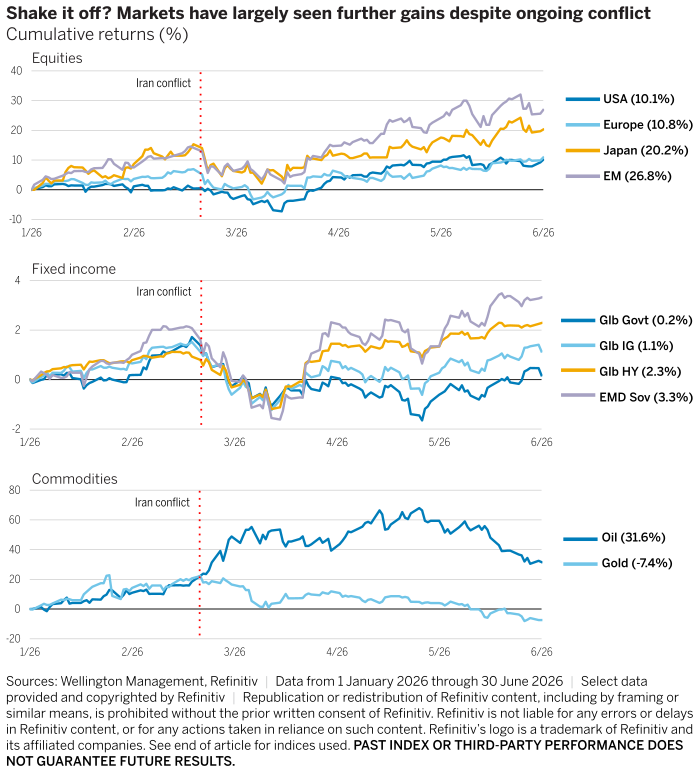
The macro and market backdrop has surprised us on the upside despite the tug of war with geopolitical risk (Figure 1). There has been an incremental pickup in maritime traffic through the Strait of Hormuz, but energy supplies remain heavily disrupted and inflation risks are higher than before the war, with stagflationary pressures elevated in some regions, including Europe.
What explains the economic and market resilience? The AI-driven earnings boom has enabled the market to absorb the geopolitical disruption. In a testament to their adaptability, companies have beaten expectations in the face of extreme uncertainty, and the upshot of strong expectations is that equities have cheapened significantly. Continued robust AI demand combined with supply constraints (in compute, memory, and power) is extending the AI spending cycle into 2027 – 2028 and creating attractive opportunities as AI bottlenecks drive pricing power.
On the policy front, most central banks have moved quickly to establish credibility on inflation, signaling a degree of willingness to look past any signs of faltering growth in favor of a hawkish stance to address inflation. The European Central Bank was a notable first mover, hiking rates in June, and other central banks may be poised for similar inflation-minded moves.
With respect to oil prices, one reason we did not see worst-case scenarios come to pass is that countries drew extensively on their reserves; stockpiling by China and other countries also helped alleviate the pressure. However, a slow normalization of traffic in the Strait of Hormuz will raise upside risks for oil prices given lower inventory levels.
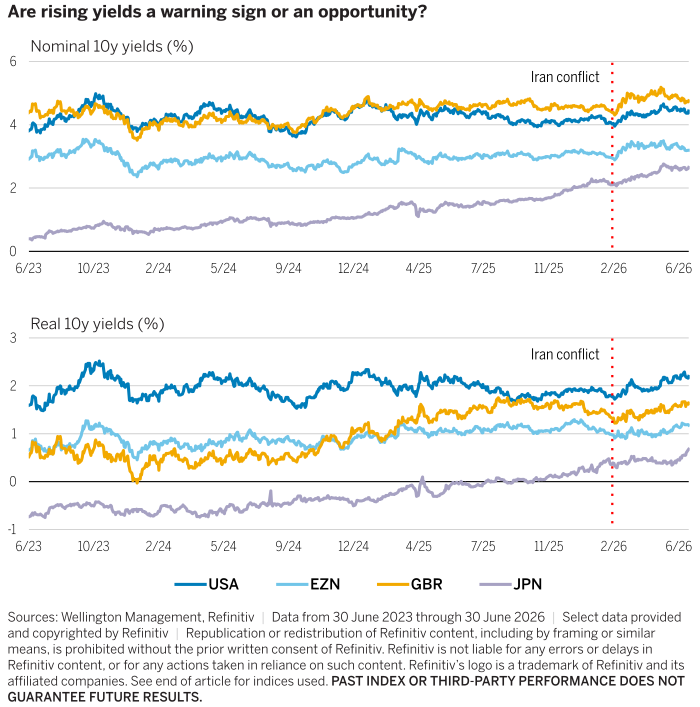
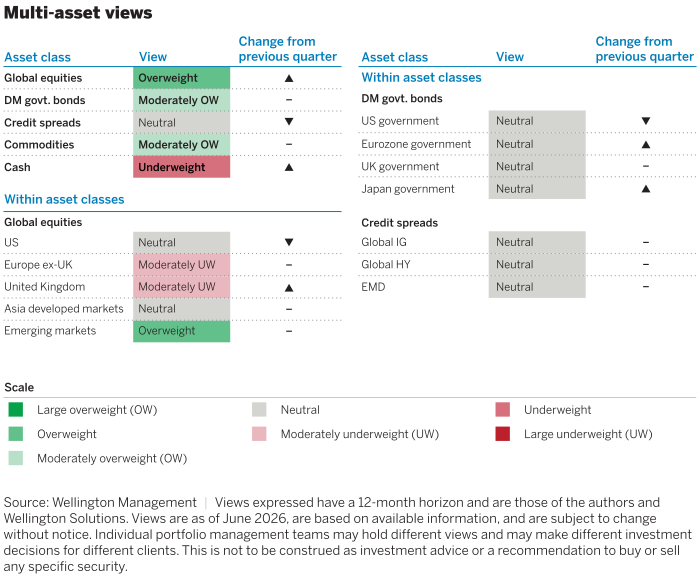
Our expectation of strong earnings growth amid more moderate valuations has led us to increase our equity view to overweight and to express a preference for EM over Europe. We have turned neutral on credit amid a significant tightening in spreads while keeping our moderately overweight view on global duration. Breakeven inflation rates have compressed significantly but we think real yields — particularly in the front end of the yield curve — are too high in many regions.