Australia & NZ, Institutional & Wholesale
Change



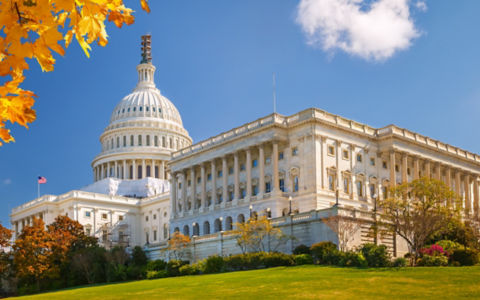
In the run-up to the US midterms, investors will be inundated with election analysis.
Who will win the House and Senate? How will markets react? Which sectors will benefit from a Republican or Democratic victory? What might the results say about the race for the White House in 2028?
These are reasonable questions. Elections matter, of course. Control of Congress matters. Tax policy, regulation, and fiscal spending all matter to investment outcomes.
But I increasingly think they are the wrong place to focus. That’s because the most important midterm question isn't who wins on November 3.
It's what doesn't change.
Welcome to the Age of Resilience
Over the past months, we've witnessed an extraordinary series of geopolitical shocks.
The Iran conflict disrupted one of the world's most important energy chokepoints. Ukraine continued to redefine modern warfare through drones, logistics attacks, and industrial attrition. Taiwan expanded military exercises focused on societal resilience and mobilization. Cyberattacks targeted American water systems. NATO and the broader transatlantic alliance came under increasing pressure. Meanwhile, Washington remained consumed by partisan battles.
Yet underneath all the volatile headlines, a remarkably consistent story emerged. The world kept moving in the same direction — away from seeking greater economic efficiency and toward greater national security resilience.
That's the real lesson investors should focus on.
What markets tend to miss
One of my favorite observations about politics is that people tend to overestimate the importance of elections in the short run, while underestimating the importance of structural forces over time.
Markets often fall into the same trap. We as investors obsess over events and underappreciate systems.
The last few months provide an excellent example.
Consider China.
Despite all the moving parts of Trump 2.0, Ukraine, Iran, and a rapidly fragmenting international environment, China's core strategy has remained surprisingly consistent.
Beijing's objectives look much the same today as they did years ago: strengthen domestic capabilities, reduce dependence on foreign suppliers, develop advanced technologies, modernize the military, and increase strategic autonomy.
That observation matters because it highlights a broader shift that lives beyond any one election cycle: Competition between the US and China has become structural.
Today, that geopolitical reality is shaping domestic politics in the US to a degree that most investors underappreciate. The rhetoric differs between political parties, of course. So do their tools and emphases. But the underlying direction is more bipartisan than it may appear on the surface.
Regardless of who controls Congress in January, I therefore expect a continued policy focus on national security priorities: semiconductor leadership, artificial intelligence, critical minerals, supply chain resilience, advanced manufacturing, and — above all — strategic competition with China.
That’s because these priorities have become embedded in the system. And investors should pay close attention to embedded trends, as they tend to last longer than election cycles.
Artificial intelligence provides a useful example.
Much of the debate around AI — including the arguments shaping most of today’s midterm election analysis — involves regulation, labor displacement, environmental and energy cost concerns, or head-spinning technological breakthroughs.
But what strikes me most is that both parties increasingly view AI through the lens of national competitiveness, economic strength, and especially, national security.
A decade ago, AI was largely a technology or productivity story. Today, it is becoming an infrastructure story.
The policy conversation in Washington is now focused on how to govern AI, deploy it, secure it and — above all — how to compete with China to ensure US economic and national security as this technology rapidly develops.
Once an issue reaches that stage, it rarely disappears after an election.
I think the same can be said of industrial policy.
For much of the post-Cold War era, policymakers, companies, and investors largely assumed that economic efficiency should determine where capital was allocated and where production occurred. That was the golden rule of globalization.
But in a world marked by rising geopolitical competition and real military conflict, events are pointing to the same lesson:
- The Iran war reminded us that energy security and maritime chokepoints still matter.
- Ukraine continues to demonstrate that industrial production, logistics, munitions, and force generation often matter more than sophisticated systems alone.
- Taiwan's recent military exercises focused less on displaying advanced equipment and more on reserve mobilization, command flexibility, communications resilience, and societal preparedness.
The common thread here isn’t politics — it’s resilience. The ability to manufacture, replenish, adapt, mobilize, and sustain is playing an ever-larger role in shaping both national security outcomes and investment opportunities.
That’s reality and reality is not a Republican idea nor a Democratic idea. It’s therefore unlikely to change on Election Day.
Perhaps the most important trend is the growing blur between economics and national security. That’s because for most of the past four or five decades, investors could largely analyze geopolitical issues separately from economic ones.
That’s now becoming much harder. Access to critical minerals is both an economic issue and a security issue. Same, too, with semiconductors. Cybersecurity, energy infrastructure, and the centrality of AI all further blur these lines.
Even the recent cyberattacks against US water utilities in Michigan and Minnesota carry lessons that extend beyond cybersecurity by underscoring that critical infrastructure, public trust, digital resilience, and systems reliability are becoming central components of national power.
These issues are today shaping capital allocation decisions regardless of which party controls Congress next year or occupies the White House in 2029.
Resilience through the investment lens
That observation leads to one of the more underappreciated realities of contemporary American politics. For all the discussion of political polarization — and to be sure, it exists — there’s also an emerging strategic consensus.
Beneath the political conflict and partisan noise, there’s growing agreement around several core ideas: America needs secure supply chains. America needs advanced manufacturing. It also needs technological leadership, resilient infrastructure, strong cybersecurity, new sources of energy, competitive advantages in AI, and the right policy tools to compete effectively with China.
The key takeaway? The biggest investment opportunities of the next decade may emerge not from policy reversals but from policy continuity.
Markets spend enormous amounts of time trying to forecast election outcomes. The more useful question might be: Which trends are likely to survive the election regardless of who wins?
Increasingly to me, that list looks clear:
- Competition with China
- Artificial intelligence
- Industrial capacity
- Defense modernization
- Critical minerals
- Infrastructure resilience
- Cybersecurity
- Energy security
- Supply chain resilience
These themes may advance more quickly under one party than another. They may be implemented differently. Funding levels may vary. Regulatory approaches will certainly differ.
But through my geopolitical lens, the underlying structural trajectory appears remarkably durable.
And that brings me back to the most important midterm question of all. Not who wins. Not which party gains a handful of seats. Not which headline dominates election night.
The most important question is what America has already decided.
I think the biggest investment stories of the next decade are unlikely to come from electoral surprises. They’ll emerge from the structural shifts that continue long after the votes have been counted.
And increasingly, those shifts point in the same direction: toward a world where resilience, capacity, national security, and adaptation matter more than economic efficiency alone.
The views expressed are those of the author at the time of writing. Other teams may hold different views and make different investment decisions. The value of your investment may become worth more or less than at the time of original investment. While any third-party data used is considered reliable, its accuracy is not guaranteed. For professional, institutional or accredited investors only.