Austria (Österreich), Institutional
Change


R-star, or the neutral rate, describes a theoretical interest rate at which monetary policy is neither expansionary nor contractionary. For decades, it has served as a benchmark for central bankers, indicating whether policy rates are too loose or too restrictive and whether they should be moved up or down.
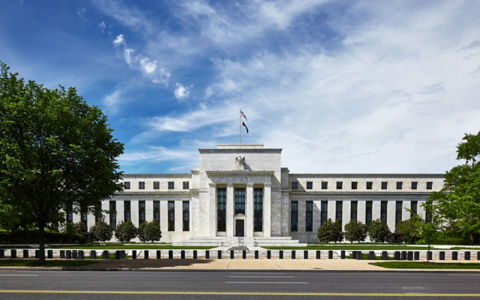
Federal Reserve Chairman Kevin Warsh wants to focus less on it.
At his news conference on Sept. 16, he dismissed neutral-rate targeting, casting it as academically relevant but of limited practicality in setting interest rates. Warsh has often discussed the need to sever the feedback loop between financial markets and the Fed, and this is one way to do it: By focusing less on the neutral rate, monetary policy would be less dependent on markets to assess policy restrictiveness and more focused on what the data suggests about future inflation.
I welcome this change and a simpler framework for determining the restrictiveness of policy rates. But I question whether Warsh’s new framework can work if the Fed’s dual mandate of stable prices and maximum employment start to conflict with one another.
The neutral rate became the prevailing force behind monetary policymaking following the 2008-09 financial crisis. Before that, central banks’ models assumed that excessively loose policy would generate inflation.
That assumption was disturbed in the 2000s when inflation remained low despite rock-bottom interest rates, partly because rising imports of Chinese goods had a disinflationary impact on U.S. prices. This lack of clear inflationary signals was one reason policymakers missed the risks emanating from the U.S. housing market leading up to 2007.
After the financial crisis, central bankers lost confidence in these models, so they turned to the neutral rate to help set policy as they slowly normalized interest rates. Between 2015 and 2018, the Fed gradually raised rates, aiming to align them with their new favorite policy aid: r-star.
Policymakers assumed that financial markets would indicate when policy was too restrictive better than inflation could. This explains the Fed’s U-turn on interest rates throughout 2019 after a stock market selloff in late 2018. Estimates of a lower neutral rate were also used to justify negative policy rates throughout the euro zone in the 2010s as neither financial markets nor inflation showed signs of excess. More recently, several Fed officials have described current policy as slightly restrictive, meaning that interest rates are higher than their long-term estimate of neutral.
Warsh has taken a dimmer view of the neutral rate’s usefulness. In 2018, he described it as nothing more than “a useful fiction.”
“In my view, r-star is not a beacon in the sky but a chimera in the eye…It is unobservable, unpredictable, imprecise, and highly variable,” he wrote in The Wall Street Journal. “That makes it a poor guide for policymakers.”
While Chairman Warsh plays his cards close to the vest, I believe he wants the Fed to return to a simpler definition of restrictiveness, one measured by how tight policy rates are relative to medium-term inflation expectations.
If that is the case, the Fed raised interest rates in September because it wasn’t confident inflation would return to its 2% target, given rising AI-driven spending and commodity prices. Because expectations for inflation rose, the policy was, by Warsh’s definition, not as restrictive as it was before. This could explain the disparity between Warsh and other committee members. While they were comparing policy rates against the neutral rate, Warsh was comparing rates with expected inflation.
Warsh’s framework has several implications for monetary policy. Most significantly, moving away from neutral-rate targeting increases the likelihood of near-term hikes.
It is rare for central bankers to raise interest rates in response to a supply shock like the one produced by the Iran war. Historically, they could justify their inaction by arguing that monetary policy tools aren’t very good at responding to commodity price shocks or that such shocks didn’t alter the economy’s neutral rate. If the Warsh Fed is more focused on expectations of inflation and less on the neutral rate, they might be more reactive to supply shocks.
Less focus on the neutral rate also means less extraordinary monetary support when inflation is below target. In the 2000s, central banks were able to justify endless quantitative easing and negative rates because the economy’s neutral rate was lower. If medium-term expectations for inflation stay anchored, policy doesn’t need to react as aggressively even if inflation is temporarily below the Fed’s 2% target.
A simpler framework for monetary policy that places less emphasis on signals from financial markets is a good thing, but it can only work if the Fed remains in the unique position of only having to worry about the inflation component of its two-pronged mandate. It is hard to imagine how the Fed might deal with a more challenging set of circumstances.
How would this framework deal with above-target inflation and a flailing labor market? What if the labor outlook weakened and inflation slowed, while asset prices boomed and financial conditions remained easy? These questions seem theoretical, but tepid job growth in the U.S. makes such trade-offs increasingly plausible.
The framework the Fed appears to be using is an improvement on neutral rate targeting, but it can’t address scenarios in which its various mandates conflict with one another. It is here where the neutral rate served as anchor for policy. If Warsh wants to replace it, he will need to explain how the Fed should set policy rates.
The views expressed are those of the authors at the time of writing. Other teams may hold different views and make different investment decisions. The value of your investment may become worth more or less than at the time of original investment. While any third-party data used is considered reliable, its accuracy is not guaranteed. For professional, institutional or accredited investors only.