Austria (Österreich), Institutional
Change




Oil prices have been the subject of much discussion since the start of the war in Iran at the end of February. Prices have fluctuated and remain subject to volatility as the conflict persists.
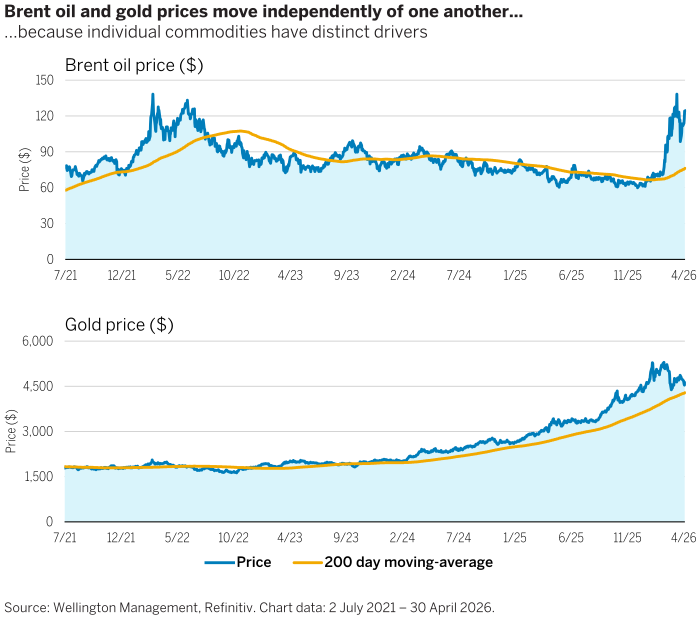
At a high level, Figure 1 illustrates two very different commodity paths:
- Major oil prices moves have historically been episodic and tactically driven by supply shock fears and subsequent reversals. Prior to the conflict, markets had largely expected the multiyear decline in oil prices to continue softening into 2026.
- Gold has been in a broader bull market since late 2022, first supported by central bank buying and later reinforced by ETF inflows, albeit with sharper corrections as positioning became stretched.
The broader lesson is that investors shouldn’t treat commodities as a single geopolitical or inflation trade. Instead, they should look under the hood at the distinct drivers and portfolio roles of individual commodities exposures.
Figure 1
Investment implications
- Consider the role of individual commodities rather than the asset class in aggregate. Both oil and gold could enhance diversification compared to portfolios comprised exclusively of traditional assets, but each plays a different role. Oil may be more relevant for inflation protection. Gold may be more useful for downside protection.
- Think of oil as a potential tactical opportunity instead of a long-term conviction. Why? In the short term, the war in Iran continues and the duration remains uncertain. Renewed supply risk could support prices and strengthen oil’s diversification role in the event of an inflation scare. However, event-driven oil price spikes have historically been episodic; the conflict has the potential to abate and lead to rapid oil repricing back toward the softer fundamentals in place prior to war.
- Remember the big picture in gold. Gold’s recent pullback may reflect cyclical excess rather than a broken trend. While return expectations may be lower from here, longer-term support from reserve diversification, central bank demand, ETF inflows, and potential US dollar weakness appears more durable.
- Keep long-term portfolio objectives top of mind when choosing between a broad, strategic commodity exposure or a more tactical allocation to an individual commodity based on what might be relative short-term catalysts.
What we’re watching
- The duration of the conflict in Iran and the resulting energy supply disruption is an important signpost in our oil outlook. As the duration increases, so does the potential severity of inflation risk.
- Given the relatively small market size of gold versus US Treasuries, central bank reserve dynamics could affect the gold market significantly. Even marginal shifts by major bondholders like China and Japan could have an outsized impact.
- If recent US dollar strength abates and we return to the weakening dynamics, the dollar’s standing as a reserve asset is likely to decline, making gold more attractive as an alternative store of value.
The views expressed are those of the authors at the time of writing. Other teams may hold different views and make different investment decisions. The value of your investment may become worth more or less than at the time of original investment. While any third-party data used is considered reliable, its accuracy is not guaranteed. For professional, institutional or accredited investors only.


















Monthly Market Review — September 2026
A monthly update on equity, fixed income, currency, and commodity markets.
By